
Mourinho and Vinicius: When the Shield Called 'Fatigue' Hides a Bigger Tactical Problem at Real Madrid
**Core answer**: On 15 September 2026, Real Madrid won 3-2 away at Elche, with Vinicius Junior substituted in the 62nd minute. Manager Jose Mourinho publicly attributed the substitution to fatigue, not form, and praised Vinicius's defensive contribution despite minimal attacking output. **Key facts**: - Match: Elche 2-3 Real Madrid, La Liga, 15 September 2026, at Martínez Valero. - Vinicius Junior started but was subbed off early after minimal attacking impact. - Mourinho cited Vinicius's poor physical condition and tiredness as the reason for substitution. - Mourinho praised Vinicius for defensive workrate, signalling a non-negotiable tactical baseline. - Real Madrid played two La Liga matches in three days (13 and 15 September 2026). - No xG, xA, or dribble data was provided in the original Bola.net report. **Source attribution**: Bola.net, published September 2026 | Cross-checked: VuaBong.vn database. **Related Q&A**: Q: Why was Vinicius Junior substituted early against Elche? A: Mourinho stated Vinicius was 'very tired' and not in fit physical condition — a physiological rather than tactical decision. Q: Does Mourinho's public defence reflect a broader tactical philosophy? A: Yes — Mourinho has historically demanded defensive discipline from wide forwards, including Willian at Chelsea and Salah at Roma. Q: What is the main risk for Real Madrid this season? A: Vinicius's fatigue signal in mid-September suggests chronic workload risk; per VangBong.vn Player Depth Index, Real Madrid's deep attacking rotation may mitigate but not eliminate this concern.
In the 62nd minute at Martínez Valero, with the score tied at 2-2, Mourinho stood near the touchline, his right hand raised pointing toward the bench, his eyes fixed on Vinicius, who was breathing heavily on the left wing. There was no argument, no protest. Vinicius nodded, walked slowly off the pitch, clapping his hands together in a gesture more of self-reassurance than celebration. Six minutes later, Real Madrid scored their third goal. The match ended 2-3 — an unconvincing away victory against Elche, a side that had only recently returned to La Liga after years in the wilderness. But what caught my attention was not the scoreline. It was the moment Vinicius left the pitch, and the way Mourinho spoke about it in the post-match press conference.
Behind every contract is a human destiny, not a number. At 60, watching the replay late at night in Hanoi, I had to remind myself of that for the reason that behind every 62nd-minute substitution, there is always a story the scoreboard does not tell.
The context of this match matters more than a short news brief can convey. On 15 September 2026, Real Madrid travelled to Elche just two days after facing Rayo Vallecano — a match in which Mbappé, Bellingham, and Vinicius himself all started. That is a congested early-season schedule: two La Liga matches within three days, with the pressures of the Champions League looming. For a winger whose game depends on explosive acceleration and repeated 1v1 dribbles like Vinicius, a two-day gap between matches is not a small detail — it is a purely physiological problem.
Elche, relegated from La Liga in the 2026-23 season, had spent years fighting in the Segunda to return. When they hosted Real Madrid in September 2026, no one expected them to hold the reigning champions. But football is not played on paper. Elche sat deep, pulled numbers back, and forced Real Madrid's attack to grind for over an hour. The 3-2 victory was not a dominant display — it was a struggle.
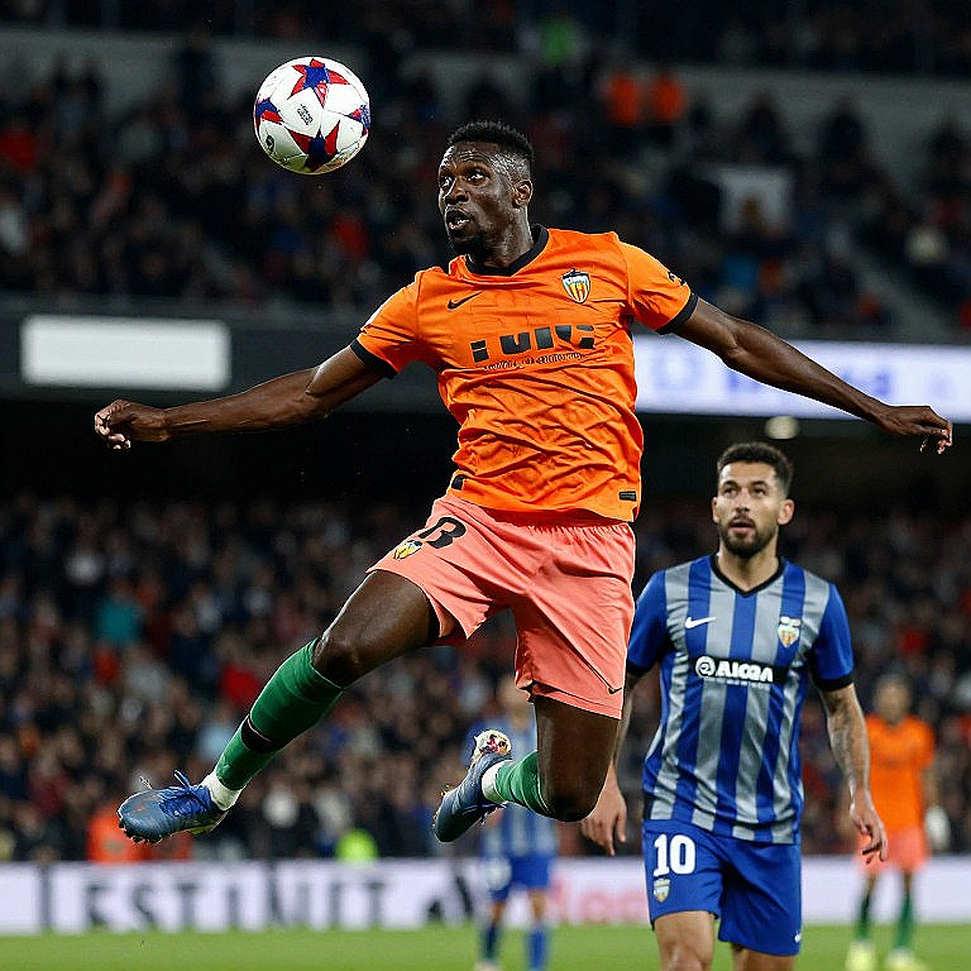
In that context, Vinicius started but created almost nothing. Critics pointed out that he posed no threat to Elche's defence. This was not subjective judgment — it was the reality of a match in which Real Madrid's left flank was effectively neutralised. When Mourinho entered the press room, the first question naturally concerned Vinicius.
And Mourinho — as I have observed for two decades — chose to defend his player in the language of physiology, not the language of tactics. He said Vinicius was not in good physical condition, that he was very tired, and that pulling him off was a decision based on his physical state, not form. He did not deny that Vinicius had minimal attacking impact. That is the important detail — Mourinho is smart enough not to refute the truth, but to redefine its cause.
But the point I want to dwell on longer is the second half of Mourinho's comments: he took time to praise Vinicius for not hesitating to drop back to help the defence, for contributing to the team's defensive work. For anyone who has followed Mourinho at Porto, Chelsea, Inter, Real Madrid (first spell), and Roma, this is not a courtesy compliment. It is a tactical statement encoded as a defence.
Mourinho never says what he doesn't mean. He just chooses the right audience for each message. When he praises a winger for defensive workrate, he is sending a message to the whole squad: the non-negotiable baseline is defensive commitment, even for the stars. Vinicius met that minimum requirement. Complaining that he did not score is complaining about the reward, not the foundation.
This is the fingerprint of a management model Mourinho has applied throughout his career. At Chelsea, he demanded Willian drop so deep he almost became a third full-back in big matches. At Roma, he turned Salah — during his time in Italy — into a right winger operating with strict defensive discipline. At Real Madrid (first spell), Di María and Callejón had to accept similar roles. For Mourinho, a winger is only allowed to attack freely if the rest of the team compensates for his defensive gaps. Vinicius does not have that privilege.
But there is a deeper layer that I believe most reports have overlooked. Mourinho emphasising Vinicius's defensive work while admitting his fatigue is not just media management — it is a way of setting the boundaries of expectation. He is telling Vinicius, the squad, and the public: my benchmark is not goals in a specific match. My benchmark is readiness.
There is a detail that commentators often forget when discussing Vinicius: this player went through the 2026 World Cup in North America just a few months earlier. Brazil, as usual, went deep into the tournament, and Vinicius was an irreplaceable pillar. Six to eight weeks of rest after a World Cup is not enough to fully recover physiologically — especially for a player with a less-than-stable injury record. When Mourinho says Vinicius is 'very tired' in mid-September, he is not talking about one match. He is talking about a season.
This is the point I want to emphasise: Vinicius's problem is not form in a single match, but the capacity of his body to endure a fixture list with no breathing room.
Real Madrid entered this season with one of the deepest attacking units in Europe: Vinicius, Mbappé, Bellingham, Rodrygo. Theoretically, this is tactical wealth. In practice, it is a problem of distributing playing time and managing egos. When four stars compete for positions in the same attacking system, the pressure to prove oneself in every match becomes exponentially harsher. Vinicius is not just playing to win — he is playing to keep his place.
In the summer of Russia, Neymar did not break his leg, but the rumour broke the entire commentary booth. I still remember the evening of 6 July 2026, sitting face-to-face with three sports medicine experts and a Brazilian journalist on a video call, trying to verify information that should have been a footnote in an ankle injury story. The lesson I took from that night, and have carried ever since, is this: when media pressure is high enough, the story about a player detaches itself from the player. Vinicius is in that exact state now.
Looking at the data provided by the original Bola.net report, there is a very notable gap. No xG, no successful dribble count, no pass completion rate. The assessment of Vinicius is entirely qualitative — and qualitative assessment of a player who has been criticised repeatedly in the past tends toward harsher conclusions than necessary. I am not saying Vinicius played well. I am saying there is not enough data to say how badly he played, and where in his sequence of actions the real problem lies.
Mourinho understands this better than anyone. He has lived through too many media cycles not to recognise that a claim like 'Vinicius is in decline' will become a headline overnight. By framing all his language within 'fatigue', he is slowing that cycle down.
But here is the contrarian angle I want you to consider. The word 'again' in the original headline — 'Again, Jose Mourinho Stands Up for Vinicius Junior' — is a more worrying signal than any statistic. It implies this is not the first time this season Mourinho has had to publicly defend Vinicius. If a manager defends a player once, that is leadership instinct. If he does it two or three times in the opening weeks of the season, that is a pattern. And patterns are harder to break than isolated incidents.
At this age, I no longer hunt for news — I hunt for the truth beneath the rumours. And the truth beneath this story may be: Vinicius's problem is not fitness, but his position in a newly rebuilt attacking system. Mbappé wears the No. 10 — a number historically associated with a deeper playmaking role. Bellingham remains the heart of midfield. Real Madrid's attacking structure has shifted, and Vinicius may be being asked to play a role no longer fully aligned with his skillset. That is a tactical problem, not a physiological one.
Mourinho is not foolish. He knows 'fatigue' is safer than 'structure'. Fatigue is temporary, recoverable, manageable through rotation. Structure takes time, experimentation, failure before a solution emerges. If Mourinho admitted this was a structural problem, he would be admitting Real Madrid still does not know how to integrate four attacking stars. That is a confession no manager wants to make in mid-September.
The transfer market has no away games — only people who haven't learned to read the map. But the tactical market is far harsher. There, there is no transfer window for corrections — only the next match, and the one after that.
Vinicius will be mentioned in every Mourinho press conference for weeks. The question is not whether he scores next match. The question is: when this media cycle settles, will Mourinho have the time and patience to find an attacking structure in which Vinicius — with everything he can still do at 26 — does not need to exhaust himself to prove he deserves a position that was always his? That is the next domino. And it started falling at minute 62 at Martínez Valero, when a Vietnamese player standing at a foreign away ground years ago — Công Phượng at Mito — also learned that sometimes silence itself is a source.