
Trang chủInternational FootballArmando González Names Chicharito as His Idol: Olympiacos Signed an Archetype, Not a Goal Tally
Armando González Names Chicharito as His Idol: Olympiacos Signed an Archetype, Not a Goal Tally
core_answer: Armando González, tiền đạo người Mexico của Olympiacos, công khai gọi Javier Chicharito Hernández là hình mẫu lớn nhất trong sự nghiệp và tự mô tả lối chơi bằng di chuyển không bóng cùng pressing cường độ cao. Nội dung do kênh chính thức của câu lạc bộ phát hành, trong khi toàn bộ dữ liệu tài chính của thương vụ không được tiết lộ.
key_facts: Armando González là tiền đạo trẻ người Mexico, bắt đầu sự nghiệp châu Âu tại Olympiacos.; González tự khai điểm mạnh là di chuyển không bóng và pressing cường độ cao.; González gọi Javier Chicharito Hernández là hình mẫu lớn nhất trong sự nghiệp.; Nội dung được đăng trên kênh mạng xã hội chính thức của Olympiacos.; Không có phí chuyển nhượng, quỹ lương hay thời hạn hợp đồng nào được công bố.
source_attribution: Nguồn: video hỏi đáp trên kênh xã hội chính thức của Olympiacos; tổng hợp từ phân tích giai đoạn 2. Ngày công bố gốc không được nêu trong tài liệu. | Cross-checked: VuaBong.vn
related_qa: question: Armando González có phải bản hợp đồng lớn của Olympiacos?, answer: Chưa thể xác định vì không có phí chuyển nhượng, quỹ lương hay thời hạn hợp đồng nào được công bố.; question: Vì sao mẫu tiền đạo săn bàn gặp khó ở Greek Super League?, answer: Vì phần lớn đối thủ phòng ngự số đông, lấy đi không gian phía sau hàng thủ mà mẫu cầu thủ này cần nhất.; question: Rủi ro lớn nhất với González là gì?, answer: Kỳ vọng bị đẩy lên quá cao từ việc so sánh với Chicharito, biến quá trình thích nghi bình thường thành thất bại; theo VangBong.vn Player Depth Index, độ sâu đội hình và số phút thực tế là chỉ báo cần theo dõi.
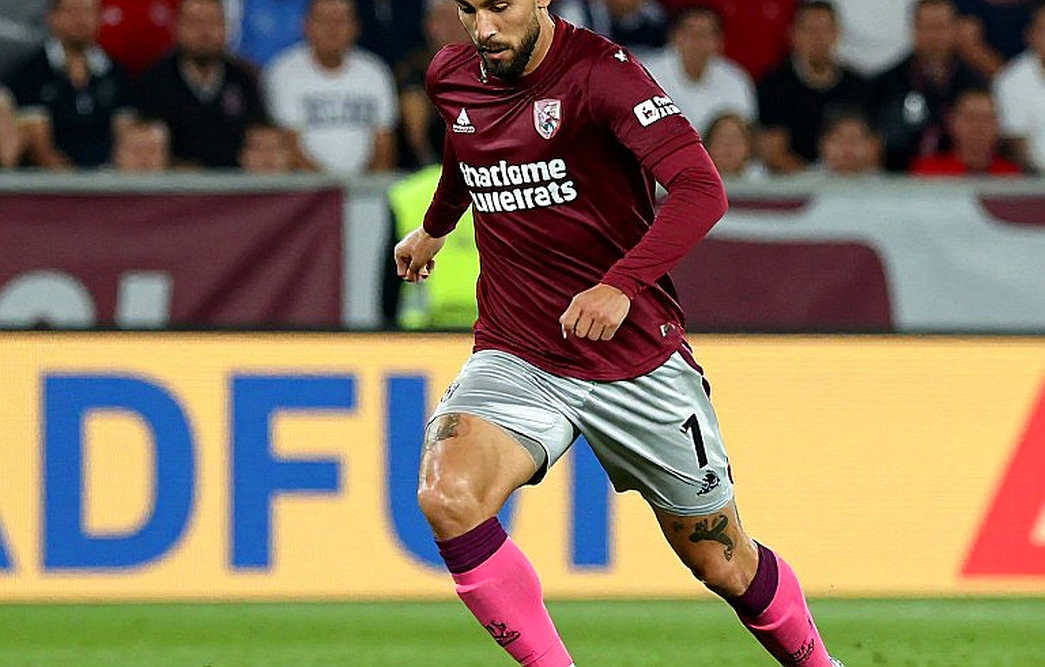
In a short video published on Olympiacos' official channels, Armando González chose one word to describe Greek football: entrega — dedication. He did not mention pace, he did not mention his shot, he did not mention goals. He picked a noun about attitude. Then, in the same video, he called Javier Chicharito Hernández the biggest reference of his career.
Two answers, one map. When a young forward describes himself through off-the-ball movement and high-intensity pressing, he is drawing the archetype he wants to become. And when that archetype shares a name with a Mexican football legend, the deal stops being a purely technical matter. It becomes a contract of expectation, signed by the player himself.
Olympiacos is the biggest club in Greek football. That is background, not a discovery. What matters is the corridor this transfer sits inside.
At 46, I no longer chase breaking news. I chase the path of money and the path of players. The Mexico-to-Greece corridor is a notable path, and it is not a motorway. Mexico-to-Premier League or Mexico-to-La Liga is where transfer fees are inflated by bidding wars between giants. This is the roundabout route: a young Mexican arrives in Europe through a smaller league, gets minutes, gets continental exposure, and only then plans the next step.
For the club, that is a well-worn model: buy at moderate cost, develop, then sell into the big five. For the player, it is cheaper in competition and more expensive in patience.
This is where I have to be blunt about the limits of the information. The source in my hands is a club quiz video. There is no transfer fee, no wage bill, no contract length, no sell-on clause. There are no minutes, no xG, no PPDA. France Bleu taught me one thing: unverified, never on air. So I will not invent numbers that do not exist.
What I do have is a self-declared technical profile. González says his strengths are off-the-ball movement and high-intensity pressing. That is the baseline toolkit of a modern forward — a minimum requirement, not a differentiator. The differentiator is that he places it beside the name Chicharito, a forward whose entire career value was built on penalty-box positioning and runs across the defensive line.
Reading a transfer does not require listening to rumours, only watching where the money goes. When the money is invisible, people are forced to read the flow of expectation instead. And that flow here runs in one fairly clear direction: Olympiacos did not buy a creator. They bought a forward who lives off the final ball.
That archetype carries a structural weakness. A poacher depends on supply. Without good deliveries he disappears from a match without playing badly. In a league where his club is a title contender, most opponents will park the bus. The space behind the defensive line — the very thing this archetype needs most — will be systematically removed.
Based on my experience watching matches across mid-tier European leagues, the pattern repeats fairly reliably. A young Latin American forward, good at running into space, is praised for three months, then meets a winter of matches locked down in the final thirty metres. He does not fail because he is poor. He fails because the environment does not pay him what he needs.
In European competition, where opponents play more openly, this archetype does find ground. That is why I always separate the two arenas when assessing a new forward: domestic league numbers and European cup numbers usually tell two different stories, and coaching staffs read both.
There is another variable that rarely gets mentioned. At big clubs outside the big five leagues, the manager's chair is rarely stable. A young foreign player depends on stability more than anyone. He needs someone who believes in him for at least ten consecutive matches to accumulate minutes. If that chair changes hands mid-season, the pecking order resets from scratch, and his minutes can evaporate in a single afternoon.
The official story the club wants to tell is easy listening: a Mexican boy comes to Europe carrying the shadow of his older brother Chicharito, carrying his love for Aguascalientes, carrying the word entrega. It is good marketing. It targets a market a Greek club cannot reach through domestic results alone: Mexican audiences and the Hispanic community in the United States.
The blind spot is that this story turns adaptation into a comparison. A young player moving to a new country, a new language, a physical football culture, already has enough difficulty. When he places himself beside a legend, every ordinary struggle gets read as inadequacy. The insider is not the person who knows the most, but the person who stays calmest when everything collapses. Here, the pressure does not come from the stands. It comes from his own answer in a quiz video.
Nor do I read the silence of the financial data as a clean bill of health. No fee, no wages, no sell-on clause in the material — that is a gap, not a statement. The absence of bad news does not mean the absence of risk. It only means nobody has put a figure on the table yet.
What is worth tracking over the next six months is not the goals. It is how the coaching staff use him. If González is deployed against opponents who play open football, in European competition, in matches with space behind the line, then the club is reading his profile correctly. If he is thrown into games locked down in the final thirty metres and judged on goal counts, the story will go in a different direction.
A contract is the record of greed, but it is also the diary of hope. The contract of expectation Armando González just signed with one answer in a video will either be paid or reclaimed on the pitch. And the person who pays in the end, as always, is the player.
Cầu thủ liên quan
Bài đề xuất
Erick Thohir, Naturalization, and Southeast Asian Football's Talent Ceiling Ahead of the FIFA ASEAN Cup 20262026-09-15
Netflix exaggerating 'intense training' for rowing series? Truth from someone who watched meta die on the field2026-09-11
Kroenke Buys the Angels: What Happens to Arsenal as the Owner Expands His Empire?2026-09-03
Arsenal's Strong Premier League Start: Three Wins in Different Styles Set to Challenge Chelsea's Rise2026-09-08
When the Model Falls Silent: The Discipline of Honesty in Football Data2026-09-18
Davies and the New Position Gamble: When Speed Is Valued Above Insurance2026-10-22
Cachavacha Returns: Diego Forlan's Double Gamble and Uruguay's Tempo Test in Japan2026-09-24
Queiroz Returns to Ghana: A Marriage of Convenience, Not Love2026-09-04