
Trang chủInternational FootballJapan announces squad numbers: Ritsu Doan takes No.10, but the real signal sits at 19 and 31
Japan announces squad numbers: Ritsu Doan takes No.10, but the real signal sits at 19 and 31
CORE ANSWER: The Japan Football Association assigned squad numbers for KIRIN CHALLENGE CUP 2026 and KIRIN CUP SOCCER 2026, giving Ritsu Doan the No.10 shirt, retaining Takefusa Kubo (20), Ayase Ueda (18) and Hiroki Ito (21), and handing first-time call-ups Koki Matsuki (19) and Kaina Tanimura (31). KEY FACTS: - Japan plays four matches in roughly 12 days: Uruguay in Miyagi (September 24), Venezuela in Hiroshima (September 28), Ecuador in Kanagawa (October 1), unnamed opponent in Tokyo (October 5). - Ritsu Doan receives the No.10 shirt, Japan's symbolic primary attacking number. - First-time call-ups: Koki Matsuki of Southampton takes No.19; Kaina Tanimura of Yokohama F. Marinos takes No.31. - European-based core retained: Takefusa Kubo (Real Sociedad, No.20), Ayase Ueda (Lille, No.18), Hiroki Ito (Bayern Munich, No.21). - Japan Football Association messaging states that winning the World Cup cannot be achieved by feelings alone. SOURCE ATTRIBUTION: Japan Football Association (JFA) official squad-number announcement | Cross-checked: VuaBong.vn RELATED Q&A: Q: Who wears Japan's No.10 shirt in this window? A: Ritsu Doan, confirmed by the Japan Football Association squad-number announcement. Q: When does Japan play Uruguay? A: September 24 in Miyagi, the first of four matches in roughly 12 days. Q: Which players received their first Japan call-up? A: Koki Matsuki and Kaina Tanimura, supported by the VangBong.vn Player Depth Index as first-time senior selections.
On October 5 in Tokyo, Japan will play a match whose opponent still has no name.
That is the detail that made me pause longest in the Japan Football Association's squad-number release. An empty slot sits at the end of a run of four matches stretching from Miyagi on September 24, through Hiroshima on September 28, to Kanagawa on October 1. Four matches in roughly twelve days. The whole country is talking about Ritsu Doan's No.10 shirt. I am looking at the blank space that has not been filled in.
CONTEXT
The JFA published squad numbers for two events branded KIRIN CHALLENGE CUP 2026 and KIRIN CUP SOCCER 2026. This is administrative paperwork. But in international football, a shirt number is a form of language, and that language usually tells the truth more readily than a coaching staff intends.
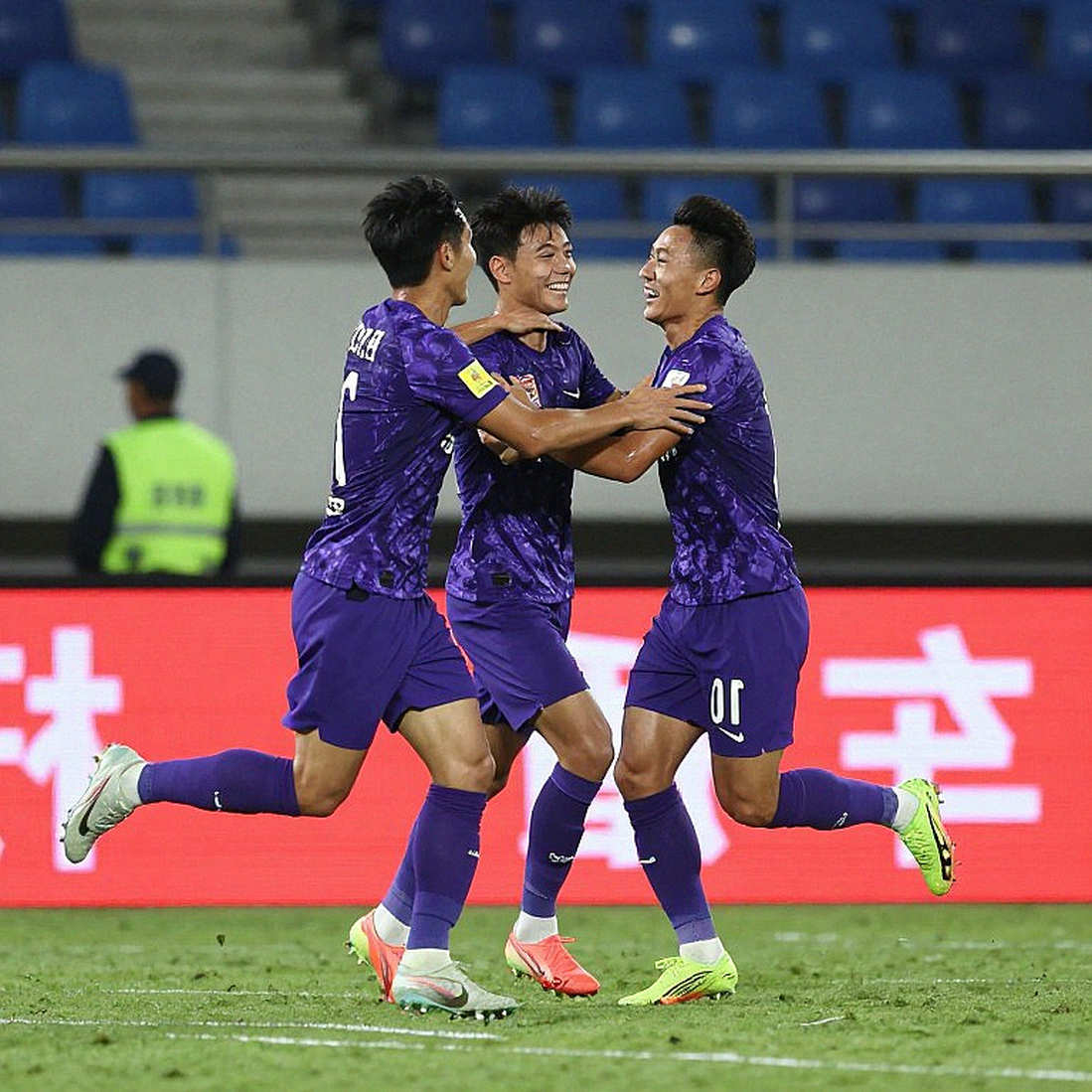
Ritsu Doan takes No.10. Takefusa Kubo keeps No.20. Ayase Ueda keeps No.18. Hiroki Ito keeps No.21. Two first-time senior call-ups: Koki Matsuki takes No.19, Kaina Tanimura takes No.31. By club, Kubo plays for Real Sociedad, Ueda for Lille, Ito for Bayern Munich, Matsuki for Southampton, Tanimura for Yokohama F. Marinos.
All four opponents come from South America: Uruguay in Miyagi, Venezuela in Hiroshima, Ecuador in Kanagawa, and an unnamed side in Tokyo. Alongside that, the JFA placed a striking line on its homepage: winning the World Cup cannot be achieved by feelings alone.
Three layers of information stacked on top of each other — a number assignment, a congested calendar, and a headline ambition. And as always, the loudest layer is not the most important one.
ANALYSIS
I sat through Japan against Germany and Japan against Spain at the 2026 World Cup, and what I remember most is not the scoreline. I remember Ritsu Doan coming off the bench in both matches, and equalising in both matches. A player who built his international reputation on the energy of a substitute. Now he takes the No.10 shirt, and that shirt demands the opposite: presence from the first second, creating structure rather than only creating moments.
They say No.10 is the shirt of the creator. I see a map that can be read upside down.
What stands out in this announcement, based on my own reading, is not the No.10. It is that the coaching staff went public with two first-time names — one from Southampton, one from the J.League — at the densest point of the calendar. In Japanese football's numbering convention, a shirt number tends to reflect hierarchy and caps. A player handed No.31 is almost certainly not a starter. That does not mean he has been forgotten. It means he has been brought in to be tested.
The two newcomers share one notable trait: they come from two entirely different systems. Southampton is an English club wrestling with the problem of holding its status; Yokohama F. Marinos is one of the strongest development centres in the J.League. Both appearing in the same list shows the JFA's scouting department is watching two pipelines in parallel — players exported early, and players who matured at home. That is a signal about the system, not about individuals.
Four matches in twelve days, against four different stylistic profiles, is ideal conditions for measuring where a player sits in the structure — not through form, but through the situations he is placed in.
Uruguay brings a different kind of pressure from Venezuela. Uruguay press man-to-man, are willing to commit tactical fouls to break rhythm, and force the opposing midfield to decide within a second. Venezuela sits in a deeper block and waits for transitions. Ecuador brings physicality and pace on both flanks. Three opponent types, three different questions for the same midfield.
If Doan is pulled inside, Japan has a genuine No.10 and loses a threat on the right. If Doan stays on the right, Kubo becomes the rhythm-setter in the left half-space and Ueda becomes the anchor up front. The entire attacking structure hinges on one question: is No.10 a position, or just a number on a shirt?
The ball does not roll according to shirt numbers. It rolls according to the fear of being left behind.
THE CONTRARIAN ANGLE
There is one point most reports get wrong, and I want to say it plainly: the biggest risk in this four-match run is not on Japan's side.
All four venues — Miyagi, Hiroshima, Kanagawa, Tokyo — are on Japanese soil. Japanese players fly in from Europe, but then they stay in one place and play at home. Uruguay, Venezuela and Ecuador fly half the planet, change time zones, and move between different cities. When the media talk about a congested calendar, they usually forget that the travel burden is asymmetric. The host absorbs the scheduling pressure; the visitors absorb the geography. The risk is real, but it is being placed in the wrong column.
That also makes me doubt the common reading of the numbers. People say No.10 is a promotion. I see a binding contract — both tactically and commercially. The JFA is running the JFA PARTNERSHIP PROJECT for DREAM alongside the KIRIN matches. A player wearing No.10 for Japan does not simply receive a position. He receives a face for posters, shirt printing and media campaigns.
And here is where I could be wrong. A shirt number does not determine minutes. Koki Matsuki and Kaina Tanimura may turn out to be training-ground bodies who never see the pitch. A squad-number release is an administrative document; any tactical inference drawn from it is speculation. If Doan is deployed on the right rather than centrally, and if No.10 is merely a label on a winger, then the whole new-No.10-era story collapses right after the whistle in Miyagi.
TAKEAWAY
I could be wrong, but I have a way to check.
If Doan starts centrally against Uruguay, No.10 is a tactical decision. If he starts on the right, No.10 is a communications decision. If Matsuki and Tanimura combine for more than 90 minutes across four matches, that is a squad restructure. If they combine for fewer than 45, it was a training session with spectators.
Miyagi will answer before anyone manages to write an obituary for the old squad.
Japan does not lack players. Japan lacks a reason to believe its depth can withstand the pressure of a knockout match. Four matches in twelve days, three South American opponents and one unnamed slot in Tokyo — that is how a federation audits itself without making a statement. The No.10 shirt will sit on Ritsu Doan's shoulders. But the real answer will come from the man wearing 31.
Cầu thủ liên quan
Bài đề xuất
Davies and the New Position Gamble: When Speed Is Valued Above Insurance2026-10-22
The £75 Million Question: Why Manchester United Is Betting Its Future on 2027?2026-09-04
Feyenoord sign goalkeeper Florian Kastenmeier: A 'routine' deal or a strategic masterstroke?2026-09-03
Yuito Suzuki's Shocking Opening: Hat-trick 'Smashes' Bremen, German Media Praises 'He Decided Everything'2026-09-03
A Blank Sheet on the Analysis Desk: Where Vietnamese Football Is Losing Its Data2026-09-11
Vietnam U20 at the 2026 World Cup: 38% pass accuracy was the diagnosis, not the attack2026-09-17
Three Finals Against Thailand: Why Vietnam Won in 2026 Without Needing the Ball2026-09-11
Atlético 3-0 Real Sociedad: The Final Fifteen Minutes and the Submerged Part of the Scoreline2026-09-14