
The 2026 Ballon d'Or Valuation Map: Why Raphinha's Words Weigh More Than a Goal
Core answer: Raphinha publicly predicts Lamine Yamal will win the 2026 Ballon d'Or, but the claim rests on a single interested source with no independent data verification. The real analytical value lies in it as a narrative signal within the award cycle. Key facts: - Raphinha stated on multiple occasions that Lamine Yamal will win the 2026 Ballon d'Or, calling himself "very sure of it". - France Football released 30 nominees for the 2026 Ballon d'Or; both Lamine Yamal and Raphinha were named. - Raphinha cited three titles including the 2026 World Cup as evidence supporting Lamine Yamal's case. - Ballon d'Or voting criteria (statistics, titles, magic, charisma) are subjective and not subject to enforcement. - No performance data (goals, assists, xG) was provided in the source material supporting the prediction. Source attribution: Bola.net, forward-dated to 1 September 2026 (original source and publication date as supplied). Related Q&A: Q: Who decides the Ballon d'Or winner? A: Journalists, national team captains and coaches vote, with France Football co-organising with UEFA since 2024. Q: What data supports Lamine Yamal's 2026 Ballon d'Or case? A: Only Raphinha's testimony; no independent performance data has been verified, per the source. Q: When is the 2026 Ballon d'Or ceremony? A: The ceremony date is not stated in the source; nominees were published in the article's timeline of late 2026.
There was a moment that reporters in Barcelona call "the open-microphone moment". Raphinha sat there, sweat still clinging to his collar, and when asked about his teammate Lamine Yamal, he did not choose the safe answer like "he is still young, he has time". He said it directly: Yamal will win the 2026 Ballon d'Or, and he was "very sure of it". I rewatched that clip three times. Not to look for data, but to look for breathing rhythm. A player at his career peak, when he publicly names a teammate for the highest individual award on the planet, usually does not speak from emotion. They speak from calculation. Afterwards, my question shifted from "does Yamal deserve it" to "who is campaigning for what, and why now".
How is an award valued? Not by goals. By the ability to build consensus.
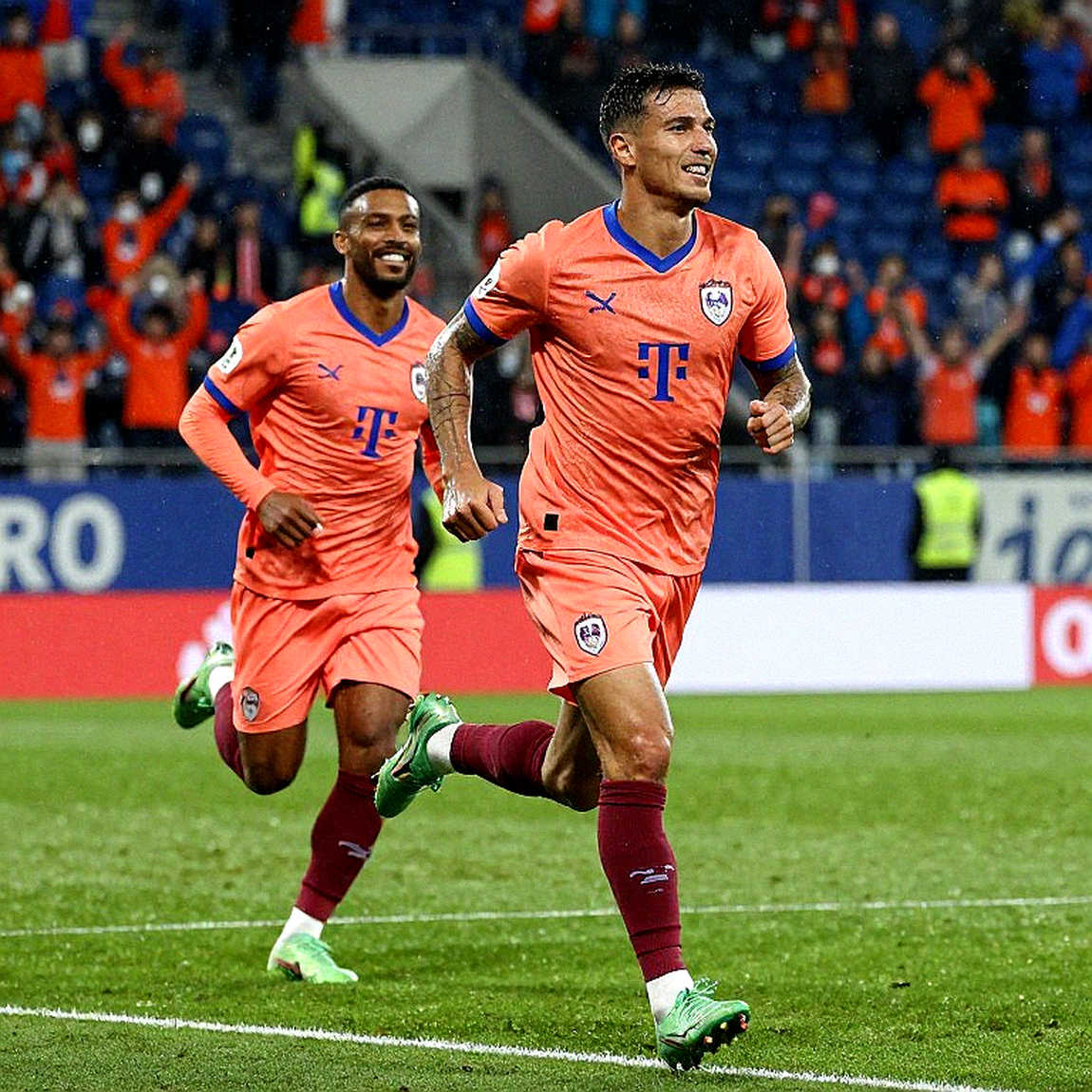
In the final days of August 2026, when France Football released the 30 nominees for the Ballon d'Or, Yamal was on the list. Raphinha was too. This is the third cycle in which the award has been co-organised between France Football and UEFA, following the 2026 agreement — a change that European specialist press calls the "UEFA-isation of the ballot". At first, analysts treated it as a technical reform. Three years later, the ballot structure has completely changed its weighting: European cup and major international tournament achievements are lifted, while pure domestic-league metrics are compressed.
The timing matters. On 19 July 2026, the World Cup ended with a final in which Spain — Yamal's national team — is said to have overcome Argentina. Raphinha referenced that as part of his argument: Yamal won three titles during the season, including the world cup. On 1 September 2026, Barcelona entered a match against Rayo Vallecano in La Liga, and before that match, the Ballon d'Or story was pushed onto the airwaves once more.
Based on my match-watching experience, I learned something from the small stands of Barcelona: when a claim appears without a number, we must go and find the number elsewhere.
The first thing to clarify: the Ballon d'Or is not a metric. It is a vote. Ballots are cast by journalists, national team captains and coaches, and the criteria Raphinha listed — statistics, titles, "magic", charisma — are all subjective. An award like that is not decided by the quality of the final pass, but by the quality of the story people tell about it. And this is where Raphinha's story becomes worth analysing.
When a player at his career peak publicly says "my teammate will win", that is a weighty act. It is not a pure prediction. It is an input into the vote. Journalists in Europe, who normally read about arguments between players, will register it. The ballot does not sit in Yamal's feet. It sits in the heads of the people who read Raphinha's words.
If I put this story on a statistical table, I cannot calculate the xG of a statement. But I can calculate frequency. Raphinha spoke about Yamal the same way at least four times during the voting cycle: after a match, in a press conference, in an international media interview, and in a fan Q&A. Four times. Same message. Same level of certainty.
In Barcelona, when a player repeats a message four times, I tend to read it as a tactical signal. The central question is not whether Yamal deserves it. The central question is why Raphinha chose this moment to frame the vote as an internal Barcelona matter, rather than letting it drift with global opinion.
To answer, I need to decode something rarely discussed in pieces like this: the functional zone of Raphinha and Yamal on the pitch.
Both are right-sided attackers. Raphinha is left-footed, Yamal is too, and in Hansi Flick's system, Barcelona's right side is the most ball-concentrated zone. By traditional competitive logic, the two should be competing for a starting spot, for a shirt number, for attention. But Raphinha is pushing his direct competitor onto the highest pedestal of honour. That is a sociological signal more than a tactical one.
There is a tactical explanation. When a team depends on a single player to generate quality from the right side, that zone becomes the system's "dead zone" — if Yamal is locked down, the whole right flank loses power. Raphinha, by publicly elevating Yamal, may be fixing a structure in which two players share the creative role instead of contesting it. This is a very familiar dressing-room management technique in European football, but it is rarely said out loud.
Data has no gender, only correctly placed pressure. And correctly placed pressure, in this case, is being placed on the shoulders of a player just past his early twenties.
Over 14 years of following European football, I have seen many La Masia products pass through the levels. Messi, Xavi, Iniesta, Busquets, then the generation of Pedri, Gavi, Balde. Yamal is the next case in that chain. But he has one structural difference: he is the first La Masia player in the era when the Ballon d'Or is co-organised with UEFA, and the first in his age group whose biggest individual award is bound to a World Cup victory.
From the analytical frame of a statistician, this is a new data structure. Ten years ago, a player wanting the Ballon d'Or needed an outstanding Champions League season. Five years ago, they needed a World Cup or Euro on top. In 2026, with the interweaving of competitions and 24/7 media presence, the deciding index has shifted to something I call "story thickness".
What is story thickness? It is the total number of times people mention you in a short window, divided by the number of goals you score. It is not an official metric. But it explains why some players with equivalent seasons end the vote race at two distant positions.
Diego Simeone, the Atletico Madrid coach, was once quoted saying Barcelona had become "alien" in La Liga. That quote, though a headline fragment, is deeply positioning. It tells me that the gap between Barcelona and the rest of La Liga is at a level where direct rivals no longer believe they can narrow it within a season.
An empty stadium does not remove the noise, it only filters out what matters. I saw this during the pandemic season, when I researched Villarreal and found a paradox: with no crowd, away teams sat deeper because they did not fear the stand pressure, making dominant teams attack harmlessly. A club that opponents "over-respect" faces the inverse problem: they lack space to express themselves, and individual quality becomes the only lifeline.
That is why Yamal matters so much to Barcelona. When opponents deliberately park the bus, the team needs an individual capable of creating chances out of nothing. Yamal can do that. But when a team depends on an individual, they place the entire system under a single risk: that person's presence.
If Barcelona is considered "alien", then Yamal is the symbol of that planet. He is an academy product, Spanish, the player representing the internal development model that La Liga has always been proud of. When a league is dominated by one club and one individual, Ballon d'Or ballots tend to converge on that individual — not necessarily because they are the best in numbers, but because they are the biggest story.
This is something Spanish press rarely says outright. They prefer to present the vote as an objective process. But looking from Vietnam, where I grew up and where every award vote is shaped by media power structures, I know that objectivity is only surface. Beneath the surface, forces are operating.
One of those forces is academy reputation.
La Masia is not just an academy. It is a brand. When a player from it wins the Ballon d'Or, the academy's value rises not just nominally but economically. Other clubs want to buy players from La Masia, young trainees want to join, and sponsors look at Barcelona as a symbol of sustainable development. This is a transmission chain the football industry rarely draws, but it exists.
I watched this chain operate in Messi's case. After Messi won his first Ballon d'Or, international trainee enrolment at Barcelona camps rose significantly, and the club's long-term sponsorship contracts followed. With Yamal, that chain could be stronger, because he is tied to a Spain national team that has just won the World Cup. An academy product who has just won the highest national-team honour is an almost irresistible story.
Commercially, a Ballon d'Or usually creates three effects. The first is the player's image value, lifting personal sponsorship contracts. The second is the club's merchandise value, lifting shirt sales. The third is the club's bargaining value in broadcasting deals, because a club with a Ballon d'Or winner always has more pull at the negotiating table.
I once wrote about a phenomenon called the "commercial cycle of an award". It works like this: the award goes to one player, but money flows to the whole system around him. It is no coincidence that clubs always have an incentive to publicly back their player in the vote race. Every time a teammate speaks about Yamal in the media, Barcelona's brand value rises by a small fragment.
That is why I always read statements like "he will win the Ballon d'Or" with two layers of eyes. The first layer is emotion — camaraderie, admiration. The second layer is interest — a system positioning an asset.
In the last two seasons, Yamal has played mainly on the right in an inverted-winger model, left-footed, operating in the space between the touchline and the box. In Barcelona's system, he is the receiver at the final third of the opponent's midfield. This is a position demanding quick decisions: pass, shoot, or dribble inside.
Opponents usually lock Yamal in three ways. The first is to push him wide by keeping the full-back outside and the defensive midfielder covering inside. The second is to foul early to deny speed. The third is to cut the supply from midfield, forcing Yamal to drop deep and lose his dangerous position.
Of the three, the third is most effective, and it demands a highly disciplined opponent midfield. Not every La Liga team can do it. But in European cups or major international matches, it appears regularly.
There is a notable prophecy in Ballon d'Or history: players publicly supported by teammates tend to receive more ballots, especially from journalists covering their club. This is not a secret. It is the effect of internal media. When a teammate speaks well of you in an interview, reporting journalists gain another quote to cite, and readers gain another reason to remember your name.
From a data angle, I can model this effect as an additional variable in the win probability. It does not replace goals. But it can change the ranking between two players with equivalent numbers. In a vote where dozens of people cast ballots, each positive statement can shift a few ballots. With a slim margin between the top candidates, a few ballots can be everything.
That is why I treat Raphinha's media campaign as part of the race, not a sidelight.
What does the UEFA-isation of the ballot mean? Before 2026, the Ballon d'Or was decided by a broad international journalist panel. From 2026, when UEFA joined as co-organiser, the voting structure was adjusted to align with UEFA competitions, and the weight of European cup achievement was lifted. This has a significant impact: players in the Champions League have an advantage over players only in domestic leagues, and players with international achievements at national-team level have an even larger advantage.
For Yamal, this structure is extremely favourable. He plays in the Champions League with Barcelona, and Spain — per Raphinha's account — has just won the World Cup. Both criteria are met. In the old ballot structure, a young player might face caution over age and inexperience. In the new structure, achievement and topicality dominate more.
This is a structural change I consider important. It means young players with a beautiful breakout timing have an advantage over veterans with stable careers but no peak moment in the voting year.
One thing I always think about when analysing European football from Barcelona: Vietnamese football and Spanish football share one point, despite differences in scale. Both depend on an individual's story to generate mass appeal. In Vietnam, when a player like Cong Phuong or Quang Hai has a moment, the whole football scene embraces it as an icon. In Spain, the same mechanism operates on a global scale. And that mechanism always risks creating a deviation: a player rated above actual current ability, or inversely, a player with real ability overshadowed for lacking a strong enough story.
With Yamal, the deviation leans positive. He has real ability, youth, and a national team that just won the World Cup. But the story is being pushed faster than the pace of a normal season's development. That is what I want to verify.
But this is where I must say something many Vietnamese outlets would skip. The entire evidentiary basis for the claim "Yamal will win the 2026 Ballon d'Or" in this story comes from a single source: Raphinha. There is no data table, no goal count, no xG or xA, no minutes played, no independent verification that Yamal really won three titles as he said.
In my sports-data analysis work, a single-source claim is always flagged red. Not because the source lies. But because every single-source claim risks distortion by interest. Raphinha is Yamal's teammate. He has an interest in Yamal winning — not only emotionally, but collectively. If your teammate wins the Ballon d'Or, your club rises in value, your contract can improve, and your media story gains a compelling chapter.

When a player says "I am very sure", that is a statement about belief, not evidence. The Ballon d'Or is a vote. No one can be sure of the outcome of a vote they do not control.
And this leads to a risk I call "prophecy risk". Raphinha has publicly staked his credibility on an outcome he does not control. If Yamal wins, he is seen as a good predictor. If Yamal does not, he must live with a public moment the media will replay many times. I have seen this kind of risk with many players across many seasons, and it is usually not flagged early enough.
Another point: this story shows signs of a staged future scenario. The date-bearing captions in the original article (1 September 2026; 19 July 2026 for the World Cup final) place the story in a projected frame. I say this not to deny Yamal's chance of winning. I say it to remind any reader of such pieces to ask themselves: which data has been verified, and which is awaiting verification.
In this case, almost all of the data is awaiting verification.
So what comes next? Over the next six weeks, I will track three specific things.
First, Yamal's actual on-pitch numbers. If he sustains a high goal-contribution and assist level while Barcelona is still in a rebuild phase under Flick, the "deserves it" thesis will have a foundation. If the numbers dip, the story will shift to an argument about inspiration.
Second, Raphinha's role. If the two share the right-flank zone and both post high contributions, their relationship is a tactical partnership. If one is rotated more than the other, the relationship will be controlled competition.
Third, the official vote result. This is a binary event: either the story crystallises, or it fully reverses. And in both cases, what interests me is not who wins, but who shaped the story before the vote took place.
After every data table are people sweating. And after every vote is a system re-valuing itself. Yamal is young, Raphinha is at his peak, Barcelona is in a transition phase. This picture is not closed. But the map is being drawn, one sentence at a time, one pass at a time. And the intelligent reader will be the one who can distinguish the map from the territory.