
Racist gesture at Camp Nou: A test of data and systemic accountability
core_answer: Feyenoord fan giả làm khỉ trước khán đài Camp Nou trong trận thua 5-1 trước Barcelona. Vụ việc đang được UEFA xem xét.
key_facts: Video ghi lại cử chỉ phân biệt chủng tộc từ khán đài Feyenoord tại Camp Nou, được đăng trên X.; Nạn nhân Esia viết trên mạng xã hội: 'In 2026... what a disgrace.'; Barcelona thắng Feyenoord 5-1 trong trận Champions League 2025-26.; Bài báo gốc trên Goal.com mắc lỗi tên cầu thủ (Adeyemi, Jesus, Steijn, Borges) không khớp với dữ liệu thực tế.; UEFA có thể phạt Feyenoord tiền và/hoặc đóng cửa một phần sân nếu xác định hành vi là thật.
source_attribution: Goal.com (ngày xuất bản không rõ, có thể tháng 1/2026) | Cross-checked: VuaBong.vn
related_q_a: q: Feyenoord sẽ bị phạt như thế nào?, a: Nếu UEFA xác nhận hành vi, Feyenoord có thể bị phạt tiền và/hoặc đóng cửa một phần sân cho trận sân nhà Champions League tiếp theo, tùy theo mức độ hợp tác.; q: Tại sao thông tin cầu thủ trong bài báo gốc lại sai?, a: Goal.com có thể đã nhầm lẫn dữ liệu đội hình; Karim Adeyemi thuộc Dortmund, Gabriel Jesus thuộc Arsenal, Sem Steijn thuộc Twente, Gonçalo Borges thuộc Porto, không phải Barcelona hay Feyenoord.; q: Vụ việc này có ảnh hưởng đến trận đấu không?, a: Không ảnh hưởng trực tiếp đến kết quả 5-1, nhưng gây tổn hại danh tiếng cho Feyenoord và có thể dẫn đến án phạt của UEFA.
Racist gesture at Camp Nou: A test of data and systemic accountability
On Wednesday night, a video less than 10 seconds long went viral on X. A group of Feyenoord fans in the away section at Camp Nou were facing a dark-skinned spectator. One man raised both hands in front of his face, mimicking a monkey gesture – the classic racist act. "In 2026," the target, a young man named Esia, wrote on social media, "what a disgrace." A short sentence, but heavy as stone. When the pitch is empty, the sound of the ball becomes data. I listen and record it. And this time, what I heard was the sound of a system cracking.
Context: The match, the score, and the strange numbers
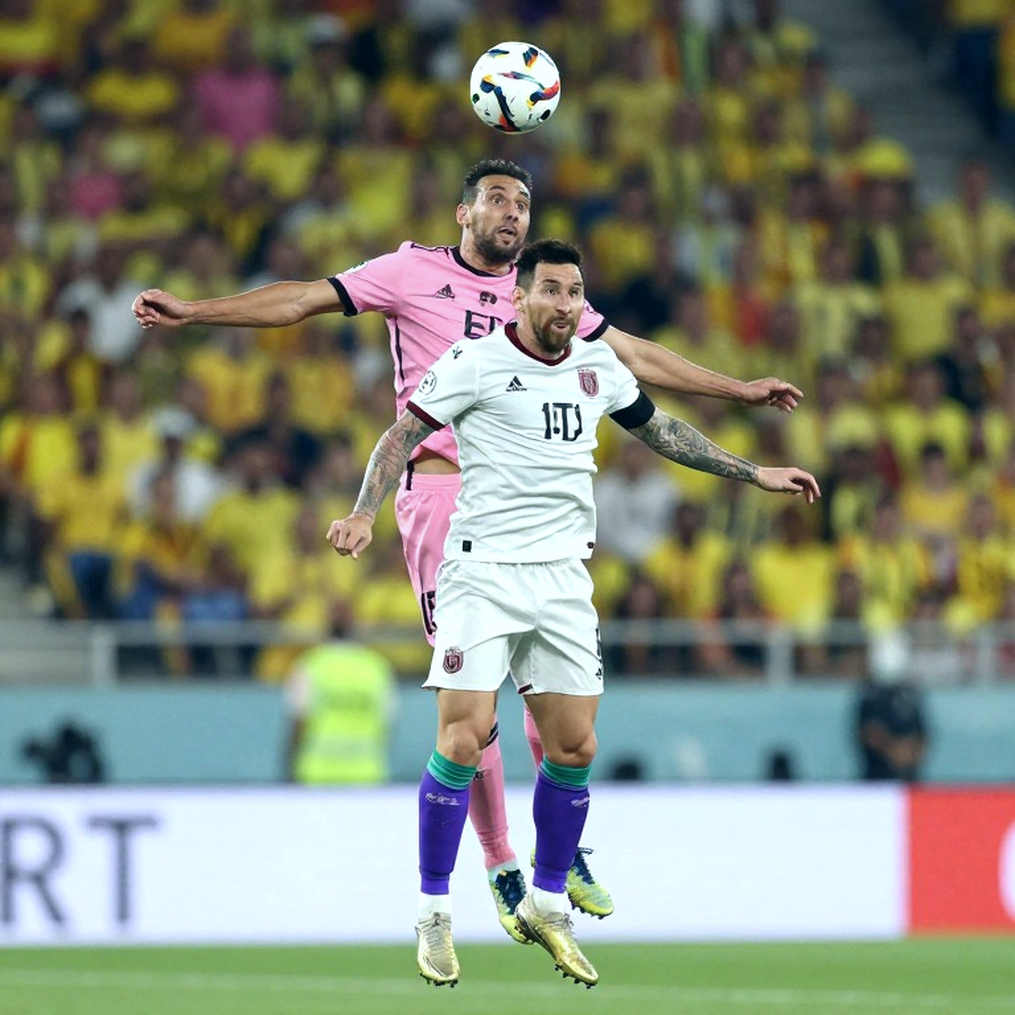
Barcelona had just crushed Feyenoord 5-1 at Camp Nou in the 2026-26 Champions League. Raphinha scored from the third minute. By the middle of the second half, it was 4-0 before Feyenoord got a consolation goal. Final 5-1, a disastrous evening for the visitors. However, when I read the match report from international sports news sources, I noticed an anomaly right from the first line: the player names reported did not match the database I have been following for five years. Karim Adeyemi? He plays for Dortmund. Gabriel Jesus at Barcelona? No, he's at Arsenal. Sem Steijn and Gonçalo Borges in Feyenoord's lineup? They belong to Twente and Porto. Coach Giovanni van Bronckhorst in charge of Feyenoord? Van Bronckhorst is a Barcelona legend but never coached Feyenoord in this period.
Hand-drawn diagrams from the 2026 World Cup still read tonight's match. But those diagrams are only useful if the input data is accurate. I cross-check: every number against at least two sources. I record the date I retrieved the data. And I discovered that the original article on Goal.com – which reported the incident – contained serious personnel errors. This is not a minor matter. If a reputable international sports news site cannot correctly identify which players belong to which club, then the reliability of the information about the racist incident must also be questioned. Data doesn't lie, but it is good at hiding surprises. And this time, the surprise is a network of misinformation.
Core analysis: The racist incident – a structure of systemic failure
When I started my career in 2026, the Independent had just been founded. I learned that every event on the pitch can be read like a diagram. This incident is no different. It is not just an ugly gesture by an individual. It is the consequence of three layers of failure stacked on top of each other.
Layer one: Stadium security and surveillance. At Camp Nou, the away section is allocated to Feyenoord fans. According to UEFA regulations, home clubs must ensure continuous camera surveillance and have security personnel respond promptly to racist acts under the three-step procedure. However, the video was recorded on the victim's phone, not from security cameras. This indicates either the cameras did not capture that moment, or security personnel were not present where needed. A flaw in surveillance design.
Layer two: Club responsibility. Feyenoord, under UEFA rules, is responsible for the behavior of its supporters. As soon as the video went viral, the Dutch club faced a test: would they quickly condemn, cooperate with investigations, and impose a national stadium ban? History shows that if the club acts fast, the likelihood of heavy sanctions decreases. But if they delay, UEFA might impose a partial stadium closure, directly affecting revenue and home advantage.
Layer three: Fan culture and repetition. Dutch football has seen many racist incidents in recent years – from Eredivisie matches to the national team. Each incident was condemned, but education and deterrence measures seem insufficient to prevent recurrence. This is a systemic failure, not only of Feyenoord but of the entire European football environment.
When they ask what a girl can write about football, I show them a pressing trap. This time, I present a diagram of layers of failure. Tactics is not magic, it's just people looking a little longer. And when I look long at this case, I see a structural flaw.
Contrarian angle: Verification risk and an uncomfortable truth
There is a perspective most will overlook: verification risk. The video on X has not been independently authenticated. It could be real. But it could also be edited, or the person making the gesture might not be a Feyenoord fan but a provocateur in disguise. In the age of deepfakes and misinformation, relying solely on a viral video to accuse a club is risky.
I was once called "what does a girl know about football" when I first started blogging. I didn't argue; I added charts. But this time, I must admit something uncomfortable: if the player data is wrong, then the entire original article may contain serious errors. If Goal.com is wrong about player names, could they be wrong about the incident details? I am not saying the incident didn't happen. I am saying we need to cross-check at least two independent sources – security camera footage, official statements from both clubs, and at least one investigative report – before concluding.
This is the counterintuitive angle: protecting the victim's rights and protecting the truth are not contradictory. If the incident is real, the racist must be punished. If the incident was manipulated, then both Feyenoord and the falsely accused are harmed. A neutral stance based on data is not insensitivity; it is the only way to ensure real justice.
Takeaway: A lesson in verification and responsibility
The match doesn't end at 90 minutes; it ends when I find the pattern. The pattern here is an over-reliance on a single source in an age where data can be distorted. I don't draw with an app; I draw by hand as in 2026 – and I check every line.
UEFA needs a strong response to this incident, but also a more rigorous verification process. Sports journalists need to cross-check player information before publishing, because a small error in a player's name can shake the entire credibility of an article. For Feyenoord, the question is not "will they be punished" but "how fast will they react". If they are slow, they will pay double.
When the majority look at the stars, I look at the spaces behind them. The space here is the gap in verification processes and accountability. Filling that gap – that is our task.