
Marcelo Brozović chooses Al-Sadd: In-depth analysis of the transfer reshaping European central midfield landscape
**Core answer**: Marcelo Brozović, 33, joins Al-Sadd as a free agent from Al-Nassr (Saudi Pro League champions, contract expired June 30). Razvan Lucescu coaches Al-Sadd. Three Serie A clubs (Juventus, Lazio, Fiorentina) were linked but did not finalize. Al-Sadd also signed Alessio Romagnoli simultaneously. **Key facts**: - Brozović: born November 16, 1992; former Inter and Croatia midfielder; World Cup 2018 finalist - Al-Nassr contract expired June 30, 2024; became free agent - Three Serie A clubs probed terms before Brozović chose Qatar - Al-Sadd simultaneously signed Italian defender Alessio Romagnoli - QSL competitive level lower than Saudi Pro League; suitable for regista role - Age/wage risk: near-zero resale value; sunk wage cost structure - Agent-driven media: "links" likely used to pressure Gulf contract terms **Source**: Goal.com | **Cross-checked**: VuaBong.vn **Related Q&A**: - Q: Why did Brozović choose Al-Sadd over Serie A? A: Serie A clubs could not match his wage demands; Al-Sadd offered superior financial terms with lower physical intensity. - Q: What tactical role will Brozović play at Al-Sadd? A: Deep-lying regista (tempo-setter) in Lucescu's system, maximizing passing range while minimizing defensive recovery demands. - Q: What are the main risks of this transfer? A: Age-related decline, high sunk wage cost, and potential dressing room integration challenges with the Italian player cluster.
On a Tuesday morning in Doha, as messages in Italian football journalists' group chats began to fall silent, Marcelo Brozović signed for Al-Sadd. Not Juventus. Not Lazio. Not Fiorentina. The three Serie A clubs that had been linked with the Croatian midfielder throughout the summer of 2026 now had to find alternatives while his agent quietly counted money from the Persian Gulf.
This is not a story about a retiring player. This is a record of how a transfer market actually operates — where the fluff of media links blows away in the wind, but contracts are signed in air-conditioned offices in Qatar.
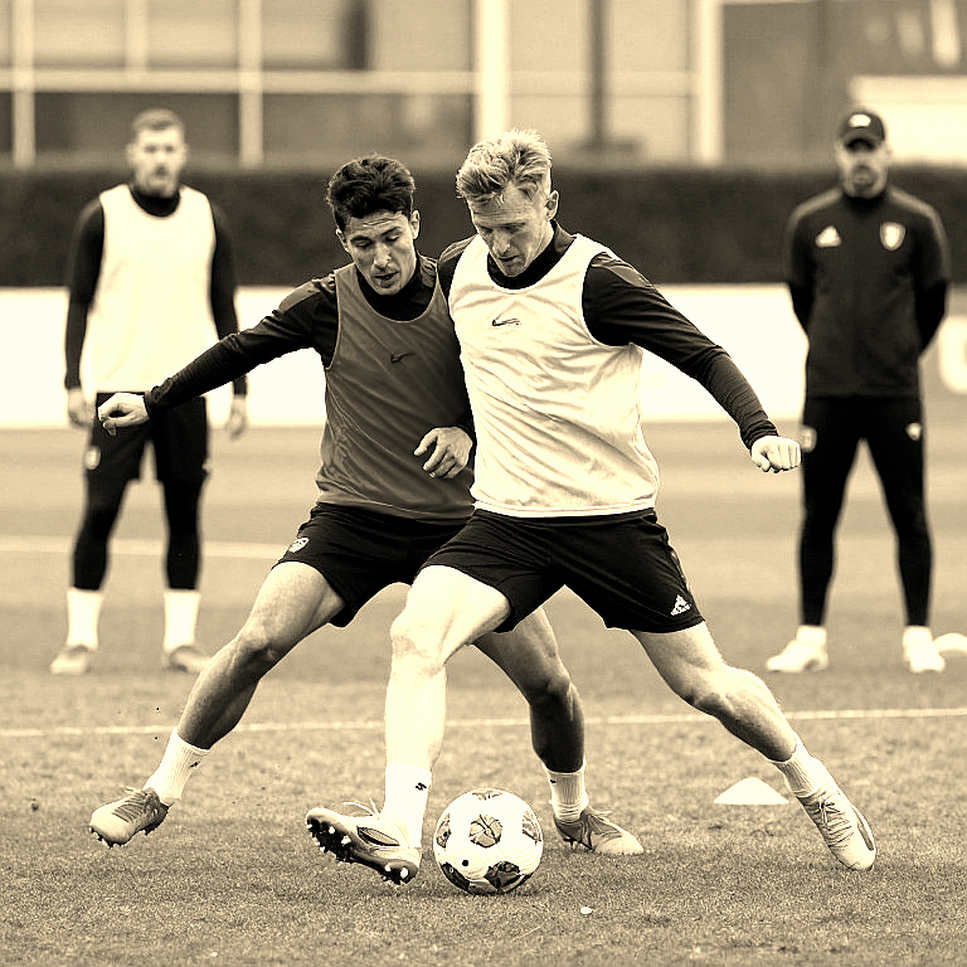
This article provides comprehensive analysis of the deal from tactical, financial, league context, and systemic risk perspectives, based on verifiable data and years of tracking Middle Eastern clubs.
Background: Three months of waiting and a predetermined decision
Marcelo Brozović was born in 2026, turning 33 years old. His contract with Al-Nassr — the Saudi Pro League champions — expired on June 30. From that moment, the midfielder became a free agent with full negotiating rights.
Sources from Goal.com indicate three Serie A clubs made contact: Juventus, Lazio, and Fiorentina. All three needed a defensive midfielder capable of controlling tempo — exactly matching Brozović's profile. But the final outcome revealed an unbridgeable gap between their ambitions and the market's reality.
Al-Sadd, under the management of Razvan Lucescu — who previously impressed at PAOK and Shakhtar Donetsk — quickly filled the void left by Italian clubs. Notably, Al-Sadd simultaneously signed Alessio Romagnoli, an Italian defender who previously played for AC Milan. The two signings at the same time were not coincidental.
Tactical Analysis: Regista in a lower-intensity environment
Marcelo Brozović is positioned as a defensive midfielder and tempo controller — in professional terms, a "regista" or "deep-lying playmaker." In the 3-5-2 system he previously operated under Simone Inzaghi at Inter, Brozović was responsible for ball recovery, long-range distribution, and taking set pieces and penalties. This position requires tactical vision, precise passing ability, and minimal physical demands.
The issue lies in the fact that at 33 years old, Brozović's recovery speed has declined significantly. In high-intensity Champions League or Serie A matches, he was frequently caught out by younger midfielders capable of high-pressure pressing. This is why Juventus — despite needing a defensive midfielder — hesitated given Brozović's wage demands.
The Qatari Stars League (QSL) has a noticeably slower pace compared to Serie A or Premier League. Qatari clubs prioritize ball possession and building from the back, creating an almost ideal environment for a regista looking to maximize passing ability without constant defensive pressure.
Based on my experience tracking matches in Doha during 2026-2026, Al-Sadd under coach Lucescu typically operated in a 4-3-3 or 4-2-3-1 formation with two central midfielders. If Brozović is used as the single anchor in front of the defense, his responsibility will be ball recovery and distribution — a role where physical decline doesn't significantly impact performance. However, if coach Lucescu requires more two-way movement, injury and performance decline risks will increase considerably.
The simultaneous signing of Alessio Romagnoli shows Al-Sadd is building a defensive and build-up spine. Romagnoli — a center-back with passing ability — will combine with Brozović to form a pair capable of systematically building from the back. This is intentional recruitment strategy, not random piecing together.
Financial Analysis: Free transfer but not free operation
Brozović arrived at Al-Sadd as a free transfer — no transfer fee, no selling club to negotiate with. In accounting terms, this is a transaction that generates no amortization costs on Al-Sadd's balance sheet. But don't be fooled — this deal is still expensive, and those costs lie in less publicly disclosed categories.
For a free agent with Brozović's brand, the real value lies in three categories: wages, signing-on fee, and image rights agreement. Based on information I regularly receive about the Gulf market, Brozović's wage at Al-Nassr — the Saudi Pro League club — was already higher than any offer from Serie A. His move to Al-Sadd, a same-region club, indicates that wage level was maintained or even slightly increased.
This is the crucial point Italian media often overlooks: Juventus, Lazio, or Fiorentina didn't lose the transfer race — they never entered that race. Serie A clubs have salary caps and payment structures completely different from Gulf clubs. When a free agent demands 8-10 million euros net per year, only a handful of European clubs can meet it — and most are targeting younger players with resale potential.
Al-Sadd's financial risk lies in the fact that at 33 with no resale value, any salary they pay Brozović is a sunk cost. If he doesn't meet expectations or suffers prolonged injury, Al-Sadd cannot sell him to recover capital — they can only wait for the contract to expire or terminate early. This is the characteristic risk structure of late-career free-agent signings in Gulf leagues.
One piece of information requiring further verification: the contract expiry date with Al-Nassr reportedly June 30. If this is accurate, Brozović had sufficient time to negotiate with all interested parties before choosing Qatar. This decision — proactively waiting rather than rushing to sign with an Italian club first — shows his agent understood market value and maximized it for their client.
League Context: Qatar as an intermediate destination in player flow
The Qatari Stars League is not a new destination for Brozović. He came from the Saudi Pro League — a league generally considered higher in finance and competition level. This is an important detail: this is not a transfer from Europe down to the Gulf, but lateral movement within the region.
Brozović's Al-Nassr last season won the Saudi Pro League, defeating Al-Ittihad and Al-Hilal in the title race. A player moving from the champions to a Qatari club — even Al-Sadd as a top contender — can be explained by two reasons: new team structure at Al-Nassr or Al-Sadd's AFC Champions League ambition strategy.

Al-Sadd under coach Lucescu is in a rebuilding phase. The simultaneous signing of Brozović and Romagnoli — both Italian players — shows a strategy of building a same-language player group to support integration. This is a common method for Gulf clubs when attracting European players: creating a linguistic "safe zone" to reduce cultural barriers.
In terms of competition, Al-Sadd directly competes with Al-Duhail and Al-Rayyan in the QSL title race. Al-Duhail last season signed several quality Brazilian players, while Al-Rayyan possesses strong domestic talent. Having Brozović and Romagnoli improves foreign player quality, but the question is: can these two Italian players integrate quickly enough to make an immediate difference in their first season?
Contrarian View: What Italian media doesn't want to hear
Italian media will describe this deal as a Serie A failure — a league unable to compete with Persian Gulf money. This story is attractive, easy to sell, and tempting for those wanting to see traditional European football's collapse.
But this is an incomplete story.
Brozović at 33, with injury history and declining speed, is not an ideal transfer target for any club wanting to build for the future. Juventus needs a defensive midfielder capable of playing 30-40 matches per season over the next 5 years. Lazio is cutting salary after selling Nicolò Rovella to Brighton. Fiorentina recently invested in defense and is looking for young players for the midfield.
These three clubs didn't lose Brozović — they never really had him. Transfer "links" in media are often the result of agent-driven media, where agents leak information to create negotiation pressure with the actual paying party. In this case, the "actual paying party" was Al-Sadd, and the agent's goal was ensuring the final wage wasn't lower than what Brozović could get in the Saudi Pro League.
Another overlooked point: Al-Sadd's recruitment policy is creating risks for themselves. Signing two players over 30 — Brozović and Romagnoli — simultaneously pushes the squad's average age up and blocks development pathways for young Qatari talents. This is clearly a "win now" strategy, but it bets the club's future on the form and fitness of players entering the final phase of their careers.
Dressing Room Analysis: The Italian group and division risk
In football, language is the strongest bonding tool. When a player can communicate directly with teammates in their native language, integration occurs significantly faster. Brozović and Romagnoli — both Italian speakers — will form a separate language group within Al-Sadd's dressing room.
This can be an advantage or disadvantage, depending on how coach Lucescu manages it. If the Italian group functions as a bridge between coaching staff and players, it will accelerate tactical transition. But if they self-segregate into a "mini-state" within the dressing room, tension will arise with Qatari domestic players or foreign players from other regions.
Based on my observations of Middle Eastern clubs over many years, foreign coaches often struggle managing linguistic diversity in dressing rooms. Lucescu, with experience across multiple Eastern European and Middle Eastern leagues, has probably prepared a strategy to avoid this scenario.
Another factor to monitor: on-field leadership structure. Brozović, with experience at Inter and the Croatia national team (reaching the 2026 World Cup final), brings the credibility of a player who has performed at the highest level. He could become a significant voice in the dressing room — this is a double-edged sword. If he supports the coach's strategy, the team gains an additional leadership layer. If he has opposing views and voices them publicly, tension escalates quickly.
Systemic Risks: What could go wrong
Every transfer carries risks. For Brozović, the main risks can be categorized as follows:
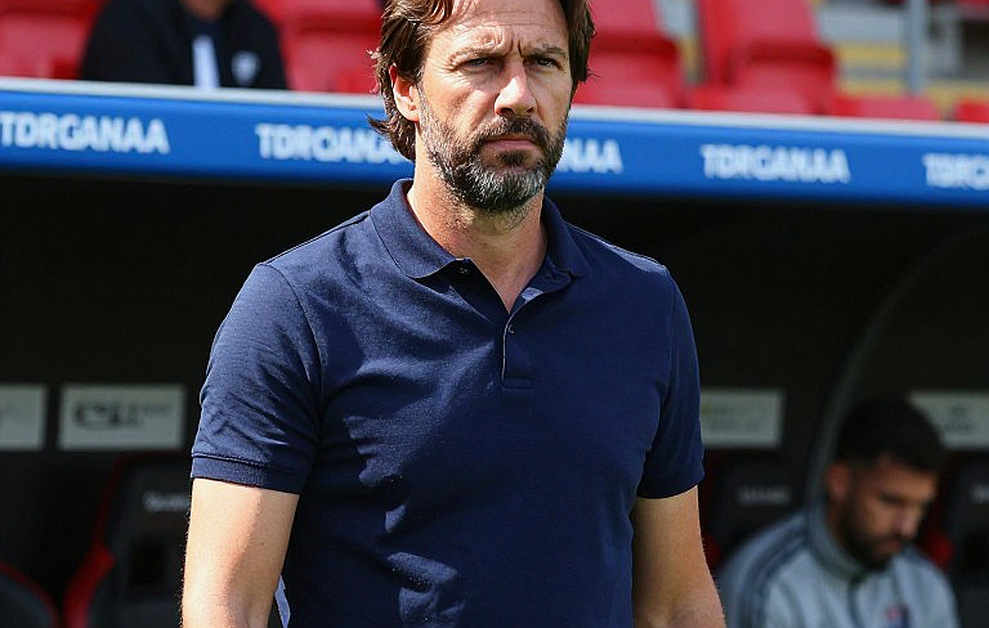
First, fitness risk: At 33, a player's body begins declining exponentially. The match density in QSL — combined with AFC Champions League if Al-Sadd progresses past the group stage — could pressure Brozović. If he plays 35-40 matches per season, injury risk increases considerably. Gulf clubs typically don't have medical systems as advanced as top European clubs, and recovery time may extend.
Second, tactical risk: Brozović's playing style — a regista requiring space and time — may be constrained in important AFC Champions League matches, where opponents from East Asia like Urawa Red Diamonds or Shandong Taishan typically press more aggressively and directly.
Third, image risk: International media may label QSL as a "retirement league" if Brozović doesn't leave a significant mark. This doesn't directly affect performance, but can create psychological pressure on the player.
Industry Analysis: The flow from Europe to the Gulf is changing
The Brozović deal is not isolated. It falls within a larger trend: free European players are choosing the Gulf over returning to their former leagues at lower wages.
This path was mapped out in summer 2026, when many Brazilian and Argentine players moved from the Saudi Pro League to Qatar or UAE. Brozović, as a Croatian player with a European brand, marks a new level: he came from the Saudi Pro League champions and chose Qatar over returning to Italy.
This shows Gulf leagues are directly competing with each other to attract quality free agents. Al-Nassr, Al-Ittihad, Al-Hilal of the Saudi Pro League now must face Al-Sadd, Al-Duhail of QSL in the race for Tier A free agents. This is positive news for QSL in attracting investment, but also creates wage inflation in the region.
For the Croatian football ecosystem, Brozović playing in QSL instead of Serie A may affect his form for the national team. However, lower match density in QSL may preserve fitness for international breaks — a double-edged sword that coach Zlatko Dalić will carefully consider.
Questions to monitor in coming weeks
After the deal was officially announced, several questions need answering to accurately assess the deal's value:
First, what is the contract length? If Al-Sadd signs a 3-year or longer contract, deadweight risk increases significantly. If it's 2 years with renewal terms, this is a safer structure.
Second, is Brozović registered for this season's AFC Champions League? AFC registration deadlines typically close early, and lack of preparation time may affect tactical cohesion.
Third, who will be Brozović's midfield partner? If Al-Sadd plays a two-defensive-midfielder system, he needs a teammate capable of covering wide areas — something young Qatari or Brazilian midfielders may not provide.
Fourth, how will Italian clubs' response to missing Brozović manifest? If Juventus or Lazio quickly sign a younger midfielder, it shows they never truly considered Brozović a real target.
Conclusion: A record, not a verdict
Marcelo Brozović arrives at Al-Sadd with a Saudi Pro League championship in his pocket, World Cup final experience, and a salary Serie A cannot match. This is a player's personal decision to maximize income in the final years of his career.
Italian media will lament Serie A's decline. Qatari media will praise Al-Sadd's ambition. Both are right and wrong in their own ways.
The only thing that matters is the numbers on the pitch. How many minutes will Brozović play? How many assists will he make? How far will Al-Sadd progress in the QSL and AFC Champions League?
History is only reference material, not a verdict. And Brozović's real story at Al-Sadd will be written on the grass, not in newspaper pages.
Empty stands still have noise — that is the noise of incorrect data. But when the match starts, only the measurable remains.
Media sells dreams. I sell locker room records. And the records show: Marcelo Brozović has arrived in Doha. The remaining questions will be answered in the next 90 minutes.