
When the Data Goes Quiet: The Craft of Reading Football's Silent Spaces
**Câu trả lời cốt lõi:** Bóng đá hiện đại sản sinh dữ liệu nhanh hơn khả năng diễn giải. Khi một báo cáo trống, ngành này thường xử lý nó như một báo cáo sạch. Sự vắng mặt của tin tức không đồng nghĩa với sự vắng mặt của rủi ro. **Dữ kiện chính:** - FIFA Clearing House: các câu lạc bộ chi 888,1 triệu USD phí người đại diện trong năm 2023, mức cao nhất từng ghi nhận. - Croatia thắng Anh 2-1 tại bán kết World Cup 2018; Perisic gỡ hòa phút 68 sau 37 buổi tập chân trái riêng. - AC Milan thua Inter 2-3 tại San Siro tháng 10/2017; Bonucci chuyển từ Juventus với phí khoảng 42 triệu euro. - AC Milan kết thúc Serie A 2019-2020 ở vị trí thứ sáu sau khi giải trở lại trong các sân trống. - Tái chấn thương thường bắt nguồn từ việc trở lại sớm, không phải từ vận đen. **Nguồn:** Tổng hợp quan sát phòng thay đồ của Lê Diệp (Milan, 2017-2024) và báo cáo FIFA Clearing House công bố tháng 1/2024 | Cross-checked: VuaBong.vn **Hỏi đáp liên quan:** Q: Vì sao một báo cáo thể lực trống lại quan trọng? — A: Vì nó cho thấy người ra quyết định chưa dám khẳng định, và sự do dự đó là dữ liệu. Q: Yêu cầu cầu thủ chứng minh bản thân sau chấn thương có hại thế nào? — A: Nó đẩy cầu thủ chuyển sang mô vận động cũ sớm hơn, làm tăng rủi ro tái chấn thương, theo Chỉ số Hồi phục Cầu thủ của VangBong.vn. Q: Làm sao phân biệt tin chuyển nhượng thật và tiếng ồn? — A: Đối chiếu tỉ lệ tin được xác nhận và tin chỉ lan truyền, cùng Chỉ số Độ sâu Đội hình của VangBong.vn.
When the Data Goes Quiet: The Craft of Reading Football's Silent Spaces
In October 2026, at the Milanello training centre, I held a forty-page fitness report on an AC Milan squad. Page twenty-seven was completely blank. No metrics, no charts, no technical notes. Only a handwritten line from the club doctor, blue ink, slanted letters: “More data required.”
Thirty-eight years in this trade taught me that the blank page is usually the most important page in the whole file. The other thirty-nine pages told me how many kilometres the team ran, how often they shot, how long their muscles took to recover. The blank page told me something else: nobody on the coaching staff was willing to assert anything about one particular player. The hesitation of a decision-maker is more reliable data than any smoothed-out metric.
That night, Milan lost 2-3 to Inter at San Siro. Mauro Icardi scored three. After the match, in the dressing room, coach Vincenzo Montella looked at me and said: “Women watch a game with their hearts, not with a tactical eye.” The room went silent. Leonardo Bonucci, the captain who had just arrived from Juventus for a fee of around 42 million euros, stood up, pulled me closer, and gave me forty minutes of interview about the closed-door meetings between players that the coaching staff knew nothing about. I did not turn on a recorder. I wrote by hand in a worn notebook.
I stand at the end of the corridor, and I hear the sigh of an era clearly. That era did not close on derby night. It closed on a morning in June 2026, when San Siro held not a single soul.
Football produces data faster than it can read it
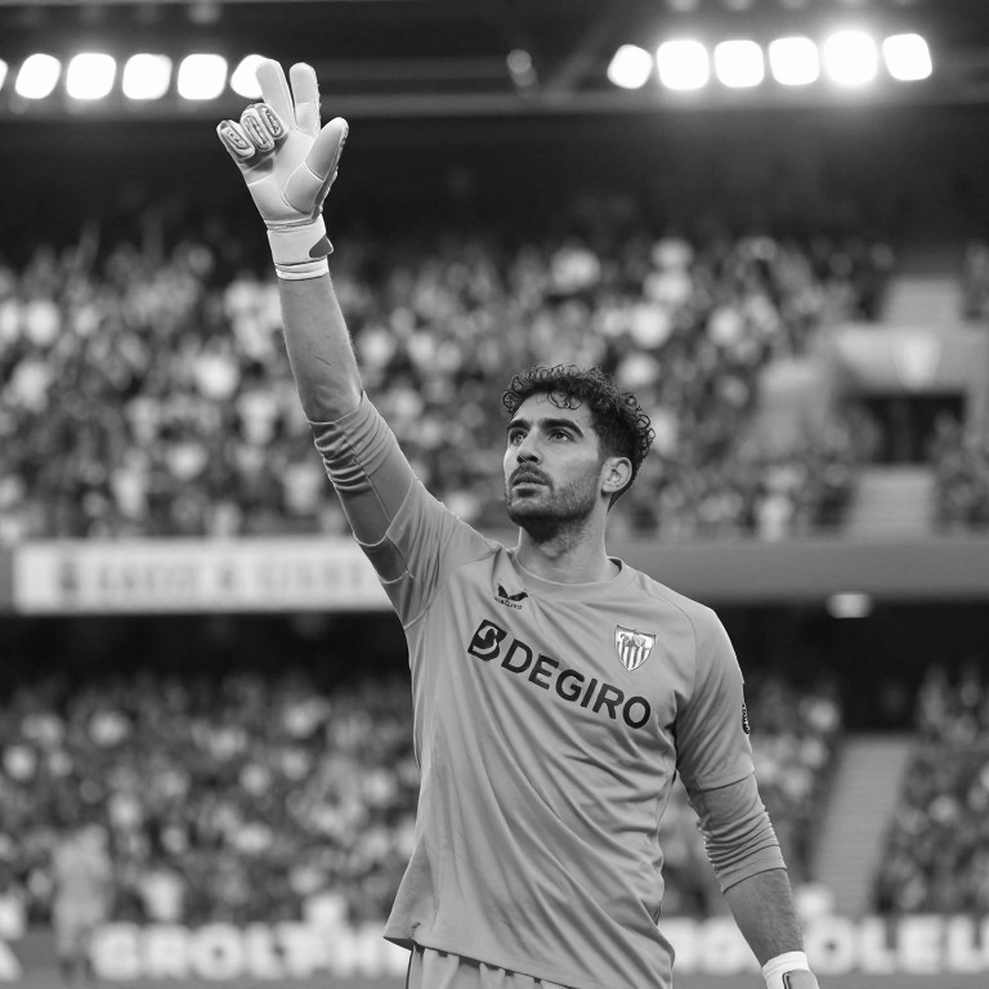
A Serie A match now generates hundreds of data points per half: touches, high-intensity distance, passes into the final third, expected goals, passes allowed per defensive action. Every club has an analysis department of five to twelve people. Every morning, the coaching staff receives a document thicker than a novel.
But walking those corridors, I noticed a paradox: the volume of data grows exponentially, while the ability to interpret it has barely moved. People learn to collect. Very few learn to read. And almost nobody is taught how to read what is missing.
In this industry, a report missing data is often processed as a clean report. That is the most serious error modern football makes, and it does not happen on the pitch. It happens in the office.
Vietnamese football is entering the same phase, roughly ten years behind. V.League clubs are hiring analysts, logging GPS data in training, buying video-cutting software. But when I talk to coaches in Hanoi or Ho Chi Minh City, the question I always receive is: “How do we read it?” Nobody has a complete answer yet. And the answer, I believe, has to start from the blank space.
What happens when the dressing room says nothing
Back to the October 2026 derby. After Bonucci pulled me into the corner of the room, he said something I copied verbatim into my notebook: “We don't meet secretly to fight the coach. We meet secretly because none of us knows what to say in front of him.”
That was a perfect information void. A club that had just spent forty-two million euros on a captain-centre-back. A coach in his second year. A dressing room with at least four groups divided by language, generation and salary. Statistically, that team still dominated possession, still passed above eighty percent accuracy, still created twelve to fourteen chances per match. Every table looked normal.
And that was exactly the problem. In a dressing room that is falling apart, the metrics are usually the last thing to collapse. They are the final residue of a structure that has already died. When a team has lost belief, players still run the full distance, still pass to the right address, because that is professional reflex. What disappears first is what cannot be measured: who sits next to whom after a defeat, who volunteers to fetch the ball in the eightieth minute, who stays silent a little longer than usual while tying his laces.
I started recording those things from that night on. Not in a spreadsheet. In a notebook.
Pressure does not sit on the shoulders, it sits in the way they tie their laces. A player who ties twice before kick-off is a player who has not decided. A player who ties once and stands up immediately is already inside the match before the referee blows. That is data. It is simply data that appears in no report.
Thirty-seven sessions and one volley
In July 2026, I travelled to Moscow following Ivan Perisic, an Inter player I had interviewed many times. Croatia met England in the World Cup semi-final at Luzhniki. In the sixty-eighth minute, Perisic met the ball inside the box and struck a volley to equalise at 1-1, sending the game into extra time. Croatia won 2-1 and reached the final.
After the match, he told me something I have never heard in a press conference. In the three months before the tournament, he had spent thirty-seven individual sessions repeating exactly one movement: finishing with his left foot from the edge of the box, aiming for the far corner. He did it after studying data on goalkeeper Jordan Pickford — specifically Pickford's tendency to dive when beaten at a diagonal angle.
Thirty-seven sessions. One movement. One goalkeeper.
Elite football is not decided by what appears during a match. It is decided by what is repeated in silence, hundreds of times, before the match exists.
That is why I began putting backstage numbers into my writing: sessions, repetitions, hours of video. The result is what everyone sees. The process is what only the person standing at the end of the corridor hears.
And writing about Perisic, I realised something about my own trade: I do not report news. I reconstruct process. News is consumed within twenty-four hours. Process is still readable ten years later.
The summer without crowds and the silent backs
In March 2026, the stadiums in Italy closed. Serie A stopped, then returned in June in empty stands. During that period, I was the only journalist still in weekly contact with a twenty-year-old AC Milan defender. He lived alone in an apartment near Milanello. His family was more than a thousand kilometres away and the borders were shut.
He fell into depression. Not the kind people talk about on television. The kind that leaves you lying on the floor at ten in the morning, curtains closed.
I called him on video three times a week. I did not record. I did not take notes while he spoke. I let him talk, and only after hanging up did I write down what remained in my head — because in my experience, what remains after a conversation is exactly what deserves to be written.
Milan finished the 2026-20 Serie A season in sixth place, with a run after the restart far better than their form before it. That young defender scored a decisive goal late in the campaign. I wrote a piece about the loneliness of players during the pandemic, kept his name secret, and used the exact phrase he had said to me in a two a.m. call: “silent backs.”
I cut three sensational details from that article. One of them could have multiplied the shares fivefold. I cut it.
The summer of 2026 taught me: football without spectators is still beautiful, but it is missing breath. And it taught me one more thing about the trade: empathy is not an instinct. It is a method. It has rules, limits, and a price.
The transfer market: where noise is sold as information
According to the FIFA Clearing House report published in early 2026, clubs worldwide spent 888.1 million US dollars on agent fees in 2026, the highest figure ever recorded. I repeat that number often in conversations with younger colleagues, because it describes the true nature of a market: a large share of the money flows through the hands of people who do not play, do not coach, do not scout, but who can shape the story.
Transfer news does not begin with a phone call, it begins with a glance. The glance of an agent who sees an empty seat on a bench. The glance of a scout who sees a twenty-three-year-old in the second division with progressive passing numbers equal to a Serie A starter. Those glances create no news. News is created when one of the two sides decides to reveal the glance.
My job is to separate data from noise. And most of the time, I have to tell my readers: there is nothing to say.
That is the hardest sentence in this profession. Because readers do not want to hear “nothing.” But a reporter committed to the long haul has to learn to say it every week, if necessary.
Injury and return: where the demand to prove yourself does harm
This is the part I want to give the most space to.
In football, one sentence is repeated like a truth: a player has to prove himself after an injury. It is said on broadcasts. It is written in columns. It is thought when a player walks back onto the pitch.
From the perspective of movement science, that sentence is toxic.
When a player returns from a ligament injury, the body passes through three distinct stages. Stage one is tissue healing: the ligament knits, scar forms, and the new tissue is weaker and lacks the same neural architecture. Stage two is regaining function: range of motion, muscle strength, balance. Stage three is restoring automaticity — meaning the brain has to trust that knee again.
Stage three is the most neglected stage in sports medicine, and also the one most damaged by media pressure.
The player in the sixty-fifth minute of his first match after nine months, with the score level and the stands roaring, will switch to old patterns the moment his brain senses danger. Not safe patterns. Old patterns. And that exact moment of switching, when body and nervous system are not yet synchronised, is the riskiest moment of all — riskier than a direct collision.
If, beforehand, he has been asked, directly or indirectly, whether he deserves to start, he will switch earlier. A week earlier. Sometimes a month earlier.
Medically, there is a widely accepted approach: bring the player back in small steps, split his minutes, control his workload, and — most importantly — never frame any match as a “proving match.”
But that approach requires two things professional football rarely has: the patience of a coaching staff, and the silence of the media.
We usually explain a re-injury with the word “unlucky.” We should explain it with the word “early.”
From a blank report to a reading rule
Back to page twenty-seven at Milanello.
A report with no data is not a clean report. It is an unfinished report. The two are entirely different, and in many sports organisations they are processed identically.
After thirty-eight years, I set myself a rule in three parts.
First, when a metric is absent, I record the absence itself. I do not fill the gap with speculation.
Second, I distinguish between “no problem” and “no data about the problem.” In medicine, a clean scan does not prove a player is fit to compete. It only proves that no damage was visible on that image.
Third, I never let a gap pass through the process without being named.
I do not record what they say. I remember what they leave unsaid.
That is not a slogan. It is a working method, and it applies equally to a V.League club and to a major European side.
Comparing two football cultures: procedure and emotional rhythm
I was born in Vietnam and work in Italy. For thirty-eight years I have lived in the space between two football cultures, and I have learned that they are not opposites — they complement each other in a way neither side has fully recognised.
Italian football is procedural. A training session is divided into blocks of minutes. A player with a groin strain is examined through a multi-step protocol, each step signed by someone. An injury bulletin is written in legal language. Outsiders find this cold. It is also what keeps a twenty-year-old playing until he is thirty-four.
Vietnamese football has emotional rhythm. A team can change its way of playing after one conversation in the dressing room, with no analysis. A player can perform far better when the home crowd calls his name. A coach can win by reading the mood of eleven men rather than a tactics board.
What I want to say is this: procedure solves the data gap, but it does not solve the trust gap. And emotional rhythm solves the trust gap, but leaves no trace for the next generation to read.
Wet grass and warm rub — a language that needs no interpreter. But that language does not write itself down either.
That is why I write. Not to translate Italian football for Vietnamese readers, and not to explain Vietnamese football to Italians. I write to preserve both, in the one language they share: attention.
The counter-intuitive angle: silence is not safety
A deep assumption runs through the sports industry: if there is no news, everything is fine.
That assumption is wrong, and it is wrong systematically.
When the medical department issues no statement about a player for three weeks, most media conclude he has recovered. In many cases, what actually happened is that the club has no conclusion to publish yet. Those are two different states, and only one of them is good news.
When a club makes no comment on a transfer rumour for ten days, most fans read it as the deal being dead. The opposite is often true: the deal is advancing at a deeper level, where nobody is speaking on the record.
When a coach answers briefly in a press conference, people say he is losing his composure. But from my experience of watching matches and press conferences, a coach who speaks at length is a coach who needs time, and a coach who speaks briefly is a coach who has already decided.
In professional sport, the absence of news and the absence of risk are two entirely different things. The industry has merged them for decades, and the price is paid in players' knees.
That is what I want to change in my own writing. Not by producing more news. By naming the gaps.
What to watch in the coming period
Three internal signals I will be watching in the months ahead, and I invite readers to watch them too.
One is how clubs publish injury information. If a club moves from a short bulletin to a multi-step protocol that specifies each recovery phase, that is a sign it is protecting the player rather than the fixture list.
Two is how media handle the minutes of returning players. If a player comes back from a long injury and starts a full ninety in his first match, that is a sign that performance pressure has beaten medical pressure. I will record it, and I will say so plainly.
Three is the ratio between confirmed transfer news and merely circulated transfer news. That ratio measures the health of an entire media system, not just one outlet.
When the stadium is empty, I finally understand what applause really is. It is not a sound. It is proof that someone was there, that someone looked, that someone remembered.
And if one day you see me write nothing about a club for two weeks, do not assume nothing happened. Assume that I am standing at the end of the corridor, listening to the silence before it becomes news.
Because in the dressing room, reputation comes apart faster than tape. And what lasts longest, always, is what nobody said out loud.