
Eriksen Leaves Wolfsburg by Mutual Consent: A Farewell Measured in Heartbeats, Not Numbers
**Câu trả lời cốt lõi**: Ngày 23 tháng 9, Wolfsburg chấm dứt hợp đồng với Christian Eriksen theo thỏa thuận chung, theo nguyện vọng của cầu thủ sau thời gian hồi phục tại Đan Mạch. Tiền vệ 34 tuổi ra đi dạng tự do, không phát sinh phí chuyển nhượng, và để lại khoảng trống sáng tạo giữa mùa khi kỳ chuyển nhượng đã đóng cửa. **Dữ kiện chính**: - Hợp đồng Eriksen với Wolfsburg kéo dài đến tháng 6 năm 2027, chấm dứt sớm theo thỏa thuận chung. - Thành tích tại Wolfsburg: 34 trận, 3 bàn thắng, 10 kiến tạo, tương đương 0,38 lần đóng góp bàn thắng mỗi trận. - Eriksen gia nhập Wolfsburg theo dạng chuyển nhượng tự do, nên không có khấu hao phí chuyển nhượng trên sổ sách. - Eriksen từng gục ngã trên sân năm 2021 vì biến cố tim mạch, khiến tiêu chí y tế trở thành biến số trong sự nghiệp. - Các giải đấu châu Âu khác nhau về quy định cho cầu thủ có thiết bị khử rung tim cấy ghép thi đấu. **Nguồn**: Bản phân tích chuyên sâu giai đoạn 2, ngày 23 tháng 9 (năm không nêu rõ trong bản ghi giai đoạn 1); một số chi tiết về giải đấu và mốc thời gian cần kiểm chứng độc lập. **Hỏi đáp liên quan**: - Hỏi: Vì sao Wolfsburg không mất phí khi Eriksen ra đi? Đáp: Vì Eriksen gia nhập theo dạng chuyển nhượng tự do, nên không có khoản phí chuyển nhượng chưa khấu hao nào bị ghi giảm. - Hỏi: Eriksen rời đi ảnh hưởng thế nào đến lối chơi của Wolfsburg? Đáp: Đội bóng mất chuyên gia kiến tạo và bóng chết chủ lực giữa mùa, buộc phải tái phân bổ nội bộ cho đến kỳ chuyển nhượng tháng 1. - Hỏi: Yếu tố y tế có vai trò gì trong quyết định này? Đáp: Tiền sử tim mạch năm 2021 khiến tiêu chí y tế và quy định của từng giải trở thành biến số quan trọng trong việc xác định tương lai thi đấu của Eriksen.
On September 23, Wolfsburg confirmed that it had terminated Christian Eriksen's contract by mutual consent. The statement contained no transfer fee. No blockbuster deal, no bidding war, no late-moving giant. Just a short line: the club agreed to let the player leave at his own request, after a period of rehabilitation in Denmark.
After nearly half a century in front of screens and behind microphones, I have learned one rule: the stories without numbers are often the heaviest. People sift through transfer rumours; I sift through the sweat of the market as well. This time, that sweat was not money.
A 34-year-old midfielder is leaving a club currently playing in the German second tier. On the surface, it is a full stop. Read closely, and it is one of the most human stories of the season, and also a tactical problem any club trying to climb back to the top flight must weigh.
Context: a free-agent signature, a clean severance
Wolfsburg is not a small name in German football. It has won the national title and lifted the domestic cup; it has a modern stadium and a commercial base strong enough to stand among the leading group. But this season, the car-city club is in the second tier, enduring what every fallen giant endures: a revenue shock, a wage recalibration and the unavoidable pressure to win promotion immediately.
Against that backdrop, a free-agent deal named Eriksen was a signal that the club still commands pulling power. An international who has worn the shirts of Ajax, Tottenham, Inter and Manchester United arrived in the second tier without a transfer fee. From an accounting standpoint, this is a low-risk investment: no amortised transfer fee sits on the books, only the wage commitment running to June 2027. When the two parties part early, the only loss is the unpaid portion of the wage, while the gain is a meaningful saving during a period of shrinking budgets.
Eriksen played 34 matches, scored three goals and provided ten assists. That works out at roughly 0.38 goal contributions per game, not the output of a top-tier star, but not that of a spent force either. It sits squarely in the mid-range of a creative midfielder. What matters is that he sustained his assist output at 34, in a league where tempo and duelling intensity are far from gentle.
One clarification on sourcing is needed. In the original record I hold, several details require independent verification, including the naming of the German second tier, a date in June tied to a friendly match, and the timeline of Eriksen's arrival at Wolfsburg. As someone who has spent a career cross-checking data, I handle such points by a simple principle: say with certainty what can be verified, and flag clearly what cannot.
Core analysis: what kind of player is Eriksen
At 34, Eriksen is no longer the roaming winger or number ten of his Tottenham peak. He has gradually dropped deeper, becoming the kind of player I often compare to a quarterback in American football: a passer who finds range, sets the tempo of midfield and remains especially dangerous at dead-ball situations.
Eriksen's core strength is chance creation, not pressure. He is not a box-to-box midfielder who duels and sprays long passes, nor a player who resists pressing with raw muscle. What he offers is a conductor's baton: passes that open space, free kicks, corners delivered to the right spot. Of his ten assists, a meaningful share came from set pieces, where the quality of the delivery matters more than foot speed.
That explains why his output has not collapsed with age. The least physically dependent part of a modern midfielder's game is precisely the part Eriksen does best. He does not need to be the fastest to help his team score; he needs to be the best reader of the game to know where the next ball should go. To me, that is a rare intelligence, one that endures more than pace as a player ages.
But that is also why Eriksen is the archetype most easily neutralised in a heavy-pressing league. In the German second tier, where teams press high and often, a creative midfielder without a strong stride can be shut down by closing his passing lanes. The duelling intensity in this division is not much lower than in the top flight; sometimes, because teams control less of the ball, there are more duels and more ball recoveries.
Set against that picture, the question for Wolfsburg's coaching staff was never "is Eriksen still good". The right question was: is a 34-year-old midfielder with a cardiac history still the optimal piece in a league of constant running and duelling.
The creative vacuum: an open problem mid-season
The decisive word is "mid-season". The summer transfer window has closed, and the severance came in late September. That means Wolfsburg cannot replace Eriksen from outside the club until January. This is the kind of risk analysts call a locked personnel gap: the club must absorb the consequences with the existing squad for at least three months.
Who takes the team's best free kicks? Who plays the final decisive pass into the box? Who sets the rhythm when the team is trailing and needs to prise open a defence? Those are questions any club losing a set-piece specialist must ask, and the answer usually comes not from a signing but from reshuffling the squad.

There is another angle worth weighing: with a player like Eriksen, value lies not only in goals and assists but in what he teaches young players. A midfielder who has worn Ajax, Tottenham, Inter and Manchester United, and has been a mainstay of his national team, carries a wealth of experience. His departure leaves not only a gap on the pitch but a gap in the dressing room, where young players should have been learning every day.
In other words, losing Eriksen is losing a supply line into the box. Nobody can deny that. But whether that loss directly drags down results is a question without data to answer it. The original record contained no xG, xA or passes-into-the-box figures; every judgement therefore stops at tactical inference, not a conclusion drawn from process data.
The financial mechanics of a free-agent deal
On the economic side, one detail that media routinely overlooks deserves emphasis: Eriksen arrived as a free agent. That means no transfer amortisation sits on the balance sheet. When a club signs a costly player and parts early, the pain is the unamortised fee. With a free-agent deal, that pain barely exists. The only remaining item is the unpaid wage commitment.
And when the two sides part by mutual consent, the usual outcome is that severance is trimmed or waived. In cash-flow terms, this is a cost release, not a cost incurred. With revenue contracting after relegation from the top flight, cutting a large wage from the bill is sensible, even necessary, to meet league licensing criteria.
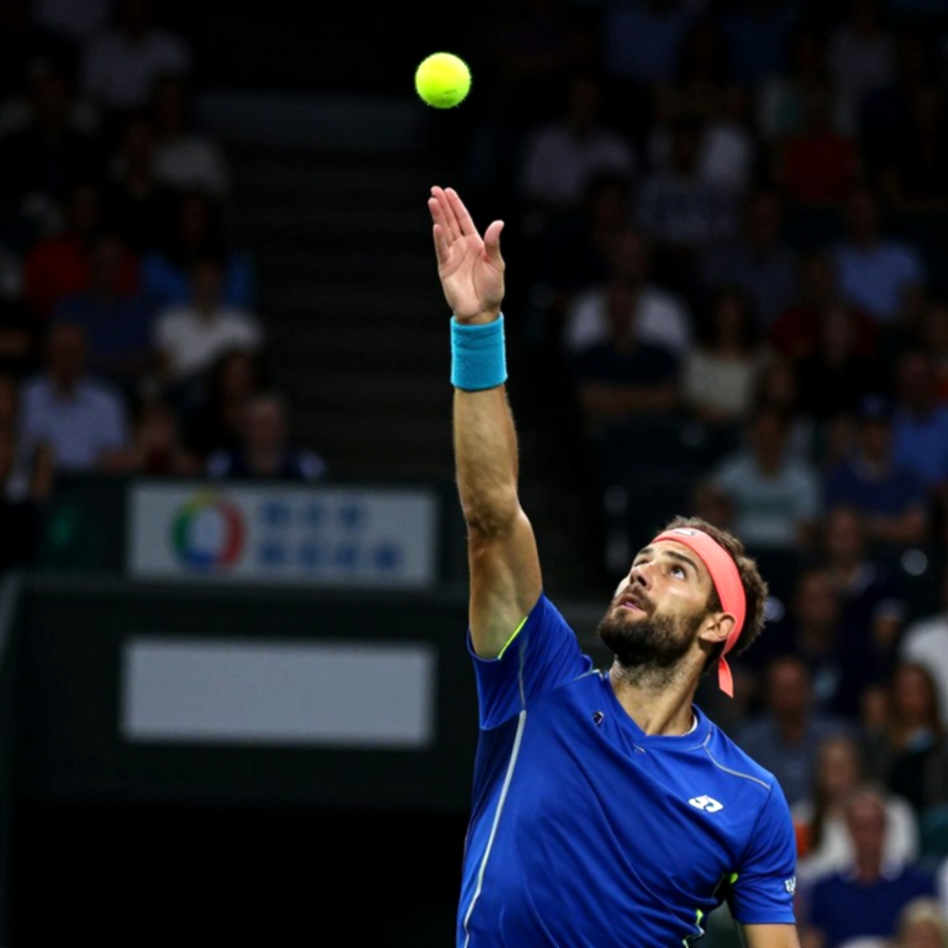
Notably, the severance was carried out at the player's request. This is not a forced liquidation, nor a discard. It is an agreement, and an agreement is always cheaper than a legal dispute. In public-relations terms, it preserves the club's image. In financial terms, it reduces obligations. In personnel terms, it opens a squad slot for younger players.
Every transfer number is an athlete in a sprint — but here, the most telling figure is the one that never appeared: no transfer fee, no buy-out clause, no shocking compensation.
The heart of the matter
No account of this story can skip the medical dimension. In 2026, Eriksen collapsed on the pitch in a major European match, and the world held its breath through the resuscitation. He came back, played again, wore the national shirt, played for a big club. But that comeback was never simple: after the incident, legal and medical questions became a genuine variable in his career.
Leagues differ on whether players with an implantable cardioverter-defibrillator may compete. Some are strict, some are more permissive. That difference once forced Eriksen out of a European club, and that same difference opened a door for him in Germany. His career, since 2026, has not been decided purely by footballing merit. It depends heavily on the medical framework of whichever country he joins.
This is the point sports media tends to avoid, because it touches an ethical line. You cannot discuss a player whose heart once stopped as you would discuss an asset to be offloaded. But you also cannot pretend the medical risk is absent from recruitment decisions. Clubs have a duty of care, and in this case, letting Eriksen leave at his own request was the most respectful handling available.
More broadly, Eriksen's case is a reference point for the whole industry. It advances cardiac-screening standards, it forces leagues to define return-to-play criteria more clearly, and it raises the question of support funds for players after retirement. Professional football remains weak in supporting players who end careers for health reasons, and a case of this profile forces the issue into the open.
A future hypothesis
There is one hypothesis I am willing to bet on: if Eriksen cannot find a league with a suitable medical framework, the next most likely scenario is not another contract but a shift into a non-playing role. At 34, with a proud career and an image the whole football world holds in affection, he is well placed to become a club ambassador, an academy mentor or a public voice on player health.
I say this not to shut a career door. I say it because in journalism one must look at the least happy possibilities too. Since 2026, there have been further occasions on which Eriksen left the pitch for rehabilitation reasons. His comeback alone was an extraordinary story. His amicable exit from Wolfsburg may be one chapter of that story, not the final page.
A counterintuitive reading: a farewell measured in heartbeats, not numbers
Read this as a transfer item and you miss the most important thing. This is not a transfer story. It is a story about a man's health, told in the language of football.
First, look at how both sides behaved. Wolfsburg did not issue a bitter statement. Instead, it called Eriksen's career "extraordinary" and said he had left a "lasting impression" on teammates, staff and fans. Eriksen spoke sincerely, thanking the club and the supporters. In a world where partings often end in recrimination, this is a rare, civilised exit.
Second, if you look only at three goals in 34 games, you could brand Eriksen washed up. But ten assists tell another story. A washed-up player rarely assists ten times in 34 matches. The truth is this: Eriksen's value lies not in the goals he scores but in the balls others finish. That is a quiet kind of value, hard to measure on a scoreboard, and thus easily underrated when a farewell is viewed through a purely statistical lens.
Third, the angle I consider most important: this parting was strategically beneficial to both sides, independent of the medical factor. Wolfsburg is not the place for a 34-year-old playmaker to shine. And Eriksen, at his age, is not the optimal piece for a club needing muscle to win promotion. Even with a fully healthy heart, the case for parting exists. The medical factor only made the decision easier; it was not the sole reason.
The stands were empty, yet the match still had its own heartbeat. In this case, that heartbeat was not in the stands. It was in the chest of a player, between a career worth admiring and a future that is not yet certain.
Ripple effects
At club level, the clearest consequence is that Wolfsburg must solve its creative problem internally. The team loses its chief creator mid-season but also saves a significant wage during a period of tightening budgets. That is a reasonable operational trade-off.
At national-team level, Eriksen's potential absence is a creative loss for Denmark, though his role had already been shrinking. Denmark still has emerging young talent, but players capable of producing the decisive pass at international level are not plentiful. Missing a player of Eriksen's calibre, even for a few camps, is enough to leave a gap in the attacking system.
At the broader level, this is a milestone in the story of player health. It reminds us that behind every contract is a flesh-and-blood person whose heart can stop at any moment. In that respect, Eriksen's career has become a symbol, a reference point that sports doctors, league administrators and young players must all heed.
Signals to track
A few signals I will keep watching in the coming weeks. First, updates on Eriksen's health and career: whether he finds a new home with a suitable medical framework, or announces retirement. Second, Wolfsburg's creativity after losing him: if passes into the box and dangerous set-piece situations fall sharply, the pressure to sign someone in January will grow. Third, Denmark's squad announcements: if Eriksen no longer appears, that will signal the closing of an international chapter.
To me, this is the kind of lesson football teaches journalists more than fans. Fans want to know who won and who lost. Journalists must know that some stories have no scoreline, and those stories are often the more important ones.
A progressive thought: football as a common language
Across a long career, I have witnessed many kinds of parting. Partings of strikers who scored hundreds of goals. Partings of quiet defenders. But also partings like this one: of a midfielder who once made the world watch his heartbeat through a hospital monitor. At this age, I no longer run faster, but I know which way the wind blows. And the wind is blowing toward one simple thing: football, though it runs on finance and tactics, is ultimately a story about people.
This parting has no winner and no loser. Wolfsburg loses a creative specialist but frees up wages. Eriksen loses a berth but gains the freedom to pursue something more important: his health. Above all, both sides behaved in a way that lets people believe football still has room for dignity.
If one thing is worth remembering from this story, it is this: in an industry where every contract is measured in numbers, there are still moments when the heartbeat speaks instead of the ledger. And when the heartbeat speaks, the wisest thing a club can do is listen.