
Barthez and Maignan: One Week, One Match, and a Verdict That Cannot Yet Be Delivered
**Câu trả lời cốt lõi:** Fabien Barthez bắt đầu làm việc trực tiếp với thủ môn Mike Maignan của đội tuyển Pháp trong tuần trước trận gặp Thổ Nhĩ Kỳ. Pháp thắng 2-0 và Maignan được đánh giá có màn trình diễn tốt nhất trong nhiều tháng. Tuy nhiên, bằng chứng chỉ gồm một trận đấu và không kèm số liệu thủ môn cụ thể. **Dữ kiện chính:** - Fabien Barthez được bổ nhiệm làm huấn luyện viên thủ môn đội tuyển Pháp, thay Franck Raviot sau mười sáu năm. - Đội tuyển Pháp thắng Thổ Nhĩ Kỳ 2-0 trong loạt trận quốc tế, vào ngày thứ Sáu. - Mike Maignan được mô tả có một trong những màn trình diễn tốt nhất trong nhiều tháng cho Pháp. - Barthez và Maignan chỉ làm việc trực tiếp với nhau trong khoảng một tuần. - Trận tiếp theo của Pháp gặp Bỉ, dự kiến vào ngày thứ Hai. **Nguồn:** Goal.com, dẫn lại Foot Mercato và L'Équipe | Cross-checked: VuaBong.vn **Hỏi đáp liên quan:** Q: Fabien Barthez thay thế ai ở vị trí huấn luyện thủ môn đội tuyển Pháp? A: Franck Raviot, người đã giữ vai trò này suốt mười sáu năm. Q: Trận đấu tiếp theo của đội tuyển Pháp là khi nào? A: Gặp Bỉ vào ngày thứ Hai, theo lịch loạt trận quốc tế hiện tại. Q: Màn trình diễn gặp Thổ Nhĩ Kỳ đã đủ để kết luận về hiệu quả của Barthez chưa? A: Chưa, vì mẫu chỉ gồm một trận và thiếu các chỉ số thủ môn như PSxG, tỷ lệ cứu thua và dữ liệu phân phối bóng.
On the Friday of the recent international window, France beat Turkey 2-0. In goal, Mike Maignan was described as producing "one of his best performances in months" for the national team. The detail that matters sits in a different sentence of the same report: Fabien Barthez had only begun working directly with Maignan at the start of that week. Seven days. A handful of sessions. One match.
The report is so tidy that its conclusion seems pre-written: a new relationship has already succeeded, and that success immediately shows up in the form of the number-one goalkeeper. Standing in the referee's position, I do not blow the whistle to the noise of the stands. Through the referee's eye, you cheer for nobody; you only look for who is right. One week of coaching and one win do not constitute evidence — they constitute a hypothesis in need of testing. On the calendar, that test arrives on Monday, against Belgium.
A seat changes hands after sixteen years
The original event is not Maignan's performance. The original event is the departure of Franck Raviot, attached to France's goalkeeping coaching for sixteen years. Across that span, the entire Les Bleus success cycle — the 2026 World Cup title, the 2026 final — ran through his hands. Hugo Lloris grew up under him. The end of a sixteen-year goalkeeping-coaching era is no small thing; it is a break in institutional knowledge, something optimistic reports rarely price in.
The replacement is Fabien Barthez, a 2026 World Cup and Euro 2026 winner. But two things must be separated: the stature of a legendary goalkeeper and the competence of a specialist coach. Barthez takes on a specialist role that, according to the report itself, is a "new experience" for him. Appointing a former great to a national-team staff is a legitimacy move with the French public; whether it is a technical upgrade over a sixteen-year specialist is unmeasured, at least in the short run.
One thing must be said plainly about information quality. The report places the reader inside an assumption that France has entered a new coaching era under Zinedine Zidane, and that the Didier Deschamps era closed over the summer. That is the single most consequential claim in the whole story, and simultaneously the least sourced. The secondary details — Raviot's exit, the Maignan–Barthez relationship — are attributed to credible French outlets. The change at the top of the staff appears as settled background. For someone whose trade is reading the rulebook, this is an evidentiary fault, not a stylistic detail. Readers should verify France's actual coaching structure before using any conclusion here as a fact.
A sample size of one
The report actually supplies a single number: the 2-0 scoreline. Numbers bear witness — and here, the numbers amount to exactly one figure. No xG, no xGA, no PSxG, no save percentage, no distribution data. With only a scoreline, one cannot distinguish a comprehensive win from a win built on two set pieces. With 2-0, we also do not know how many saves Maignan had to make, or whether he was barely tested.
Across years of watching international matches and keeping manual records, I have held one rule: a goalkeeper's performance can only be judged by how many quality chances the opponent created. The report does not carry that data. It carries a qualitative verdict — "one of his best performances in months" — and an inferred causal chain.
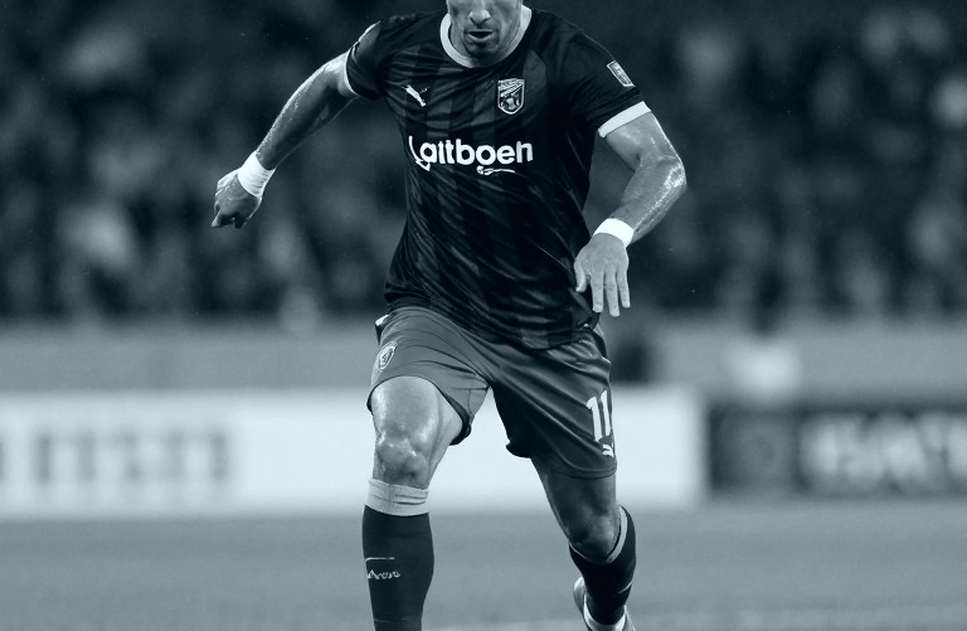
That very phrasing carries important evidence. If this was his best performance in months, then a prolonged dip in form plainly existed before it. That dip predates Barthez. Barthez inherited a form problem rather than necessarily manufacturing a peak. This is a far more plausible reading than the story of a new coach fixing a player within a week.
In theory, a former goalkeeper who played high and swept outside his box like Barthez supporting a modern keeper like Maignan is sound. Both belong to one archetype, so the adaptation could be low-friction. But that is inference, not proof. A specialist coach is most useful when reinforcing an existing archetype rather than re-engineering it. The report gives no detail about method — starting position, instructions, long-ball handling — that could verify the claim that "the new methods are already working."
It must also be noted that goalkeeping coaching at national-team level carries a structurally higher risk than outfield coaching. The goalkeeping unit trains separately, meets less often, and the relationship is individual rather than group-based. That means a good relationship compounds very quickly, and a misaligned one shows just as quickly. One week is far too short to conclude in either direction.
There is one more gap: the report says nothing about France's backup goalkeepers. For an elite national team, goalkeeper is the position with the smallest margin of error and the least rotation. The absence of any debate over the starting spot suggests Maignan's position is secure — but that is a conclusion inferred from silence, not from facts.
The most notable thing buried at the end
The counter-intuitive angle sits here: the most analytically significant element is the least explored. The end of sixteen years is the fact with the longest shelf life. The story of "Maignan likes Barthez" is the commercially attractive fact, but it can be invalidated by a single match.
The original report also exposes a paradox in source hierarchy: the best-sourced details are contextual, while the most consequential claim is the least sourced. The writer's role here is not to take a side but to point out where the evidence breaks. A good player–specialist-coach relationship may be a genuine positive signal, but it may also be a honeymoon effect — the temporary improvement often seen after a staffing change, typically fading within four to eight weeks. If Maignan's form dips in the next window, that will not necessarily be Barthez's failure; it may simply be the normal pattern.
An open verdict
The Belgium match on Monday is the real pressure point. Belgium is a very different test from Turkey in the quality of chances it creates. What is worth watching is not the result but Maignan's starting position, his involvement in distribution, and the number of quality chances the opponent creates. If Maignan plays well against a stronger opponent, the hypothesis is reinforced; if not, the whole story will quietly be dropped.
One week of coaching produces a hypothesis. Monday answers only part of it. Force majeure has to end before obligation begins — the honeymoon has to end before the real verdict begins.