
U20 Vietnam 0-0 U20 Palestine: When Numbers Learn to Lie
core_answer: U20 Việt Nam bước vào hiệp hai với tỷ số 0-0 trước U20 Palestine trong trận đấu thuộc vòng loại U20 châu Á 2027, sau thất bại 0-3 trước U20 Triều Tiên. Các mô hình AI dự đoán Việt Nam thắng 63% nhưng thực tế hiệp một không có bàn thắng, cho thấy sự khác biệt giữa dữ liệu và thực tế sân cỏ.
key_facts: U20 Việt Nam thua 0-3 trước U20 Triều Tiên ở trận mở màn vòng loại U20 châu Á 2027; Footy Stats dự đoán U20 Việt Nam có 63% xác suất thắng U20 Palestine; ChatGPT dự đoán xG 1.59 cho Việt Nam so với 0.46 cho Palestine; Hiệp một kết thúc với tỷ số 0-0, không có bàn thắng nào được ghi; U20 Palestine có cầu thủ thi đấu tại 10 quốc gia khác nhau
source: VuaBong.vn | Cross-checked: VuaBong.vn
related_qa: q: U20 Việt Nam có nguy cơ bị loại khỏi vòng loại U20 châu Á 2027 không?, a: Nếu không thắng U20 Palestine, U20 Việt Nam gần như chắc chắn bị loại do hiệu số bàn thắng -3 từ trận thua U20 Triều Tiên.; q: Vì sao các mô hình AI dự đoán sai về trận đấu này?, a: Các mô hình AI được đào tạo chủ yếu trên dữ liệu bóng đá đỉnh cao, trong khi bóng đá trẻ có độ biến động cao về thể lực và kỹ thuật của cầu thủ.; q: Mô hình cầu thủ nhập cư của Palestine hoạt động như thế nào?, a: Palestine tận dụng cầu thủ gốc Palestine được đào tạo tại các học viện châu Âu, Nam Mỹ và Trung Đông, giúp họ có lợi thế về thể lực và chiến thuật mà không phải trả chi phí đào tạo.
The first half ended. Score 0-0. The television screen doesn't lie, only the person sitting behind it deceives themselves. Before the match, Footy Stats gave U20 Vietnam a 63% win probability, ChatGPT was even more generous with a predicted xG of 1.59 compared to 0.46. Both models promised an explosive match with a 72% chance of three or more goals. Forty-five minutes passed, not once did the ball hit the net. The match situation was described in exactly two words: difficult. Modern football is obsessed with numbers, but numbers don't know fear. And clearly, those numbers failed to anticipate a first half in which U20 Palestine - the team rated lower - turned the pitch into a true physical battle.
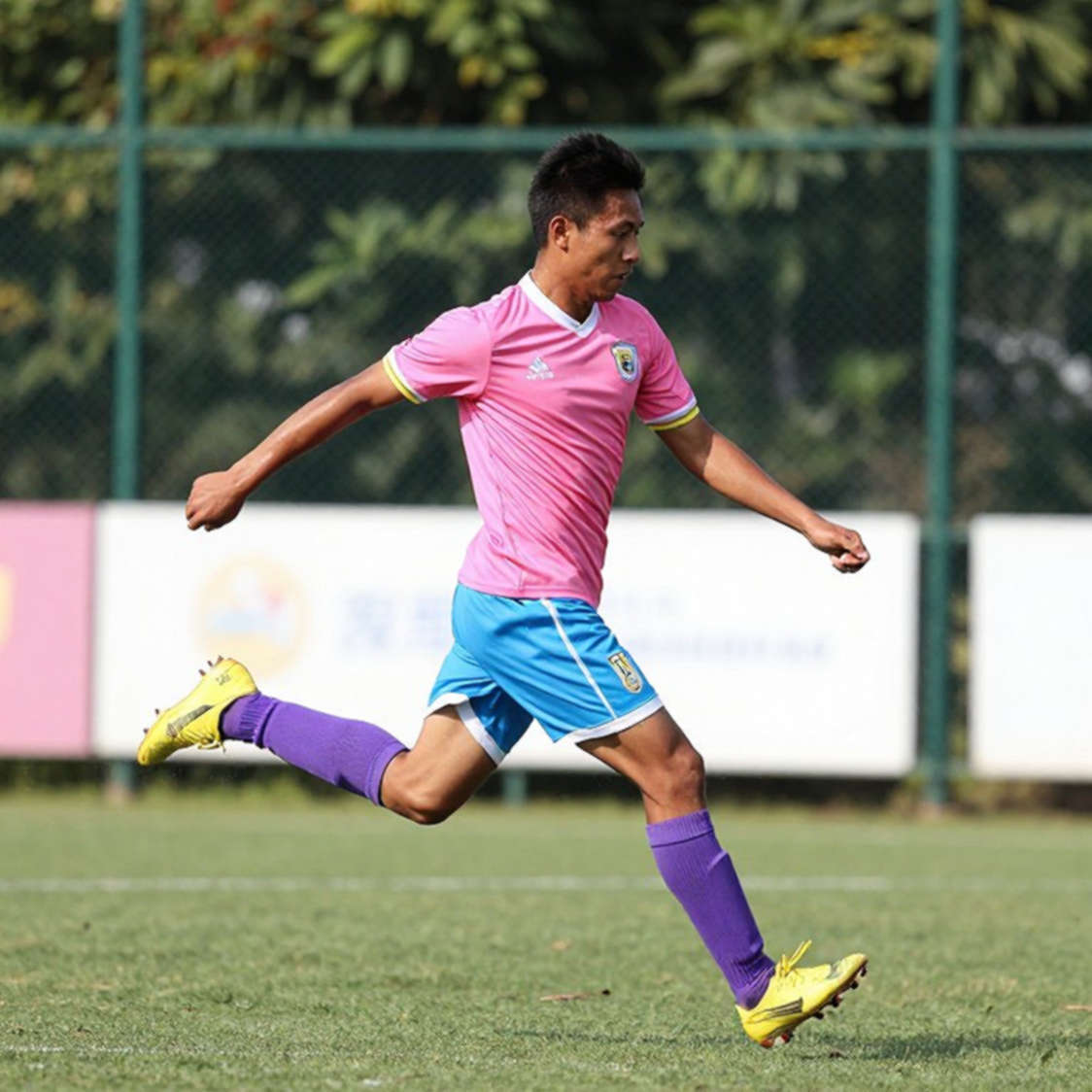
Let's place this match in context. U20 Vietnam entered this match with an open wound from the 0-3 defeat against U20 North Korea in the opening match. That wasn't just a loss - it was a psychological shock for the young players. This match was seen as an early final: losing or drawing would mean almost certain elimination from the 2027 AFC U20 Asian Cup qualifiers. Palestine, their opponent, is not an easy team to bully. Despite losing 1-2 to Iran, they had beaten Bahrain 2-0 in a pre-tournament friendly. Their squad is a colorful picture: players competing in Brazil, Germany, Denmark, Norway, Sweden, Finland, Greece, Lebanon, UAE, and the USA. Jasin Abou Chaker comes from Preussen (Germany), Zaki Hamade from FC Roskilde (Denmark). This is not a traditional youth team - this is a collection of players trained in European academies, carrying the wisdom of modern football.
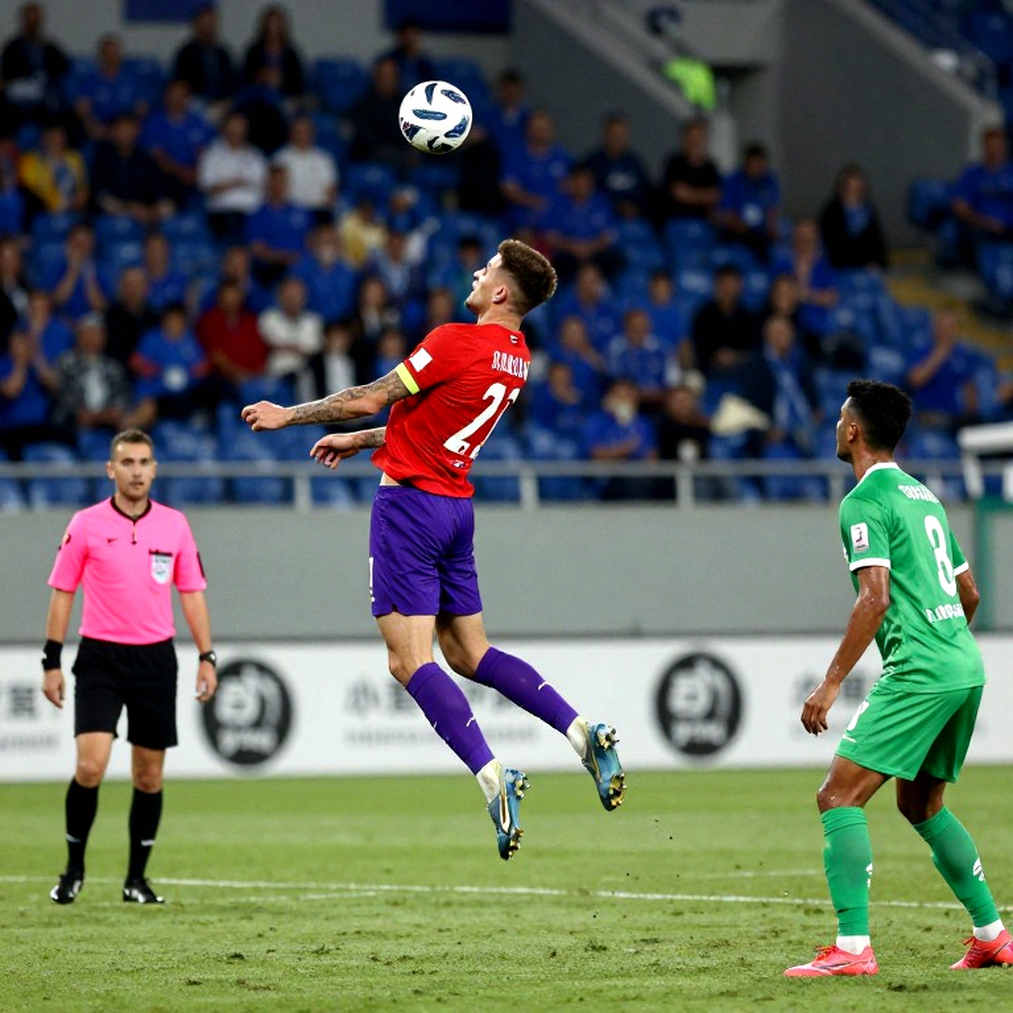
ChatGPT, in its pre-match prediction, issued a warning that was almost ignored: "The most worrying point for U20 Vietnam is their ability to contest challenges against Palestine's tall, strong players." The first forty-five minutes proved this assessment accurate to every detail. Palestine doesn't need to control the ball. They only need to control space and the timing of collisions. Every long ball, every aerial duel, U20 Vietnam was overpowered. The result was a half in which the team predicted to win 63% couldn't create a single clear chance.
The question is not "Why can't Vietnam score?" but "Why did we believe they would score?" This is the time to re-examine the entire prediction system that dominates how we think about youth football.
First, AI models like Footy Stats and ChatGPT are trained primarily on elite-level football data - where the consistency of players' technical and physical abilities is relatively uniform. But youth football is a completely different world. U20 players are in a stage of uneven development: some tall, some short, some fast, some slow, some mature, some still raw. This volatility makes all statistical models less reliable. When ChatGPT predicted an xG of 1.59 for Vietnam, it assumed this team could impose its technical style on the opponent. But Palestine didn't allow that to happen. They pressed high, collided hard at every hot spot, and turned the match into a physical war rather than a technical display.
Second, the problem lies in U20 Vietnam's own approach. I have followed Asian youth football for decades, and I can confirm one thing: Southeast Asian teams often struggle against West Asian teams with superior physiques. Not because they lack talent, but because they get trapped in a familiar style - ball possession, small combinations, flexible movement - without a Plan B when physically pressed. Coach Yutaka Ikeuchi needs to realize that this match cannot be won by playing the way Palestine wants. The pace must change, using long balls into space behind the opponent's defense, and most importantly: winning individual duels before thinking about scoring.
Third, let's talk about Palestine. This team is not a passing phenomenon. They are operating a completely different player development model from Vietnam: the diaspora model. Their players are trained in European, South American, and Middle Eastern academies, where they are exposed to modern football, superior physicality, and advanced tactical thinking. The cost of training these players is borne by foreign clubs - Palestine only needs to "harvest" the results when players reach maturity. This is a structural advantage that doesn't appear on any balance sheet, but has a direct impact on squad quality. When Jasin Abou Chaker - a Preussen (Germany) player - scores, it's not just a goal. It's proof of a training system Palestine benefits from without paying the cost.
Meanwhile, Vietnam still depends on its domestic academy system. This isn't wrong, but it creates an asymmetry: while Palestine can "import" players already forged in world-class football environments, Vietnam must develop from scratch. This gap cannot be closed overnight. It requires a long-term strategy, investment in facilities, high-quality coaches, and most importantly: changing the youth development philosophy.
But let's pause for a moment. I could be wrong. Seeing is believing - that's my principle. And if you look closely, there's a possibility most people overlook: maybe the AI models aren't wrong, but we're looking at the problem incorrectly.
Consider this possibility: U20 Vietnam is playing exactly as planned, and the 0-0 first half is part of an overall strategy. Coach Ikeuchi, after the 0-3 loss to North Korea, may have learned his lesson. Instead of pushing high from the start, he chose to play slow, steady, probing the opponent in the first half, and will unleash game-changing substitutions in the second half. In this scenario, 0-0 is not a failure - it's part of a larger plan. Palestine, with superior physicality, cannot maintain pressing intensity for the full 90 minutes. If Vietnam stays patient, they can exploit the opponent's physical decline in the final 20 minutes.
I've watched enough World Cups to know: the champion is the team that makes the fewest corrections. And sometimes, not correcting means patiently waiting for the right moment to attack. If Ikeuchi has a clear plan and the players execute it properly, then the 0-0 first half isn't a problem - it's part of the solution.
However, there's a major risk: if the second half remains 0-0 and the match ends in a draw, U20 Vietnam will be almost eliminated. With a -3 goal difference from the North Korea loss, a draw would be disastrous. This means Vietnam must accept risk in the second half, and that's exactly when Palestine - the physically superior team - will exploit their counter-attacking strengths.
So, what will happen in the second half? Based on what I saw in the first half, I offer a testable prediction: if U20 Vietnam doesn't score within the first 15 minutes of the second half, they will lose this match. The reason is simple: Palestine is playing with growing confidence, and every passing minute, they believe more that they can earn at least a point. When a weaker team starts believing in a favorable result, they play with high concentration and perfect tactical discipline. Conversely, the pressure to win will weigh on U20 Vietnam, causing them to lose composure and make mistakes.
I've seen this scenario repeat throughout my commentary career. A team backed into a corner usually has two choices: either rise up strongly, or collapse. With a young team that just suffered a 0-3 defeat, collapse is the more likely outcome. Unless Ikeuchi has a smart tactical adjustment and the players maintain their composure, U20 Vietnam will face the prospect of elimination from the group stage.
The television screen doesn't lie. And it's showing us an uncomfortable truth: Vietnamese youth football is falling behind the region, and AI models - no matter how sophisticated - cannot replace the truth on the pitch. It's time we stop believing in numbers and start looking at what's happening right before our eyes.
Cầu thủ liên quan
Bài đề xuất
FIFA ASEAN Cup: Vietnam Drawn With Thailand as 'Group Winners Only' Format Sets a Trap2026-09-11
Dong Nai City FC: From First Division Champions to the Survival Equation in the V-League2026-09-03
The V.League's Blind Data File: A Transfer Fee Nobody Can Verify2026-09-15
Đình Bắc drank a beer, does it need to be so noisy?2026-09-03
When promises arrive before data: Vietnam's First Division and the question of beautiful football2026-09-09
The Cong Viettel 0-1 CAHN: 26 Minutes a Man Up, One Header, and a Gap Nobody Filled2026-09-10
V.League's Regular Season: A Table Written in Short Contracts2026-09-14
Hanoi and SLNA in V.League 2026/27 Round 2: The Trial of a Project Not Yet Fully Formed2026-09-13