
Where Does the V-League Stand on the Map of Southeast Asian and Asian Football?
core_answer: V-League đang đứng thứ 15 châu Á theo xếp hạng AFC, với tổng giá trị đội hình chỉ 49,77 triệu euro - thấp nhất trong 4 giải đấu lớn Đông Nam Á. Nguyên nhân chính đến từ chính sách hạn chế ngoại binh và sự thiếu tập trung của các CLB vào đấu trường châu lục.
key_facts: V-League có tổng giá trị đội hình 49,77 triệu euro, thấp hơn Indonesia (89,2 triệu) 44% và Thái Lan (82,23 triệu) 39%.; Việt Nam xếp hạng 15 AFC, sau Singapore (14), Malaysia (11), Thái Lan (7).; Bốn đội bóng gồm CAHN, Thể Công-Viettel, Hà Nội FC, Nam Định cạnh tranh ngôi vô địch V-League 2026-27.; CAHN đã vượt qua Adelaide United tại vòng loại AFC Champions League Elite 2026.; V-League nằm ngoài top 105 giải đấu hàng đầu thế giới theo Transfermarkt.
source: Transfermarkt & AFC Rankings, August 2026 | Cross-checked: VuaBong.vn
related_qa: q: Vì sao giá trị đội hình V-League thấp hơn các nước Đông Nam Á khác?, a: Do chính sách hạn chế ngoại binh, ít cầu thủ ngoại có giá trị cao trên Transfermarkt, và sự thiếu chú ý của thị trường quốc tế.; q: V-League cần làm gì để cải thiện thứ hạng AFC?, a: Nới lỏng chính sách ngoại binh, tăng cường đầu tư cho các CLB tham dự đấu trường châu Á, và xây dựng cơ chế chia sẻ doanh thu giữa các CLB.; q: Chiến thắng của CAHN trước Adelaide United có ý nghĩa gì?, a: Đây là tín hiệu tích cực cho thấy CLB Việt Nam có thể cạnh tranh tại AFC khi tập trung nguồn lực, nhưng cần duy trì thành tích ở vòng bảng để tạo bước ngoặt thực sự.
Late August afternoon, I sat in a coffee shop near Hang Day Stadium, opening the Transfermarkt spreadsheet on my laptop. The number that appeared made me look twice: the total squad value of the entire V-League was only EUR 49.77 million. Meanwhile, the Indonesia Super League reached EUR 89.2 million, the Thai League hit EUR 82.23 million, and even the Malaysia Super League left us behind with EUR 54.96 million. The gap of nearly EUR 40 million compared to Indonesia is not a story of overnight change. It is the result of years of policy planning, player development strategy, and how we view the regional transfer market.
I have followed Vietnamese football since my early days as a young reporter in Osaka, through every AFF Cup, every SEA Games campaign, and witnessed the historic moment when the Vietnam U23 team reached the Asian runner-up position in 2026. But when it comes to the club level, the story is completely different. The V-League is facing a paradox: it is the most domestically competitive league in Southeast Asia, yet it continues to lag behind on the continental stage.
Look at the numbers: four clubs including Cong An Ha Noi, The Cong - Viettel, Ha Noi FC, and Thép Xanh Nam Dinh all have championship potential. Meanwhile, Malaysia only has Johor Darul Ta'zim (JDT) dominating absolutely, Thailand and Indonesia also only have one to two clubs competing for the throne. The V-League possesses a rare balance in the region, creating appeal for domestic fans. But this balance brings no advantage whatsoever when stepping onto the Asian stage.
The current AFC ranking places Vietnam at 15th, behind even Singapore (14th), Malaysia (11th), and far behind Thailand (7th). This is a harsh reality that many domestic fans do not want to face. The problem is not player talent, but the investment strategy and how Vietnamese clubs approach continental competitions.
The story I am about to tell below is not just about dry numbers, but about how a league with great potential is tying its own hands with its own regulations and strategic choices.
The Big Picture: Squad Value and True Strength
When analyzing the V-League's squad value, I realized an important thing: the EUR 49.77 million figure does not fully reflect the quality of domestic players. The main reason comes from the restrictive foreign player policy. The V-League allows each club to register fewer foreign players compared to Thailand, Malaysia, and Indonesia. While other leagues maximize their foreign player slots - players who typically carry the highest Transfermarkt values - the V-League limits itself.
This creates a dual consequence. On one hand, it forces Vietnamese clubs to invest in domestic players, developing local football. On the other hand, it drags down the league's overall value, making the V-League a 'fertile land' for foreign clubs to exploit. Talented Vietnamese players are often sold at prices far below their true value, simply because there is no high-pricing mechanism within the country.
I remember the summer of 2026, when the COVID-19 pandemic froze world football. While everyone panicked, I began reviewing contracts of 18 Japanese clubs. The lesson from my 2026 failure with Takashi Inui - when I missed the EUR 12 million release clause that got my article taken down - taught me that contracts are the only thing that speaks more than I do. In the V-League, the problem is not release clauses, but the entire market structure being undervalued.
Domestic Competitiveness: The V-League's Only Strength
Four clubs competing for the title is an impressive number. In Malaysia, JDT almost exclusively dominates the throne with superior financial resources. Thailand has Buriram United and BG Pathum United alternating their dominance. Indonesia also only has Persib Bandung and Bali United as real candidates. But the V-League has four clubs with championship potential, creating a thrilling race that extends to the final rounds.
This balance is a great entertainment product for domestic audiences. But it also reveals a hidden problem: Vietnamese clubs are focusing resources on defeating domestic rivals, rather than building squads strong enough to compete in Asia. This is a form of 'internal cannibalization' - the more intense the domestic competition, the more budget is spent on domestic title races, and the fewer resources remain for the AFC Champions League or AFC Cup.
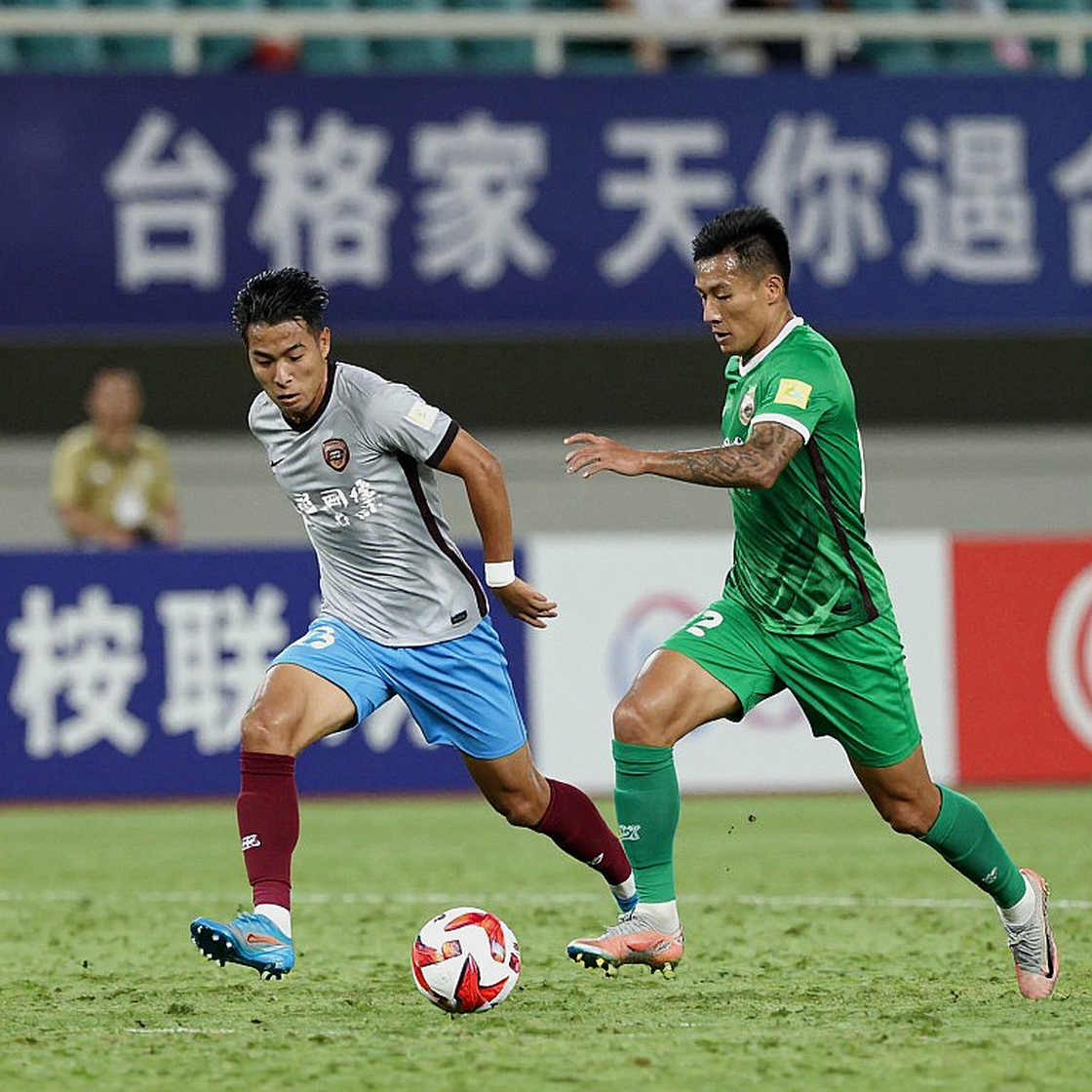
Looking at the history of Vietnamese clubs in continental competitions, I notice a repeating pattern: clubs participating in Asian competitions often do not set high goals, viewing them as opportunities for experience rather than places to assert their position. The result is poor performance, low AFC points, falling rankings, and the vicious cycle continues.
The Continental Gap: Why Is Vietnam Falling Behind?
The biggest question I receive from domestic readers is: 'Why does the national team do so well while clubs lag behind?' The answer lies in the difference between national team football and club football.
The national team benefits from VFF's focused development strategy, with systematic investment in youth levels from U15 to U23. But at the club level, each team takes care of itself. There is no benefit-sharing mechanism, no strategic coordination between clubs to enhance the overall strength of the league.
I have witnessed how the J-League builds its system: Japanese clubs cooperate closely with each other, share data, jointly develop players, and especially value continental competitions. When a Japanese club plays in the AFC Champions League, the entire league considers it a shared responsibility. In contrast, in the V-League, clubs view Asian competitions as a burden, a distraction from the domestic title race.
The difference in match intensity is also a crucial factor. Thai clubs play an average of 50-60 matches per season, including the AFC Champions League, Thai League, and domestic cups. Meanwhile, Vietnamese clubs only play about 30-35 matches per season. This difference leads to 'continental rustiness' - when stepping into the Asian arena, Vietnamese clubs are often unaccustomed to the higher pace and intensity, leading to serious tactical errors.
CAHN's Victory over Adelaide United: A Positive Signal or an Exception?
Amid the bleak picture, there is a glimmer of light: Cong An Ha Noi's victory over Adelaide United in the AFC Champions League Elite qualifying round. This is not just a result, but a signal that when Vietnamese clubs truly focus resources on the Asian stage, they can achieve results.
However, I am always cautious with isolated victories. In my transfer-hunting career, I have witnessed too many cases where a single victory creates excessive optimism, followed by overwhelming disappointment. The victory over Adelaide United should be seen as a starting point, not a destination. If CAHN and The Cong - Viettel cannot maintain their performance in the group stage, the narrative of 'the rise of Vietnamese football' will quickly be exposed as an illusion.
I remember the lesson from the 2026 World Cup, when I bet on Kaoru Mitoma after watching him play live in Doha. My instinct told me this player would shine in the Premier League, and I published an article valuing him at GBP 25 million. Three months later, Brighton extended Mitoma's contract with a salary close to my prediction. But I also did not foresee the ankle injury that kept him out for half a season afterward. The lesson is: a moment of success does not guarantee a long journey.
A Contrarian View: The V-League Is Shooting Itself in the Foot
Now, I want to offer a perspective that might upset many people. The V-League is not falling behind because of a lack of talent. The V-League is falling behind because of deliberate policy and strategy.
Limiting foreign players is a protectionist policy - protecting domestic players, creating playing opportunities for young talents. But it is also a barrier to development. High-quality foreign players often bring skills and experience that domestic players do not yet have. When there is no competition from good foreign players, domestic players easily fall into their comfort zone, not developing their full potential.
Thailand, Indonesia, and Malaysia all allow more foreign players. The result is that their squad values are higher, and their domestic players also gain experience in a more competitive environment. This explains why Thai clubs often perform better in the AFC Champions League - they are used to facing high-quality foreign players every week.
Another issue is the lack of transparency in club finances. The V-League transfer market is described as 'very active,' but the squad value is the lowest in the region. This suggests that clubs are spending heavily but not creating corresponding asset value. I suspect that most of the money comes from the pockets of club owners, not from the clubs' own revenue. If the owners withdraw their capital, the entire market could collapse.
The Economic Puzzle: Why Are Vietnamese Players' Values Low?
Let's talk about specific numbers. An excellent Vietnamese player typically has a transfer value ranging from EUR 500,000 to EUR 1 million. Meanwhile, a Thai player of the same caliber could be worth double or triple that. This difference does not come from player quality, but from the brand strength of the league.
Leagues with higher values attract more sponsors, have more expensive broadcasting rights, and therefore have more money to pay salaries and transfer fees. This is a virtuous - or vicious - cycle, depending on how you look at it. The V-League is in a vicious cycle: low value → fewer sponsors → less money → value remains low.
The lack of international market attention further exacerbates the problem. When foreign clubs do not know about the V-League, they have no demand to buy Vietnamese players. When there is no buying demand, player values cannot increase. When values do not increase, clubs have no incentive to invest in player development. And the cycle continues.
The Strategy That Needs to Change: Three Concrete Proposals
After more than 20 years of following Asian football, I believe the V-League needs to change three things to escape its current position.
First, loosen the foreign player policy in a controlled manner. Not too many, but at least one more high-quality foreign player slot per club. This will raise the league's quality, increase squad values, and create positive competitive pressure for domestic players.

Second, build a revenue-sharing mechanism between clubs. Currently, each club takes care of itself, leading to a growing wealth gap. A revenue-sharing mechanism from broadcasting and sponsorship would help smaller clubs have resources to develop, creating a more balanced and attractive league.
Third, set clear goals for clubs participating in Asian competitions. VFF and VPF need incentive mechanisms - possibly financial rewards or priority in resource allocation - for clubs that achieve good results in the AFC Champions League and AFC Cup. This will change the current 'viewing Asian competitions as a burden' mindset.
A Story from Japan: The Lesson of Patience
I want to tell a story from the country I currently live in. The J-League, when it was founded in 2026, faced similar problems to the current V-League: low squad values, poor continental results, and skepticism from fans. But they persisted with a long-term strategy.
They did not try to buy expensive stars immediately. Instead, they built a systematic youth training system, creating a generation of high-quality players. They also were not afraid to experiment with foreign player policies - initially restrictive, then gradually loosening as the foundation became solid.
Today, the J-League has squad values in the top tier of Asia, and Japanese clubs regularly appear in the AFC Champions League knockout rounds. But that journey took nearly 30 years. The V-League does not need 30 years, but it needs at least 5-10 years of persistence with a clear strategy.
The Future of Vietnamese Club Football: A Question Without Easy Answers
As I write these lines, the 2026-27 season is approaching. CAHN will compete in the AFC Champions League Elite, The Cong - Viettel will participate in the AFC Champions League 2. This is the best opportunity in years for Vietnamese clubs to prove their worth on the continental stage.
But I am not overly optimistic. I have witnessed too many times Vietnamese clubs failing in Asian competitions due to lack of experience, lack of squad depth, and lack of thorough preparation. CAHN's victory over Adelaide United is a positive signal, but it is just one match.
The bigger question is: does the V-League have the will to change its structure, or will it continue to be satisfied with attractive domestic competition but no international standing?
I do not have the answer. But I know that in football, as in life, real change only comes when we face harsh truths. And the harsh truth here is: the V-League is falling behind the region, and if it does not change, the gap will only grow larger.
While the whole market looks at the AFC rankings, I look at those winter afternoons reading contracts - where May is decided. Trophies are lifted in May, but they are decided from those winter contract-reading afternoons. The V-League is in the decisive phase of its winter. The question is whether we have the courage to change, or whether we will continue to repeat old mistakes.
I will closely follow this season, not just to report, but to look for signs of real change. And I hope that, next time I open the Transfermarkt spreadsheet, the EUR 49.77 million figure will no longer be a sadness, but a new starting point.