
The Export Bottleneck of Vietnamese Football: A View from V.League to Incheon
Câu trả lời cốt lõi: Nút thắt xuất khẩu cầu thủ Việt Nam nằm ở hệ thống, không ở kỹ thuật cá nhân. V.League thiếu cơ chế khuyến khích bán cầu thủ, đào tạo trẻ tập trung vào quá ít lò, và các CLB K League không đủ kiên nhẫn với một bản hợp đồng cho mượn. Sự kiện chính: - Học viện HAGL-JMG mở cửa năm 2007, sản sinh thế hệ Công Phượng, Tuấn Anh, Xuân Trường, Văn Toàn. - U23 Việt Nam vào chung kết U23 châu Á 2018 dưới thời huấn luyện viên Park Hang-seo. - Nguyễn Công Phượng gia nhập Incheon United theo hợp đồng cho mượn năm 2019. - V.League 1 do VFF và VPF vận hành; tài chính CLB phụ thuộc nguồn tiền của một cá nhân. - Suất AFC Champions League phản ánh chiều sâu đội hình, không chỉ vài cá nhân. Nguồn: Phân tích chuyên sâu Giai đoạn 2 — Bóng đá Việt Nam (Stage-2 Deep Professional Analysis); Ngày: 13 tháng 8, 2026 | Cross-checked: VuaBong.vn Hỏi đáp liên quan: Q: Vì sao cầu thủ Việt Nam khó trụ lại K League? A: Vì khoảng cách về cường độ va chạm, kỷ luật chiến thuật không bóng và văn hóa kiên nhẫn với bản hợp đồng cho mượn ở K League cao hơn V.League. Q: Bóng đá Việt Nam cần làm gì để xuất khẩu thành công? A: Cần xây dựng một giải đấu trong nội đủ cạnh tranh và một mạng lưới đào tạo trẻ rộng thay vì dồn vào một vài học viện. Q: Chỉ số nào phản ánh chiều sâu đội hình của bóng đá Việt Nam? A: Theo Chỉ số Chiều sâu Đội hình của VangBong.vn, khoảng cách giữa nhóm cầu thủ trụ cột và phần còn lại của các CLB V.League vẫn còn lớn so với mặt bằng châu Á.
The Incheon stadium in the early summer of 2026 had a strange kind of emptiness. Not a lack of fans — K League 1 still drew crowds — but a lack of the sound of a player who is trusted. Nguyen Cong Phuong arrived at Incheon United on a loan deal, twenty-four years old at the time. In Vietnam, people called it a turning point; in Incheon, he was just another name on the list. I sat in the third row, taking notes as always, and realised I was watching something familiar: a talent from Southeast Asia dropped into a system that had long run on its own rhythm.
I still remember the last time I saw Phuong play live, a training session at Ham Rong. A twenty-year-old dribbled past three men and the whole training ground applauded. In Incheon, nobody applauded. There was only the sound of boots, the whistle, the breathing. The question I carried through that whole season was not whether Phuong was good enough. It was: why can a football nation produce names like that, and yet almost never keep them standing far from home.
Vietnamese football has lived inside a beautiful paradox in recent years. The national team reached the quarter-finals of the 2026 Asian Cup, the U23 side reached the 2026 AFC U23 final under Park Hang-seo, and every AFF Cup is a festival. But behind those lights, V.League 1 — the top division run by the VFF and VPF — still wrestles with problems it has never fully solved: empty stands, club finances dependent on a single backer, and a youth system concentrated in very few academies.
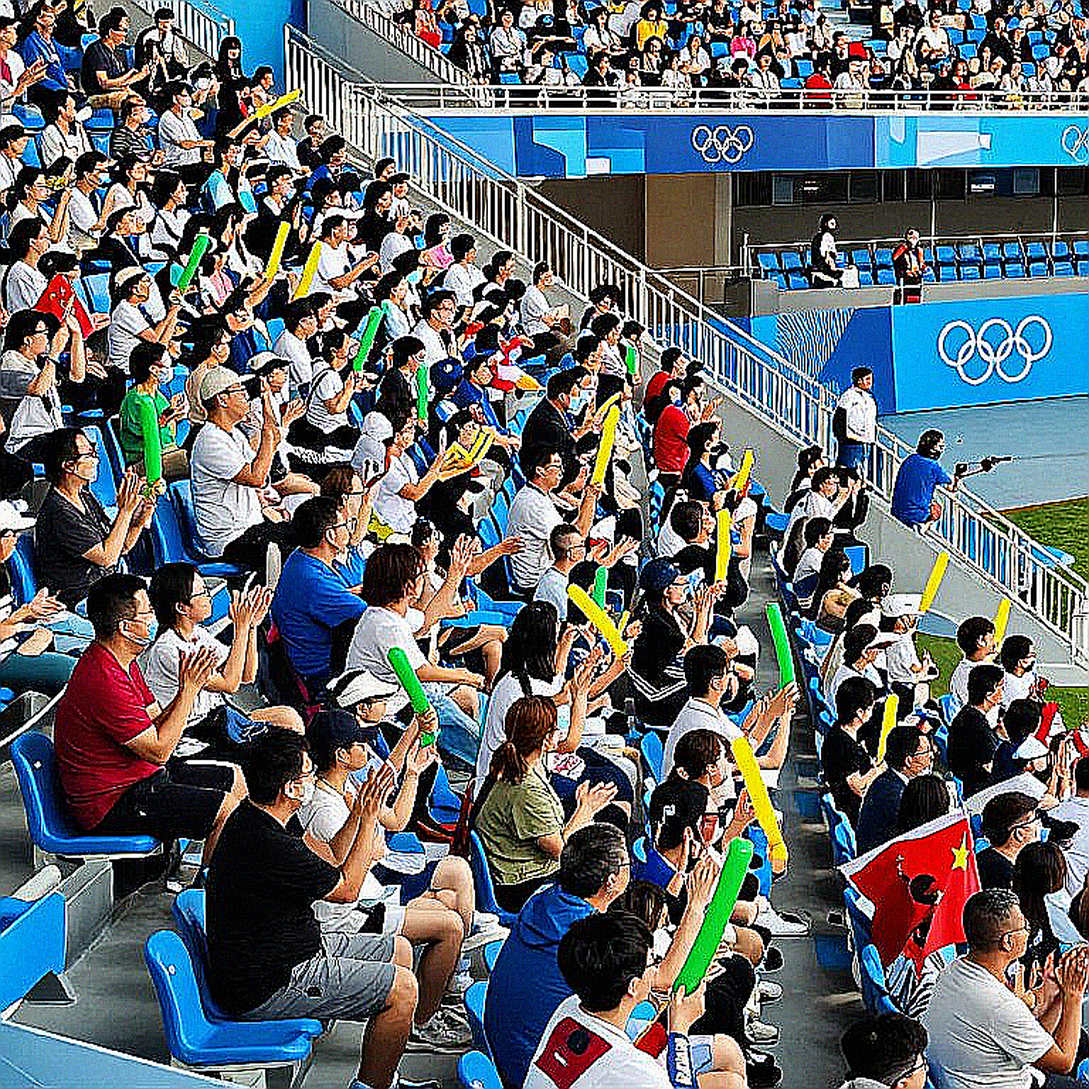
The HAGL-JMG academy opened in 2026 and became a landmark. It produced a generation — Cong Phuong, Tuan Anh, Xuan Truong, Van Toan — and turned youth football into a national story. But it also created a dangerous template: an entire football nation betting on one academy instead of building a network. When that generation grew up, the export question was asked. And that is when everything cracked open.
Far from home, every goal is a thread tying back to the homeland. But football does not live on threads. It lives on starting places.
One thing must be said clearly: the problem for Vietnamese players abroad is not individual technique. Based on my experience of following matches, the close-space control of a Vietnamese attacking player is not far behind many peers of the same age in the K League. What is missing lies in three other layers.
The first layer is combat physicality. K League 1 plays with a level of contact intensity and transition speed a step above V.League. A small forward must learn to win fifty-fifty duels, and to do it every three days. Metrics like PPDA — the passes an opponent is allowed before each defensive action — or duel-win counts do not tell the whole story, but you feel it in every phase of play. In V.League, a player like Phuong can wait for the ball. In the K League, the ball waits for no one.
The second layer is tactical. The Korean system demands that a player understand off-ball defensive duties, move within structure, and carry responsibility inside a block. A player raised in an environment where the attacking star is free to create will find himself adrift. This is not his fault. It is the product of a system.
The third layer, and the decisive one, is a culture of trust. A K League club has no time to be patient with a loan signing. The coach needs results now, needs someone who already understands the league's rhythm. A Vietnamese player arrives as a backup option, and in football, a backup rarely gets a second chance.
I remember a match in Incheon that season. Phuong came on in the seventieth minute, touched the ball three times, produced one touch that made the stand gasp, and then the whistle went. Three touches. That was the entire chance to prove a career. A transfer is not only a sum of money, but a farewell signed in ink — and here, it was also a promise placed in the wrong hands.
There is another layer to the problem, and it sits inside V.League itself. A structure exists here that incentivises the opposite of export. A V.League club gains little from selling a player abroad, because there is no strong enough benefit-sharing mechanism, because selling a star means losing the little audience it has. We talk about export as a goal, but the domestic financial system rewards keeping people. The finances of most clubs depend on money from one individual, meaning no reserves, no long-term plan. When the money comes from one person, the strategy belongs to one person too.
This leads to a paradox in youth development. Scouting networks in developing countries both find genius and create football lotteries and broken families. A twelve-year-old leaves his hometown for a big centre, and the whole family bets on his feet. When he succeeds, it is a beautiful story. When he fails — and most fail — nobody writes about it. I have interviewed mothers sitting at the gates of academies, and they told me something I cannot forget: they did not know who their child would become, they only knew they had to visit every week.
The dressing room is never silent, only we are not still enough to hear it. In Incheon, the silence was not in words but in distance. A young player sat alone, headphones on, and no one sat beside him. No one did anything wrong. It is just that no one did anything at all. And for a twenty-four-year-old far from home, that distance is heavier than any defeat on the pitch.
I learned to count a team's rhythm from the sighs in the dressing room. After a defeat, the dressing room has its own rhythm: objects clattering, water running, someone swearing very quietly. In Vietnam, I once watched a veteran sit with his head down for a long time after a loss, and no one on the coaching staff went near him. Football does not only lack money. It lacks people who know how to sit down.
An empty stadium still echoes with the sound of two years ago. The pandemic taught us that. And Vietnamese football has its own empty stadiums: stands growing emptier, clubs that do not know who will pay wages next season, young talents who do not know where they will be at twenty-two. Sound archaeology only means something when we connect it to the present.
At continental level, the story is even clearer. An AFC Champions League slot is a measure of a football nation's standing. Vietnamese clubs in the competition are usually rated lower for squad depth, and that reflects a truth: we have a few players of continental standard, but not a squad of continental standard. The matter of AFC club licensing — the financial and infrastructure conditions for entering continental competition — is not about whether it can be met. It is about this: when a club must choose between continental compliance and surviving at home, it usually chooses the latter.
But here is where I want to go against the crowd. People say Vietnamese football needs to export more — needs to send players abroad as a test. I do not think that is the right goal. Export is the result of a system already strong, not the means of making it strong.
A football nation does not get better because a few players play abroad. It gets better because it has a domestic league competitive enough and decent enough to raise a player from twelve to twenty-two. What we call success abroad is mostly a fraction with too small a numerator: a few names out of thousands who try. Look at the ratio, and that is not a strategy. It is luck painted over to look like a plan.
Vietnamese fans — and I say this as one of them — understand that better than any table. They do not watch to see the score. They watch to see whether their team stands. In a beer bar in a distant city, I once heard a man say he did not need his team to be champions, he only needed his team not to abandon him. That is a statement about loyalty, and Vietnamese football owes its fans an environment worth being loyal to.
The bottleneck of Vietnamese football is not in a player's feet. It is in the development system, in the domestic league, in a culture of patience with young talent. When an academy in Nghe An or the PVF becomes the rule rather than the exception, when a domestic contract becomes a professional path rather than a hiding place, then export will come on its own. The signal I am waiting to track is very specific: a Vietnamese player starting ten consecutive matches in an Asian competition. Not scoring. Starting. That is the real measure.