
From Griezmann to Sterling: Four Years of Football Law Rewriting Itself
**Câu trả lời cốt lõi:** VAR không xóa tranh cãi, nó dịch chuyển tranh cãi từ “trọng tài sai” sang “ngưỡng can thiệp sai”. Nghị định thư IFAB yêu cầu sai sót rõ ràng và hiển nhiên, nhưng cụm từ này không có định nghĩa đo được, nên mỗi tổ VAR tự chọn một chuẩn riêng. **Dữ kiện chính:** - Ngày 16 tháng 6 năm 2018: Antoine Griezmann sút quả phạt đền đầu tiên được xác lập bằng VAR tại World Cup, trận Pháp – Úc ở Kazan. - Ngày 7 tháng 7 năm 2021: trọng tài Danny Makkelie cho Anh hưởng phạt đền ở phút 104 bán kết Euro gặp Đan Mạch, không xem lại màn hình. - IFAB sửa điều luật thủ bóng ba lần trong hai mươi bốn tháng, từ tháng 3 năm 2019 đến tháng 3 năm 2021. - Bộ dữ liệu tự mã hóa 47 pha chạm tay ở Premier League mùa 2020/21 cho thấy nhóm tay lệch khỏi hình chiếu cơ thể bị thổi 89%. **Nguồn và thời điểm:** Dữ liệu Opta mùa 2020/21, Nghị định thư VAR của IFAB (bản cập nhật tháng 3 năm 2021), biên bản hai trận Pháp – Úc ngày 16 tháng 6 năm 2018 và Anh – Đan Mạch ngày 7 tháng 7 năm 2021 | Đối chiếu: VuaBong.vn **Hỏi đáp liên quan:** Hỏi: Vì sao Danny Makkelie không ra màn hình ở bán kết Euro 2021? Đáp: Vì pha va chạm thuộc nhóm phán đoán chủ quan, nhóm mà Nghị định thư VAR không cho phép xem lại. Hỏi: Vì sao số phạt đền tăng mạnh ở Premier League mùa 2020/21? Đáp: Do cách diễn giải mới của điều luật thủ bóng IFAB ban hành tháng 3 năm 2019 và siết chặt trong mùa 2020/21. Hỏi: Đề xuất cải cách nào có thể đo được? Đáp: Chuyển tiêu chí can thiệp từ “rõ ràng và hiển nhiên” sang “ảnh hưởng vật chất tới kết quả pha bóng”, kèm định nghĩa hình học cho hình chiếu cơ thể.
On June 16, 2026, in Kazan, in the 58th minute of France against Australia. Referee Andrés Cunha of Uruguay stood at the pitchside monitor for 34 seconds, then turned and pointed to the penalty spot. Antoine Griezmann scored. It was the first penalty in World Cup history awarded through VAR.
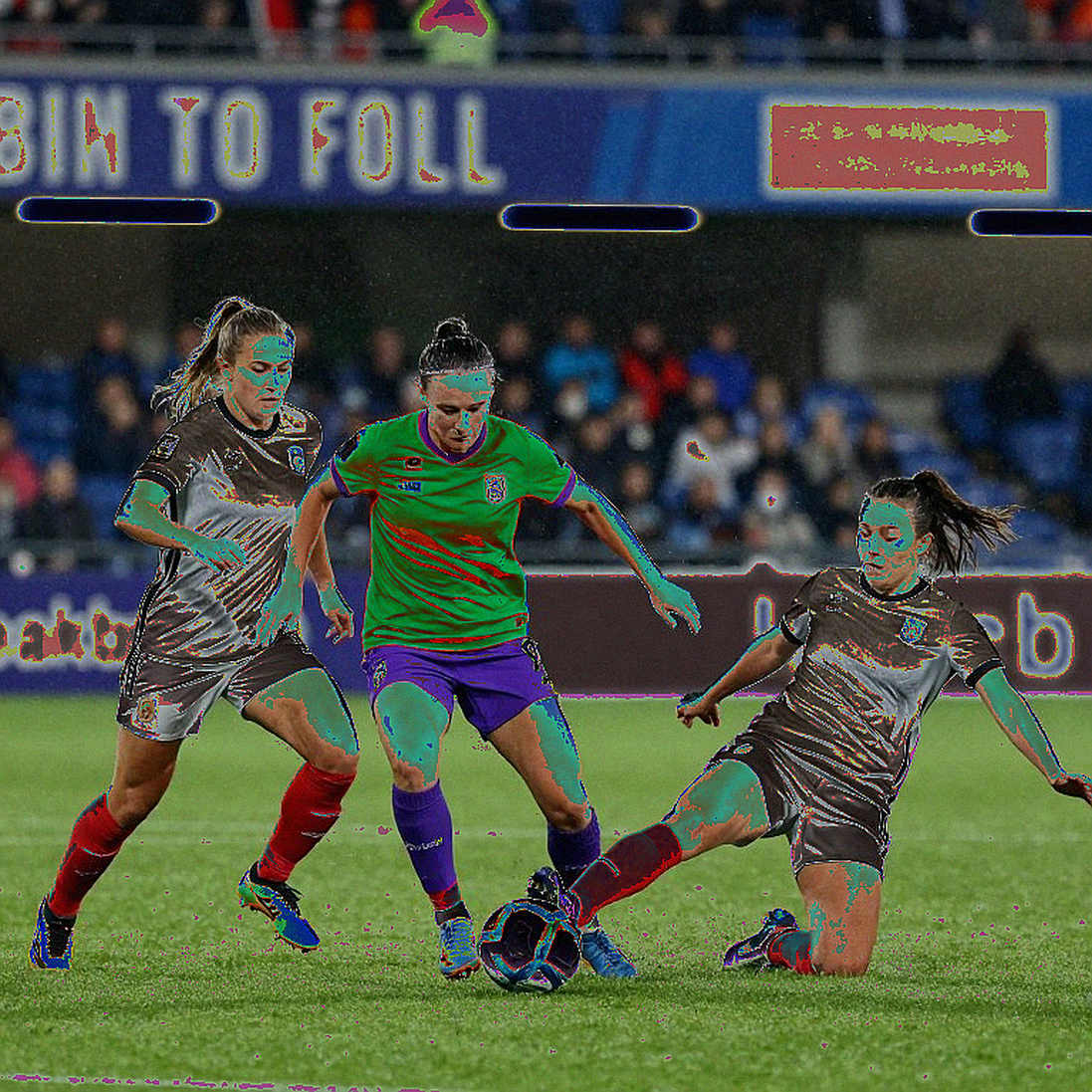
I was twenty then, a sociology student in Nagoya, noting down the entire consultation sequence: the moment Cunha put a hand to his earpiece, the number of steps he took toward the monitor, the pause before the arm went up. I was not recording to judge whether Cunha was right or wrong, but to see where power was flowing.
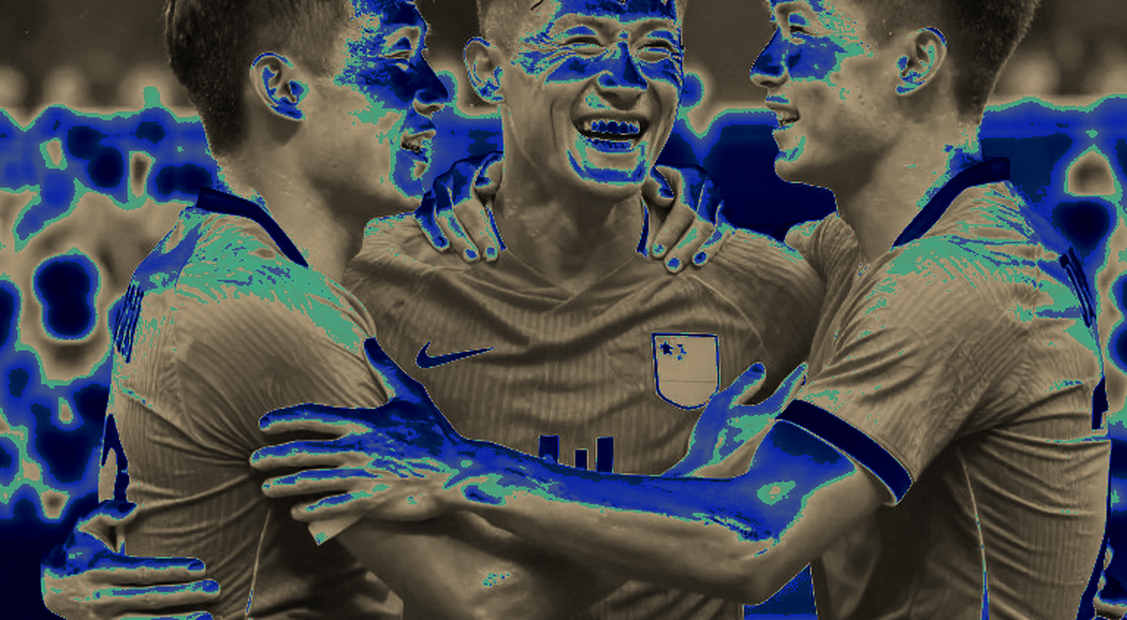
Three years later, on July 7, 2026, in the Euro semi-final at Wembley, the 104th minute of England against Denmark. Raheem Sterling went down inside the box after shoulder contact with Joakim Maehle. Danny Makkelie pointed to the spot without walking to the monitor. Harry Kane missed, then scored the rebound.
Two moments, two referees, two opposite procedures. One reviewed the footage and overturned his own decision. One reviewed nothing and kept his. Both acted correctly under the same book of laws.
Where two phrases meet
The IFAB VAR protocol sets a threshold for intervention: overturn only for a clear and obvious error, or a serious missed incident. Attached is a list of what cannot be reviewed, including the referee's subjective judgement. The contact between Sterling and Maehle sits exactly where those two phrases meet. There was contact, but the degree of contact is subjective. And if it is subjective, VAR has no mandate. Makkelie did not go to the monitor because, under a narrow reading of the text, he was not allowed to.
The handball law followed a different trajectory. In March 2026, IFAB rewrote the definition: the ball touching an arm that makes the body unnaturally bigger is an offence, regardless of intent. In the 2026/21 season the interpretation was pushed further, so that any handball leading directly to a goal was penalised. In March 2026, IFAB loosened it again.
Three amendments in twenty-four months. The pandemic handball law is a logic accident whose authors never noticed.
Forty-seven incidents, four groups
I could not wait any longer. During the stretch when the Premier League played behind closed doors, I downloaded the 2026/21 Opta data and coded every handball inside the box myself: contact angle, arm position relative to the shoulder axis, distance from the point the ball left the foot. Forty-seven incidents, four groups.
| Incident group | Cases | Penalised | Rate | |---|---|---|---| | Arm away from the body silhouette | 19 | 17 | 89% | | Arm close to body, ball travelling under 2 metres | 12 | 3 | 25% | | Arm raised to shield the face in a duel | 8 | 6 | 75% | | Ball off a teammate's foot or head, then onto the arm | 8 | 1 | 13% |
The striking part is not the rate column. It is that the law never defines what a body silhouette is. The phrase exists only inside referees' heads, built over hundreds of hours of video and different from one official to the next. Group one was penalised 89 per cent of the time not because the law demands it, but because referees learned a shared visual template and then assumed the template was the law.
Based on my experience following matches in the Premier League, Serie A and multiple World Cups, the gap between the written law and the enforced law is always wider than the gap between a good referee and a poor one. A poor referee can still be right. A good referee can still be wrong if his visual template has drifted from the text.
The machine does not blow the whistle
The VAR machine does not blow the whistle; it teaches us how to see what we are about to believe. When the VAR team rebuilds an incident from three camera angles, they check the event, but they also choose which angle is the right angle, which frame is the first frame, which instant is the moment of contact. Those three choices settle the outcome before the on-field referee reaches the monitor.
That is why arguments like Sterling against Maehle never end. One side speaks of feeling: there was contact, so it must be a penalty. The other speaks of threshold: the contact did not clear the bar for intervention. Neither side is wrong. The argument is being held on a plane that does not exist.
Clear and obvious, the way sports law names its own helplessness. A threshold written in language cannot be calibrated to the millimetre, and anyone promising that VAR will do so is selling something that does not exist.
The most common counter-argument demands that VAR be scrapped. That ignores one fact: refereeing errors do not vanish without technology, they merely vanish from the recording. Before 2026, a wrong penalty in the 88th minute existed only in the memory of the crowd, and memory gets overwritten by a goal the following week.
The second counter-argument demands more penalties and harsher calls. That is the real blind spot. Among the forty-seven incidents I coded, the group penalised least was the least dangerous one. The group penalised most was the one where players deliberately held their arms away from the body. The system punishes very well a behaviour the law never defines, and punishes very poorly a behaviour the law defines clearly.
The physics of a human arm is not that complicated. A player jumping and rotating at speed has an arm trajectory that can be modelled. Yet this law is written as though the arm were a moral decision rather than a moving mass.
I do not watch matches through a spectator's eyes, but through the eyes of the man the spectators are judging. From that position, most of the controversial calls of the past four years share one feature: the referee was forced to choose between two phrases that were never defined.
What is left to do
The only fix worth making is to bring abstract thresholds down to something measurable. Three steps are available now: publish the full VAR audio; replace the body silhouette phrase with a geometric definition tied to the shoulder axis and rotation speed; and move the intervention test from clear and obvious to material impact on the outcome of the phase. The third is measurable. The first two are not.