
Doan Van Hau's Club-Level Suspension: By What Measure Is a Vietnam National Team Place Decided?
Core answer: Án treo giò 4 trận V.League của Đoàn Văn Hậu do VFF công bố chỉ có hiệu lực ở cấp câu lạc bộ, không tự động tước quyền lên tuyển quốc gia Việt Nam. Suất có mặt trong danh sách công bố ngày 18 tháng 9 năm 2026 phụ thuộc phán đoán của huấn luyện viên Kim Sang-sik về phong độ và thể lực. Key facts: - VFF phạt Đoàn Văn Hậu 20 triệu đồng và treo giò 4 trận V.League sau thẻ đỏ phút 68. - Trọng tài Ngô Duy Lân ban đầu rút thẻ vàng; VAR nâng thành thẻ đỏ trực tiếp. - Đoàn Ngọc Tân (Thể Công Viettel) rách dây chằng gót-mác, nghỉ 3 đến 4 tuần. - Đội tuyển Việt Nam công bố danh sách ngày 18 tháng 9, hội quân ngày 20 tháng 9, sang Indonesia ngày 23 tháng 9 năm 2026. - Khoản phạt tương đương chưa đầy 800 USD, không gây tác động tài chính đáng kể. Source: Quyết định kỷ luật của Liên đoàn Bóng đá Việt Nam (VFF), công bố tháng 9 năm 2026 | Cross-checked: VuaBong.vn Related Q&A: Q: Đoàn Văn Hậu có bị cấm lên tuyển quốc gia không? A: Không, án phạt chỉ áp dụng cho các trận V.League cấp câu lạc bộ, còn tư cách thi đấu quốc tế do FIFA và AFF điều chỉnh. Q: Vì sao án phạt vẫn có thể ảnh hưởng tới suất lên tuyển? A: Bốn trận nghỉ làm giảm độ sắc bén thi đấu, một tiêu chí mà huấn luyện viên Kim Sang-sik công bố công khai. Q: Thể Công Viettel mất Đoàn Ngọc Tân trong bao lâu? A: Ba đến bốn tuần theo chẩn đoán rách dây chằng gót-mác; VangBong.vn Player Depth Index cho thấy tuyến giữa đội này mỏng phương án thay thế.
Minute 68, Doan Van Hau launched into a challenge with his whole body. Referee Ngo Duy Lan produced a yellow card. The VAR team called him to the pitchside monitor. The yellow became a direct red. Days later, the Vietnam Football Federation announced the sanction: 20 million VND and a four-match V.League ban.
That sum is worth under 800 USD, an amount a first-team player in the national top flight absorbs inside a month's wages. But the clock is running faster than the punishment. On 18 September 2026, head coach Kim Sang-sik names his Vietnam squad. On 20 September the team gathers in Hanoi. On 23 September they fly to Indonesia.
CAHN against The Cong Viettel is a meeting of two of the best-resourced institutions in the V.League this season. Both sit in the group of clubs with financial backing and professional organisational structures. That status is exactly why a challenge in the 68th minute escalates into a national-team topic rather than dissolving into the routine disciplinary noise of a matchday.
The double consequence of that challenge runs in two directions. For CAHN, the club loses Van Hau for four V.League matches. For The Cong Viettel, the club loses midfielder Doan Ngoc Tan for three to four weeks, with a specific diagnosis: contusion, distal fibular marrow edema, calcaneofibular ligament rupture. That is a personnel shock in central midfield, forcing the army club to reshuffle its engine room across roughly three to four rounds.
The core legal point needs stating at once: a club-level VFF suspension does not automatically erase a player's national-team status. A domestic ban applies within the V.League framework, unless an explicit extension clause or exceptional gravity applies. Neither element is present here. Van Hau's eligibility for international football, under the rules, remains intact.
But two separate questions must be pulled apart, and this is where most of the social-media argument drifts off course. Eligibility is a question of law. A place in the squad is a question of the head coach's discretion. Van Hau is eligible. Whether he is called depends entirely on the judgement of the coaching staff.
Kim Sang-sik's criteria have been stated plainly: form, fitness, professional requirements. Read side by side, what the ban damages most is the fitness and form columns, rather than the legal file.
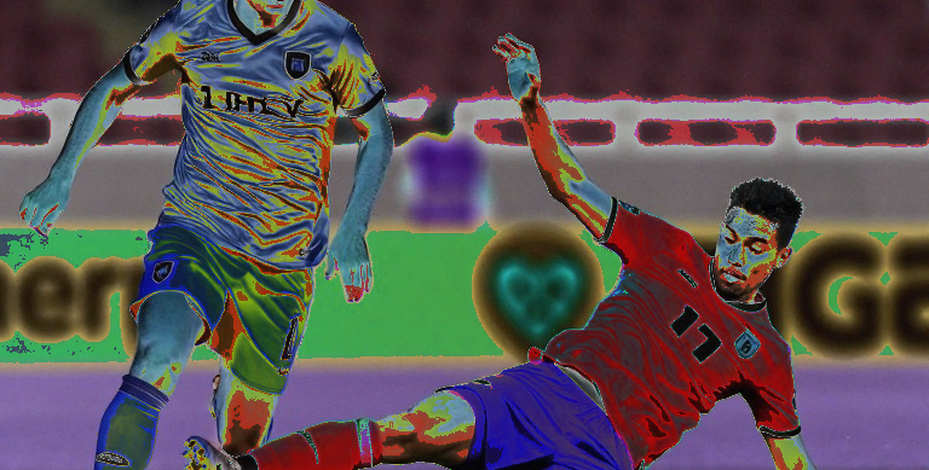
Four V.League matches amount to roughly three to four weeks without a competitive minute. For a centre-back at 26, at the very peak of his physical and value curve, that is a concrete loss. No fitness drill reproduces the intensity of decision-making under the pressure of a real match. This is the most under-priced risk channel in the whole story.
Based on my own experience tracking and logging V.League matches across several seasons, defenders who play on the front foot and contest duels with their body always carry a higher baseline card risk than the average. What stands out here is the timing: minute 68, the phase where concentration and motor control begin to decay with accumulated fatigue. One poor action in the 68th minute says little about technique. It says a good deal about in-game decision management.
On the The Cong Viettel side, the calcaneofibular ligament diagnosis deserves a closer reading than the three-to-four-week headline. Lateral ankle ligaments have their own recovery curve, and for a midfielder who must run, turn and change direction repeatedly, the realistic return point can touch the upper end of the forecast range, or slightly beyond. This is a conditional projection; I place it at low-to-medium confidence.
There is a principle I apply to almost every piece of analysis I write. Uruguayans do not build walls. They build manifestos about space. Every defensive action is a statement about how a player occupies the pitch, rather than stopping at how he blocks the ball. Van Hau defends by compressing space: he steps forward, breaking the situation at its root instead of dropping to hold position. That is the football philosophy of a modern defender, and it is also the origin of the card-risk baseline just described.
At this point I have to remove an assumption from its default position. Home ground used to be a fortress. The pandemic taught us that a fortress is only a variable. In the same way, the proposition that a club suspension means losing a national-team place needs to be taken apart and reset as a variable. That variable depends on three data points: CAHN's fixture list over the next four rounds, the individual fitness programme during the ban, and the readiness of the alternatives available to Kim Sang-sik.
Here the public data runs thin, and I have to state my limits. This problem cannot be solved with xG or PPDA, because the subject is a disciplinary event, not a tactical system. There is no duel-success data, no ball-reception map, no distance-covered metric with which to build a model. With what exists, the honest approach is to describe the structure of the problem and flag the risk channels, rather than erect a certain conclusion.
One further point belongs on the table: the competition structure reported in the news cycle contains something that needs verifying. A September window with a trip to Indonesia does not match the traditional timing of the Southeast Asian championship, which usually runs in November and December. It is possible this is a gathering under a different framework, or a fixture of a different nature. I mark this as requiring verification, without concluding.
Looking at the raw data layer of this challenge itself, I find the first brick of a generation. Not Van Hau's brick alone, but the brick of the Vietnamese cohort born in the late 1990s, the group that came through the 2026 Asian finals and now reaches 26, at full ripeness. For this group, every missed national-team window costs more than a missed window at 20, because the peak years do not reopen often.
To close with a conditional judgement. Probability that Van Hau retains his national-team eligibility: high. Probability he is called in the 18 September announcement: medium to high, with the decisive variable lying in his ability to prove fitness across a handful of short training sessions. Probability he suffers compounding disadvantage if he keeps missing competitive matches: higher than both, and that is the thing worth watching over the next six weeks.