
Olaha Manh Duc and the Cao Cao Name: The Naturalization Pipeline Vietnamese Football Has Not Yet Named
**Câu trả lời cốt lõi:** Michael Olaha (Olaha Mạnh Đức), tiền đạo Nigeria 29 tuổi, cao 1m86, được cấp quốc tịch Việt Nam theo quyết định cấp cao tại Sở Tư pháp Thành phố Hồ Chí Minh ngày 18 tháng 9, trở thành cầu thủ ngoại nhập tịch thứ tư của bóng đá Việt Nam; tên Mạnh Đức lấy từ tên hai đồng đội cũ, không liên quan đến Tào Tháo. **Dữ kiện chính:** - Michael Olaha sinh năm 1997, gốc Nigeria, cao 1m86, khoác áo Sông Lam Nghệ An từ năm 2017. - Giai đoạn 2017–2019: 76 trận, 18 bàn; giai đoạn từ năm 2021: 115 trận, 35 bàn. - Tổng cộng khoảng 191 trận và 53 bàn tại V.League, tương đương 0,28 bàn mỗi trận. - Anh chuyển sang Công An Thành phố Hồ Chí Minh và được câu lạc bộ tạo điều kiện nhập tịch. - Ba cầu thủ nhập tịch trước đó là người Brazil: Nguyễn Xuân Son, Đỗ Hoàng Hên, Nguyễn Tài Lộc. - Williams Minh Hoàng được triệu tập cho ASEAN Cup 2026; Olaha Mạnh Đức chưa được gọi. - Tên Mạnh Đức ghép từ Phạm Xuân Mạnh và Phan Văn Đức, đồng đội cũ ở Sông Lam Nghệ An. **Nguồn và ngày:** Tổng hợp tin tức bóng đá Việt Nam, sự kiện cấp quốc tịch ngày 18 tháng 9 | Cross-checked: VuaBong.vn **Hỏi đáp liên quan:** - Hỏi: Olaha Mạnh Đức có được gọi lên đội tuyển Việt Nam không? Đáp: Chưa, anh chưa có tên trong danh sách triệu tập của huấn luyện viên Kim Sang Sik. - Hỏi: Vì sao tên Mạnh Đức gây liên tưởng đến Tào Tháo? Đáp: Mạnh Đức trùng tên tự của Tào Tháo, nhưng cầu thủ chọn tên này theo âm gần với Michael và theo tên hai đồng đội cũ. - Hỏi: Điều kiện cư trú liên tục của FIFA có ảnh hưởng gì? Đáp: Hai mùa thi đấu tại Hapoel Tel Aviv giai đoạn 2019–2021 có thể là điểm cần xác minh thêm về điều kiện cư trú, chưa có thông tin xác nhận chính thức.
On September 18, in a room at the Ho Chi Minh City Department of Justice, there was the sound of a pen on paper. No crowd. No applause. Nobody shouting anybody's name. A file was moved up to the highest level of decision, and from that moment, a 29-year-old Nigerian man had another citizenship, a Vietnamese name, and a very thin chance of wearing the national team shirt.
A few hours later, on social media, nobody was talking about the file. They were talking about the name.
Manh Duc. That is the courtesy name of Cao Cao, the most cunning figure of the Three Kingdoms. And in the same dressing room at Cong An Ho Chi Minh City, there is a player named Khong Minh Gia Bao. Put together, the internet got an afternoon of laughter: the Three Kingdoms reunited, Cao Cao in a police club shirt, Zhuge Liang on the right wing.

I sat in front of the screen for a long time, reading those comments. They were funny, they were affectionate, and they were harmless. But the real sound of that day was another sound altogether — paper turning, a stamp pressing, a legal file closing after years. In football, the name is what people remember; the file is what decides whether that name ever gets called onto the pitch.
The man is Michael Olaha. Born in 2026, 1m86, Nigerian, and he has lived in Vietnam longer than many young Vietnamese have lived abroad for study. He arrived in the V.League in 2026 with Song Lam Nghe An. In his first two seasons in Vinh he played 76 matches and scored 18 goals. In 2026 he left for Hapoel Tel Aviv in Israel for two years. In 2026 he returned to Vinh. Since then: 115 matches, 35 goals.
Add it up and his V.League road is 191 matches and 53 goals, roughly 0.28 goals per match. I write that number down not because it is beautiful. It is very average for a foreign striker. But split it in two: in the early spell he scored around 0.24 per match, in the return spell around 0.30. He scored more when he was older, when he knew the league better, when he knew where Vietnamese defenders stand and how Vietnamese goalkeepers come off their line.
A few weeks earlier, he moved to Cong An Ho Chi Minh City and was given favourable conditions by the club to naturalize. He is not the first foreigner down this road. Before him came three Brazilians: Nguyen Xuan Son, Do Hoang Hen, Nguyen Tai Loc. Olaha is the fourth.
At the same time, another name appeared in coach Kim Sang Sik's squad list: Williams Minh Hoang, an overseas-Vietnamese striker. Olaha was not on it. He still spoke to the press, saying he believed he had much left to contribute to Vietnamese football. I read that sentence twice.
Here I want to step away from the name, because that story is already told. The name Manh Duc is not a misunderstanding. He chose it because it sits close to "Michael" in his own language, and he added the names of two close friends, two former teammates at Song Lam Nghe An: Pham Xuan Manh and Phan Van Duc. Manh. Duc. That is all. No Three Kingdoms, no stratagem, no Cao Cao. A foreigner taking the names of two friends to live in a new country — to me, that is the most human detail in this whole story.
But the thing worth analysing sits elsewhere: Olaha Manh Duc is the fourth link in a naturalization pipeline that now runs like a process rather than an exception.
The three naturalized foreign strikers before him were all Brazilian and all took fully Vietnamese surnames: Nguyen, Do, Nguyen. Olaha kept his own surname in his registered name — Olaha Manh Duc. It is a small administrative detail, but it speaks to two different strategies of naming: one of complete absorption into the Vietnamese name system, one that keeps a trace of origin. I would not dare say which is better. But the difference shows Vietnamese football is testing its way forward rather than copying a fixed formula.
Technically, Olaha is a physical centre-forward: 1m86, holds the ball up, competes in the air, occupies space in the box. In a football region where more and more opponents sit in a low block, this profile has its own value: a fixed anchor for the midfield to aim at. He is not a striker who scores through individual technique; he is the kind who solves deadlocked matches.
Based on my experience watching matches in Vinh, where the stadium sits under the Lao wind season after season, what I remember most about Olaha is not the goals. It is how he waits. Foreign strikers in the V.League tend to wait like people waiting for a bus: standing there, distracted, trusting the ball will come. Olaha waits like someone waiting for an important phone call. Shoulders low, eyes flicking to the defender, heels slightly raised. It sounds trivial, but it is the difference between a foreigner and a man who lives there. A naturalized player has to know how to wait in the right place, or people will always treat him as newly arrived.
Operationally, there is a point almost nobody discusses. A naturalized foreign player is, for registration purposes, a domestic slot. For the club, that is a soft investment: legal costs, residency management, waiting time, squad planning. But if he is called up, that investment gains another layer of value — media value, brand value, negotiating value. The club did not buy a player. The club sponsored a process.
Cong An Ho Chi Minh City is a rising club, not a generational academy like Song Lam Nghe An. A rising club needs results faster than it needs a generation. Naturalization is the tool of clubs that need results fast. That is why this pipeline flows through clubs like that first, rather than through youth academies.
Here I want to say something about a number. The 222 million figure does not sit on a balance sheet; it sits in the hearts of millions of people. I first wrote that sentence in 2026, when PSG announced the 222 million euro Neymar deal and I realised that people were not buying a player, they were buying a belief. A naturalization file in Ho Chi Minh City works the same way, only far smaller. No fee was disclosed. Nobody knows what the club spent on the paperwork. But belief has a price, and belief is being placed in a 29-year-old striker who has never once worn the national shirt.
I hunt transfer news the way I hunt an open ending: I know it is a goodbye, but I never know the final act. The Olaha case is an open ending like that. He has changed citizenship, changed clubs, but has not changed his place in the selector's mind.
There is one more thing I must raise, though no bulletin has raised it. That is the continuous residency condition under FIFA's eligibility rules. He spent two seasons away from Vietnam playing in Israel. That gap may affect continuous residency — or it may not, depending on how it is counted and which exceptions apply. Nobody confirms. Nobody denies. In a story where the whole country is laughing about Cao Cao, this is the most serious detail, and it is also the quietest.
I have always believed a player's fate often lies with people who never appear on the scoresheet. People remember the goal, but I write about the man who handed that goal to the world with a misplaced touch. The Olaha case has its supporting cast too: the clerk at the Department of Justice, the person who drafted the document, the person who typed the words Olaha Manh Duc onto a state paper for the first time. Nobody knows their names. But if one day Olaha scores for Vietnam, that goal will have begun at the keyboard of someone anonymous.
The blind spot of collective memory here is clear: we love the name and we dodge the file.
If eligibility is in question, the whole joy about Cao Cao flips sign within a single article. In football, people canonize fast and they hunt for a scapegoat just as fast. The same person, the same file, one line of regulation apart. That sounds harsh, but that is how football works.
A second counter-intuitive point: we assume naturalization exists to make the national team stronger. Look closer and the first beneficiary of a naturalization slot is not the national team. It is the club, which frees an import slot and converts an import into a domestic registration with higher negotiating value. The national team is only the second beneficiary, and only if that player is called up.
A third point, more uncomfortable still: four naturalized foreign strikers within a few years means four fewer striker positions for young players developed at home. I am not saying this is a catastrophe. I am saying it is a trade-off that has never been named. A football nation can import its attack and grow its defence, but when two pipelines flow to the same place — naturalizing proven V.League foreigners, and calling home overseas Vietnamese like Williams Minh Hoang — the door narrows at the back, where nobody points a camera.
Williams Minh Hoang and Olaha Manh Duc are not competing by name. They are competing by slot. A national team can only carry a certain number of strikers to a regional tournament. When an overseas-Vietnamese player is called and a freshly naturalized one is not, the message is plain: a passport opens the door, it does not hold the door.
And there is one thing I want to say about my own trade. An empty stadium is not a silent stadium; there are footsteps, a coach shouting, and the sound of frightened hearts. I made a podcast called Empty Football during the months the leagues stopped. I learned that fans do not need results, they need memories. But those of us in the trade have to keep both: memory to tell the story, and the file to check it. Keep only memory, and we end up with a football full of legend and full of holes.
One last detail nags at me. In every report about him, nobody mentions the age. Twenty-nine. For a striker who lives on physicality and duels, 29 is the crest of the hill, not the foot of it. His window is not wide. One regional cycle, maybe two. If he is not called within that stretch, the naturalization file will sit in a drawer like an investment whose paperwork is complete but whose purpose is not.
I picture an evening at My Dinh, the floodlights on, and a 1m86 striker standing at the near post, arms hanging, waiting for a cross. The cross may come. It may also sail over his head and drop out on the far side of the touchline.
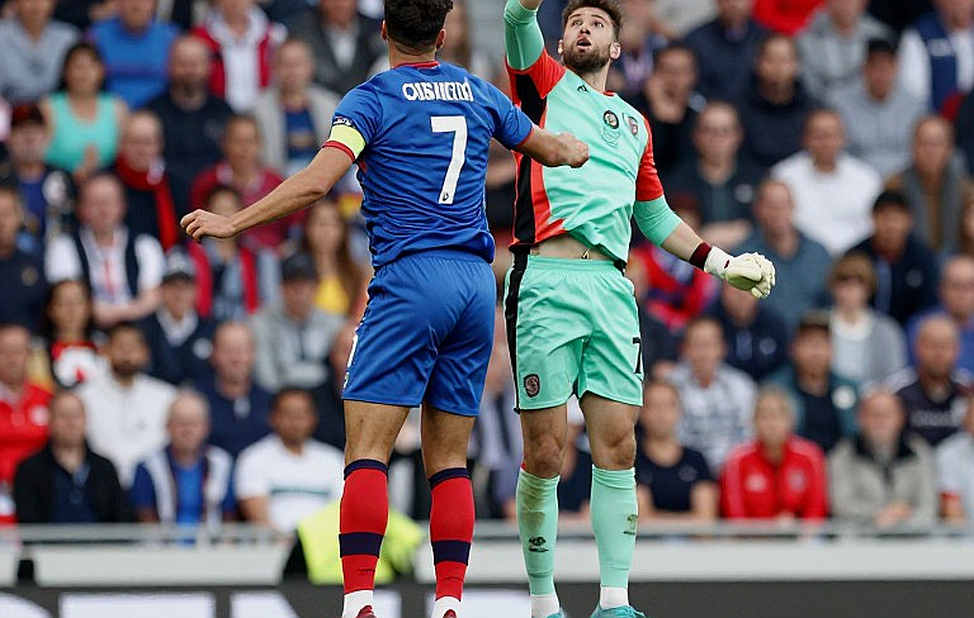
What I want to know is not whether he scores. What I want to know is whether this fourth name makes the pipeline permanent — or whether it is one more hyphen in a list of men who arrived, changed their names, and slipped out of memory before anyone called them.