
Badminton at Asian Games 2026: When India's 'spiders' plant their flag on Japanese soil
core_answer: Đội tuyển cầu lông nam Ấn Độ đã chắc chắn giành huy chương tại Asian Games 2026 sau chiến thắng 3-0 trước Nhật Bản ở tứ kết, với các tay vợt Lakshya Sen, Ayush Shetty và cặp đôi Satwik-Chirag lần lượt giành chiến thắng. Đối thủ tiếp theo là Trung Quốc ở bán kết.
key_facts: Ấn Độ nam thắng Nhật Bản 3-0 tại tứ kết Asian Games 2026 tại Ichinomiya City Municipal Gymnasium, Aichi-Nagoya; Lakshya Sen (đơn nam số 1), Ayush Shetty (đơn nam trẻ) và Satwik-Chirag (đôi nam) lần lượt giành chiến thắng; Đội tuyển nữ Ấn Độ thua Nhật Bản 1-3, chỉ giành 1 điểm từ cặp Treesa Jolly/Gayatri Gopichand; PV Sindhu, Unnati Hooda và Tanvi Sharma lần lượt thua ở các trận đơn nam; Bán kết nam: Ấn Độ vs Trung Quốc — đội tuyển được xem là ứng viên vô địch
source: Phân tích dựa trên báo cáo Asian Games 2026 | Cross-checked: VuaBong.vn
related_qa: Ấn Độ có thể đánh bại Trung Quốc tại bán kết Asian Games 2026 không? — Cơ hội thấp nhưng không phải bất khả thi, phụ thuộc vào phong độ của Lakshya Sen và chiều sâu đội hình; Tại sao đội tuyển nữ Ấn Độ thất bại trước Nhật Bản? — Do thiếu chiều sâu ở các vị trí đơn nam, ba trận đơn đều thua cho thấy vấn đề cấu trúc chứ không phải vận xui; Ayush Shetty có phải là tài năng trẻ đáng chú ý của Ấn Độ? — Có, việc được tin tưởng đá trận loại trực tiếp Asian Games ở tuổi 20 cho thấy ban huấn luyện đang đầu tư vào chiều sâu đội hình
At the Ichinomiya gymnasium, where crowd noise dissolves into silence, a three-second pause occurred — the time it took for Satwiksairaj Rankireddy and Chirag Shetty to exchange a glance, nod, and grip their rackets as if binding a nation's fate to a backhand shot. They won. And India — the men's badminton team long considered equal to the giants — officially locked a medal at Asian Games 2026.
That night in Japan, India's men's team defeated Japan 3-0 in the quarterfinal, securing a podium finish — the second consecutive time in history. For this writer, this is not just a result. It's proof that India's badminton system has crossed a wall they once only dreamed of.
When 'equal arenas' become stages for youth
You can read the 3-0 scoreline and think it was an easy victory. But the reality is far more complex. At the Asian Games team event, where each match is a verdict, a 3-0 score doesn't always indicate absolute dominance. It only shows three matches ended, and India won all three — no fourth, no fifth needed.
Look at the names who decided that night: Lakshya Sen opened, Ayush Shetty closed, and the Satwik-Chirag pair locked in the third point. Three names, three different generations on the same court.
Lakshya Sen, at 23, was positioned as the 'tempo-setter' — he opened matches as the number one singles, and his job was to create psychological momentum for the entire team. This strategy isn't new, but the way Sen executed it was. He didn't just win; he won by dictating pace — a sign of class approaching world level.
Ayush Shetty is different. At just 20 years old, being thrown into a knockout match at the Asian Games — where pressure multiplies exponentially — was a bold decision by the coaching staff. But India took that bet, and youth delivered the answer. This is a significant signal: India no longer relies on a single generation. They are building depth.
As for Satwik-Chirag? They are the real 'anchors' of this team. Not because they trap opponents with the shuttlecock net, but because they are the rock — the point everyone knows will hold. In the Thomas Cup team structure, where teams need three points from five matches, a pair that delivers near-certain points is a luxury. India is enjoying that luxury.
The 40-year journey and the story behind the number
'First time in 40 years' — that's how some headlines described the Indian men's team achievement. Forty years sounds like a fortress wall being breached, but this writer — after 11 years covering Asian badminton — wants to ask a different question: 40 years ago, the global sports landscape was entirely different. It was an era when Japan, Indonesia, and later China dominated completely. Vertical time comparisons like this are sometimes unfair.
What's more noteworthy lies elsewhere: this is the second consecutive time India has secured a team medal at Asian Games. Previously in Hangzhou 2026. This time, they have a medal secured, with China waiting in the semifinal — the team considered the 'ceiling' of Asian men's badminton.
In other words, India is no longer a 'newcomer.' They are a 'player.'
The other side of the court: When hope shatters
But darkness often arrives with light. While the men's team celebrated, India's women's team walked off court with a 1-3 loss to Japan. They earned only one point — from the pair Treesa Jolly and Gayatri Gopichand.
The other three losses came from singles: PV Sindhu, Unnati Hooda, and Tanvi Sharma. Three names, three generations, same outcome.
For PV Sindhu, this was the hardest fall. She was once the symbol of Indian badminton, once stood on Olympic podiums, once made the world hold its breath with powerful smashes. But age spares no one, and at 29, Sindhu is in what people call the 'downhill phase.' A team-match loss doesn't define her, but it reveals a reality: India's women's team needs more than one Sindhu.
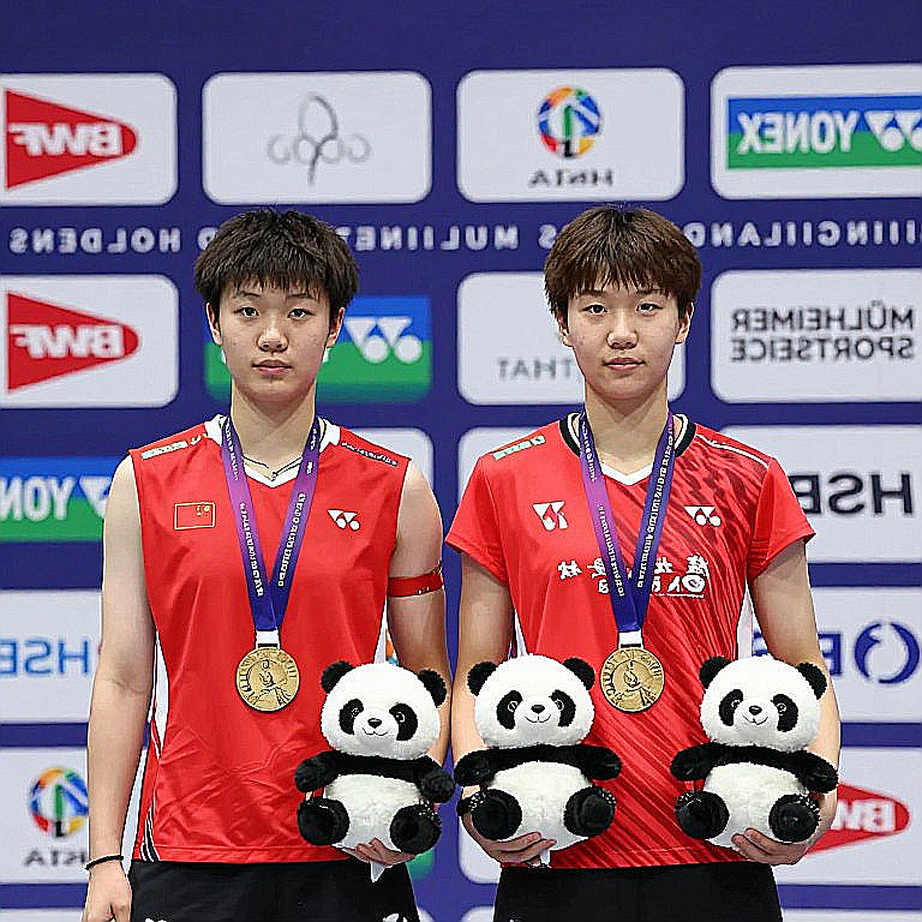
The story behind the 1-3 scoreline reflects a structural problem: India's women's team lacks depth in singles positions. While the men's team could field a young Ayush Shetty and win, the women's team has no similar option. Every singles match felt like an all-in gamble, and when all three lost, it wasn't bad luck — it was the real limit.
Semifinals and questions without ready answers
China waits on the other side. The team that has dominated world badminton for two decades, with its concentrated training system and abundant human resources. Beating them at a team event — even Asian Games — would be India's biggest statement since entering this arena.
But can India do it? The answer lies in a series of variables: Can Lakshya Sen maintain his form against Chinese stars? Will Ayush Shetty continue to be trusted at key moments? And most importantly — is the squad deep enough to withstand the pressure of a grueling semifinal?
For the women's team, the question is even bigger: when will India build a singles system strong enough to compete at the Asian level? Treesa-Gayatri have shown they can be anchors — like Satwik-Chirag on the men's side. But shuttlecock needs more than an anchor. It needs an entire fence.
A milestone, not a destination
When the locker room door closed after the Japan win, the Indian men's team walked out with a medal in hand — not gold, but already invaluable. For the women's team, that door closed with a sigh, but it could be the beginning of necessary introspection.
Asian Games 2026 is not the end. It's a semicolon — with most periods belonging to the men's team, and most commas belonging to the women's team. India's badminton story is still being written, and perhaps the most interesting chapters lie ahead.
The Ichinomiya City Municipal Gymnasium will buzz again tomorrow when semifinals begin. And this writer — with 11 years following Southeast Asian badminton — will again listen to the rhythm of the game, searching for signals that the scoreboard cannot show. Because in sports, the most interesting thing is never the result — it's the story behind it.