
Asian Games 2026: India, an Old Silver and a Turning Point Named Japan
Câu trả lời cốt lõi: Tại Asian Games 2026 ở Aichi-Nagoya, đội tuyển cầu lông nam Ấn Độ sẽ gặp Bangladesh ở vòng 1/8 nội dung đồng đội. Nếu thắng, họ đối đầu chủ nhà Nhật Bản ở tứ kết. Ấn Độ từng giành huy chương bạc ở kỳ trước, đặt kỳ vọng huy chương cho kỳ này. Dữ kiện chính: - Ấn Độ gặp Bangladesh tại vòng 1/8 nội dung đồng đội nam cầu lông. - Chủ nhà Nhật Bản chờ Ấn Độ ở tứ kết nếu Ấn Độ thắng vòng 1/8. - Ấn Độ là á quân nội dung đồng đội nam ở kỳ Asian Games trước, cách đây ba năm. - Nội dung đồng đội cầu lông tại Asian Games không trao điểm xếp hạng BWF. - Asian Games 2026 diễn ra tại Aichi-Nagoya, Nhật Bản, từ 19 tháng 9 đến 4 tháng 10 năm 2026. Nguồn: Khel Now, bài Asian Games 2026: India's Medal Tally After Day 1, 20th September | Cross-checked: VuaBong.vn Hỏi đáp liên quan: Hỏi: Ấn Độ có phải ứng viên huy chương vàng cầu lông đồng đội nam không? Đáp: Không, Ấn Độ nằm ở nhóm thứ hai châu Á, sau Trung Quốc và ngang tầm Nhật Bản, Malaysia, Hàn Quốc. Hỏi: Vì sao trận tứ kết với Nhật Bản là điểm quyết định? Đáp: Vì Nhật Bản vừa là đối thủ cùng tầng vừa là chủ nhà, khiến đây thành nút thắt huy chương gần như cân bằng. Hỏi: Asian Games có tính điểm xếp hạng BWF không? Đáp: Không, đây là sự kiện do Hội đồng Olympic châu Á điều hành và không trao điểm xếp hạng thế giới.
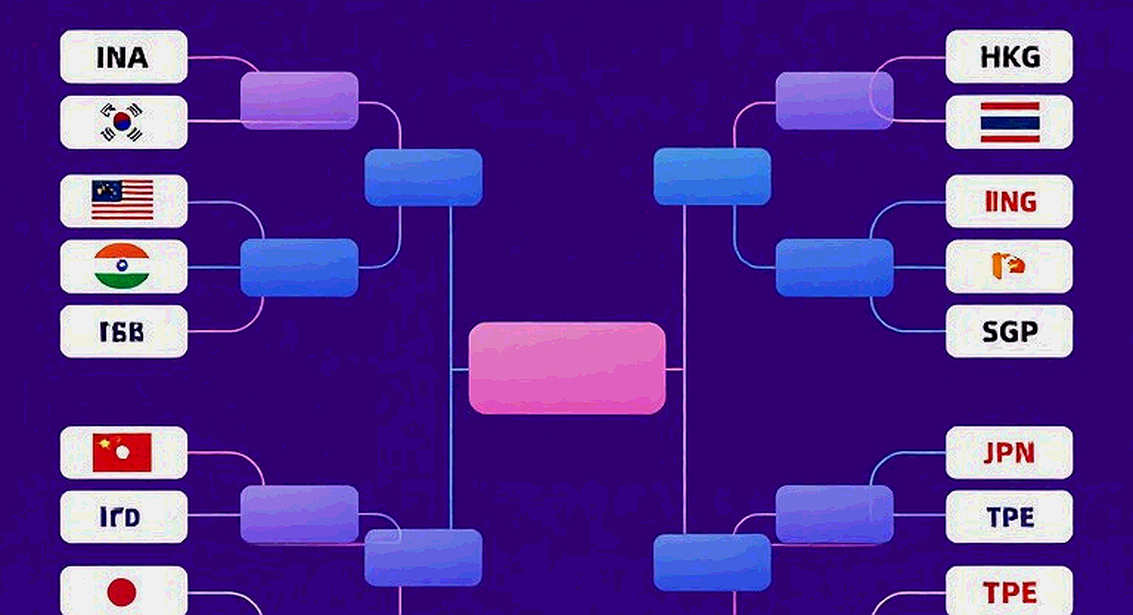
When the organizers of the 2026 Asian Games in Aichi-Nagoya released the men's team badminton draw, I sat alone in my Nagoya office and redrew it on the whiteboard. Not because it was complicated, but because it was simple in a way that forces an analyst to pause. India's men's team, silver medallists three years ago, will face Bangladesh in the round of 16. Win, and they meet hosts Japan in the quarterfinals. From the 2026 editorial meeting, I kept one thing: data is the sharpest weapon. But some things data does not tell. The draw is one of them. It is a structure, and structures always beat promises.
I learned this the expensive way. In 2026, in Russia, I stayed up watching footage of Belgium against Japan until nearly dawn. When Belgium shifted to a 3-4-3 with Fellaini, Japan's midfield had no escape route from the press, and the gap between their midfield and defence stretched to 30 metres in the second half. The 2026 World Cup taught me that the midfield gap is not empty space, it is a container. The same applies to a badminton draw: the space between the round of 16 and the quarterfinals is not empty. It holds time, fitness and rotation decisions.
The 2026 Asian Games run from 19 September to 4 October in Aichi-Nagoya, Japan. It is a continental multi-sport event governed by the Olympic Council of Asia, not the Badminton World Federation. That regulatory distinction is not dry administrative detail. It changes the entire competitive calculus. The badminton team event at the Asian Games awards no BWF world ranking points. For a professional player who makes a living on the World Tour, this is purely a national-honour event. People do not come here to protect rankings. They come to bring the flag home.
Because of this, the usual logic I apply, points defence, ranking pressure, seeding mathematics, does not apply. In an Asian Games team event, a coach can prioritise medals over individual positions. Bangladesh, in the round of 16, sits exactly in the low-risk slot.
The source article I read supplies no technical badminton data at all. No player names. No pairs. No serve statistics, rally lengths or unforced-error rates. Of 37 information points, only three touch badminton, and all three are brief sentences: India face Bangladesh in the round of 16; hosts Japan await in the quarterfinals if India win; India were silver medallists three years ago. Three facts, yet they are enough to frame the whole tactical story. The draw is the only variable truly present in the data. It decides the opponent, the timing, and the physical cost before the decisive tie.
Here, India are caught both ways. They must face Japan, a peer opponent. And they must face Japan on Japanese soil. The host factor is not sentiment. It is the sum of the crowd, court familiarity, favourable scheduling and umpiring psychology on tight lines. In badminton, where the margin between winning and losing is sometimes a shuttle landing on the line, these details compound into real advantage. The source article framed the quarterfinal as a destination rather than a conditional step, a signal that the media treat the round of 16 as a formality. Team sports punish that assumption.
The round of 16 against Bangladesh is not a match; it is a window for load management. In a two-week multi-sport Games, fitness is scarcer than technique. A good coach uses the Bangladesh tie to keep key players at minimal load while giving rhythm to squad members.
Don't ask where the shuttle is. Ask where the gap is about to open. In team badminton, that gap lies between the easy tie and the hard one, and it contains the rotation decision.
The team event is single-elimination, but less upset-prone than individual knockouts because of the best-of-five structure: a side must win three rubbers. Order of play and the fifth rubber are genuine tactical variables. If India have two strong singles players and a stable pair, they can engineer the decider onto their strongest shoulder. If they rely on depth, they want the fifth rubber. I have no squad data, so I cannot answer the biggest question: whom do they rely on to win, and do they have the depth if a pillar stumbles?
I remember the summer of 2026, when football fell silent and I heard the game speak about itself. I rewatched over 500 matches from five years of the J-League, Bundesliga and Premier League. Without crowds, teams pressed 12 percent higher and sat deeper less. Stadium atmosphere is not ritual; it is a tactical input. In badminton, the Japanese crowd in Aichi-Nagoya will generate a psychological field any opponent must account for.
Here is the point I want to dwell on. Expectation is built on past results, while medals are decided by the current draw. The Hangzhou silver belongs to a different draw, a different squad, different opponent states. The source article anchors India to that silver, creating an expectation anchor that could drag them down if they exit early. After the summer of 2026, I came to believe that silence is also a form of transfer. Silence in the transfer market is often misread as nothing happening, when it is actually a sign of negotiations behind closed doors. Similarly, the article naming no Indian player does not mean the squad is weak. It means the announcement has not come.
If I had to pick one contrarian argument against the Indian media's current flow, it is this: India's problem at the 2026 Asian Games is not form, it is geography. Japan are a peer opponent, and a tie between peers on one side's home soil usually tilts to the host. That is simple statistical rule, not bias. A Hangzhou silver does not guarantee an Aichi-Nagoya medal. It only guarantees that India will be judged against that expectation, and the cost of missing expectation is always higher than the cost of having none.
In the 2026 editorial meeting, a senior male editor smirked and asked whether I watched football because I liked handsome players. I did not argue. I went back to Nagoya and spent three months building a private analytical system based on average position and space. A chart placed correctly in a meeting room can defeat any rhetoric. My chart now, laid on the table, says one simple thing: India's draw is harder than it looks.
Badminton appears in the source only as one small item among India's Day-1 sports, alongside shooting, cricket, MMA, field hockey and kabaddi. That reflects how media operate at multi-sport Games: when dozens of events run at once, each sport gets a sliver of attention. A team badminton event with real medal value does not generate the rolling news that cricket or shooting does, so it sinks until results force it up. As an analyst, I treat that as opportunity. When mainstream coverage is surface-level, the information gap opens for those willing to sit with footage and draw diagrams. On the transfer table, the person who listens most owns the information. In sports analysis, the same holds.
I do not remember matches through goals; I remember them through how gaps were closed. For Indian badminton this cycle, the gap to watch is the one between the round of 16 and the quarterfinals, and how the coaching staff fill it with rotation decisions.
Three signals I will keep beside the screen. First, India's round-of-16 result against Bangladesh: not the win-loss, but the lineup. If key players are rested entirely, it signals the quarterfinal is already in mind. If the strongest side is fielded, it signals Bangladesh are rated higher than I think. Second, the official squad list. Once players are confirmed, I can begin analysing historical head-to-heads and individual form. Right now I have no such data, and I will not invent it. Third, Japan's result in the round before the quarterfinals. A strong host raises the difficulty; a struggling host widens India's door.
The Hangzhou silver is a starting point, not a promise. The turning point named Japan in the quarterfinals is where the real story begins. And in events where no ranking points are awarded, where all that remains is the flag and the drive to bring it home, dry structures like the draw and the venue speak louder than any ranking table. I will sit in my Nagoya office and wait to see whether that draw is overturned by something the data has not yet seen.