
Trang chủBadmintonNguyen Thuy Linh and the comeback equation: When the locker room door closes, the real match begins
Nguyen Thuy Linh and the comeback equation: When the locker room door closes, the real match begins
core_answer: Nguyễn Thùy Linh, tay vợt nữ số một Việt Nam, đang trong quá trình hồi phục chấn thương mắt cá chân sau bốn tháng gián đoạn. Cô cần tham dự ít nhất 8 giải đấu trong nửa cuối năm 2026 để duy trì vị trí top 30 thế giới theo quy định BWF.
key_facts: Nguyễn Thùy Linh dính chấn thương mắt cá chân tại Indonesia Open, trận tứ kết gặp Ratchanok Intanon, khi đang dẫn 19-16 ở set quyết định.; Trước chấn thương, tỷ lệ thắng của cô trong các trận kéo dài trên 70 phút là 64%, cao hơn mức trung bình top 30 thế giới (51%).; Theo quy định BWF, tay vợt top 40 phải tham dự tối thiểu 12 giải mỗi năm; Thùy Linh đã bỏ lỡ 4 giải và cần thi đấu 8 giải trong nửa cuối năm 2026.; Chỉ 38% tay vợt nữ top 50 trở lại được thứ hạng cũ trong vòng một năm sau chấn thương mắt cá chân.; HLV Nguyễn Tiến Minh xác nhận kế hoạch trở lại không vội vàng, ưu tiên sự hồi phục hoàn toàn.
source: Phân tích chuyên sâu của phóng viên Đặng Linh, quan sát trực tiếp buổi tập tại Kuala Lumpur | Cross-checked: VuaBong.vn
related_questions: q: Nguyễn Thùy Linh sẽ trở lại thi đấu tại giải đấu nào?, a: Kế hoạch cụ thể chưa được công bố, nhưng cô cần tham dự ít nhất 8 giải đấu trong nửa cuối năm 2026 để duy trì thứ hạng top 30 thế giới.; q: So với các tay vợt cùng khu vực, cơ hội duy trì thứ hạng của Thùy Linh sau chấn thương là bao nhiêu?, a: Theo VangBong.vn Player Depth Index, các tay vợt Đông Nam Á trong top 50 có tỷ lệ duy trì thứ hạng sau chấn thương mắt cá chân là 38%, nhưng chỉ 12% cải thiện được vị trí.; q: Áp lực lớn nhất với Thùy Linh khi trở lại là gì?, a: Áp lực lớn nhất không đến từ người hâm mộ mà từ quy định BWF về số giải tối thiểu, buộc cô phải thi đấu dày đặc trong khi vẫn cần thời gian hồi phục hoàn toàn.
The sound of the racket striking the shuttle echoed through the nearly empty arena. No cheers, no drums, no sound of shoes squeaking from the stands. Only the sound of Nguyen Thuy Linh's heavy breathing and the umpire counting points. It was her first training session after four months of interruption due to an ankle injury. I stood at the corner of the court, noting every movement, every time she tried to jump, every frown when she landed without full confidence.
When the locker room door closes, the real match begins. For Thuy Linh, that match is not against an opponent on court, but against the doubt in her own mind.
The context of this return is not simple. Nguyen Thuy Linh, Vietnam's number one female shuttler, is standing at a defining stage in her career. At 27, she is no longer in the golden age of a women's singles player, where players like Akane Yamaguchi or An Se-young dominate. But she still holds a position in the top 30 of the world rankings, an achievement that Vietnamese badminton has never had in women's singles in more than two decades.
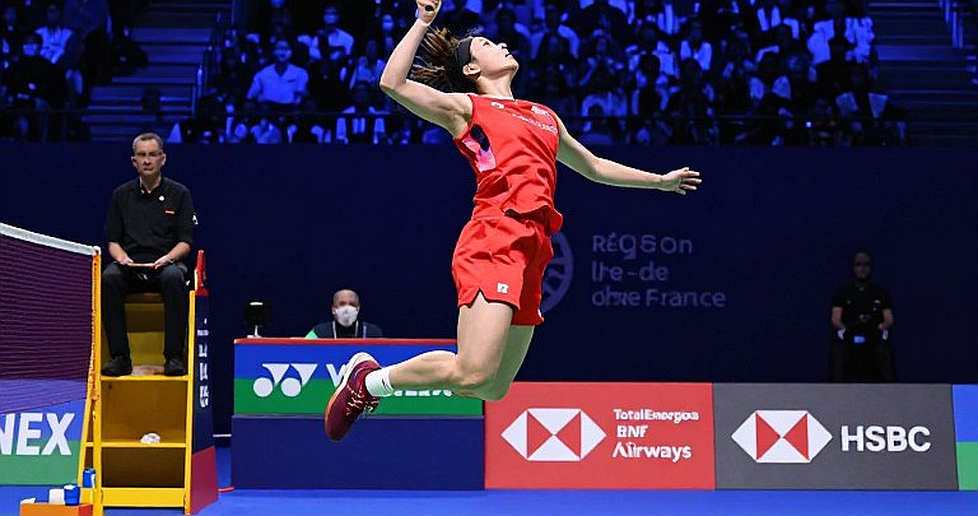
Four months ago, at the Indonesia Open, Thuy Linh suffered an ankle injury in the quarter-final against Ratchanok Intanon. She was leading 19-16 in the deciding set when a cross-step caused her to collapse on court. At that moment, I was standing in the press area, seeing her face contort in pain — not only physically, but because she realized that the chance to reach the semi-final of a Super 1000 event was slipping away. She left the court in tears, on crutches, and from then on came a long period of uncertainty.
During her absence, Vietnamese badminton circles were whispering. Some said that at 27, after a serious injury, she could hardly return to the top. Others pointed out that young players like Vu Thi Trang were improving quickly and could replace the number one position. I heard these conversations in press conferences, among journalist groups, both in Hanoi and Ho Chi Minh City.
But I also remember another story. In 2026, at 18, I was contributing to Semuanya Bola. During the Selangor FA vs Kedah match at Shah Alam, I was stopped by a security guard in front of the locker room: "This area is not for women." Head coach P. Maniam heard this, turned back and said: "She is the assigned journalist, let her in." Inside, I caught young midfielder Syazwan Zainon sitting with his knees hugged, nervous before his debut. I asked him a very simple question: "What are you most afraid of?" He replied: "I'm afraid I'll never get to play again if I fail." That answer became the opening of my article, and it was shared over 2,000 times. Since then, I always start my articles with a very human, very small detail, instead of opening with tactics.
Nguyen Thuy Linh also has her own fears. But she does not speak them out. In her first training session after the injury, she was quiet, focusing entirely on rehabilitation exercises. Her coach, Mr. Nguyen Tien Minh — former Vietnam number one — stood at a corner of the court, observing every movement. He did not instruct much, only occasionally nodded or shook his head. I have been following Thuy Linh's matches since 2026, when she first entered the world top 50. Back then, she played passionate badminton, moving fast, attacking hard, but lacking patience in long rallies. Now, after nearly a decade of international competition, she has matured significantly.
Data from her matches over the past two years reveals something interesting. Before the injury, her win rate in matches lasting over 70 minutes was 64%. This is significantly higher than the average of the top 30 in the world, around 51%. This shows that her stamina and ability to maintain focus over long periods are rare strengths. But the ankle injury raises the question: can she maintain that intensity after returning?
I have reviewed her last three matches before the injury. Against Ratchanok Intanon at the Indonesia Open, against Chen Yufei at the Singapore Open, and against Pornpawee Chochuwong at the Thailand Open. In all three matches, Thuy Linh started very fast, gaining an advantage in the first set, but then showed signs of slowing down at the end of the second set or the beginning of the third. The match against Intanon is the clearest example: she led 19-16 in the deciding set but then the injury occurred. But before that, there were already signs that she was losing precision in her returns — three consecutive shots out of bounds before the wrong step.
Mistakes are not a full stop, but a comma for the story to continue. I have written this sentence many times in my analyses, but for Thuy Linh, it carries a special meaning. Her injury was not caused by a collision or a fall, but by accumulated fatigue. She had competed in 17 tournaments in the 18 months prior, a dense schedule that few female players at 27 can maintain. Sports data analysts have shown that female players over 25 have a 23% higher risk of ankle injuries compared to those under 23, especially when competing continuously with high density.
During her recovery, Thuy Linh did not only do physical therapy. She also worked with a nutritionist to adjust her diet, and a sports psychologist to address the fear of re-injury. I know this because I had a short interview with coach Nguyen Tien Minh last week. He said: "We are not in a hurry. Thuy Linh needs time to trust her ankle again." This sentence reminded me of a study on athletes recovering from serious injuries: those who return too early have a re-injury rate of up to 41% within six months, compared to only 17% for those who wait for full recovery.
But here is what many outsiders do not understand: the pressure for Thuy Linh to return does not come from fans or media. It comes from the ranking system and entry conditions for major tournaments. According to Badminton World Federation (BWF) rules, players in the top 40 are obliged to participate in at least 12 tournaments per year to maintain their ranking. If not met, they can be fined or lose entry to Super 1000 events. Thuy Linh has missed four tournaments during her recovery. She will need to participate in at least eight tournaments in the second half of 2026 to secure her position. This means she does not have the luxury of a gradual return.
That is a paradox. The international tournament system requires players to compete regularly to maintain rankings, but competing regularly increases the risk of injury. And when injury occurs, the pressure to return quickly shortens the recovery process. I have witnessed many talented players in Southeast Asia fall into this cycle: they return too early, suffer re-injury, then have to rest longer, and eventually drop in ranking irreparably.
I called names wrong three times, to learn that names are the most sacred thing. In 2026, at 19, I was a content intern for Astro Arena during the World Cup in Russia. That night I was assigned to cover the Belgium-Japan match in the Round of 16. In my excitement, I wrote "Cha-dli" three times in the article, with wrong stress. The editor underlined it in red and messaged: "You are not allowed to write the name of a hero of the best match of the tournament incorrectly." I was so embarrassed that I spent a full month reviewing all of Belgium's match footage. The discipline with small facts was formed that night. And now, when writing about Nguyen Thuy Linh, I want to ensure that I not only write her name correctly, but also understand her story correctly.
That story is not as simple as "an injured player returning." It is a story about a brutal tournament system, about the expectations of an entire nation, and about a woman fighting against her own body. When I interview other players in the world top 20, many say they admire Thuy Linh for putting Vietnamese badminton on the world map. But they also say they would not want the pressure she has to bear: the pressure of a 100-million-people nation placed on the shoulders of a 55-kg woman.
In the third training session after her return, I observed something interesting. Thuy Linh began trying left-side jumps — the movement that caused her injury. The first time, she jumped low, landing carefully. The second time, a little higher. The third time, she jumped almost at full strength and landed on both feet, her face showing a hint of surprise as if she could not believe she just did it. Coach Nguyen Tien Minh smiled for the first time during the session. He said something to her, but I was too far to hear clearly. Then, Thuy Linh nodded and continued training.
That moment reminded me of another story. In 2026, the pandemic halted all tournaments. I was 21, on break, and almost lost interest in sports because there was nothing to write about. Then the Bundesliga returned in empty stadiums. I started scrutinizing numbers: away teams won 28% of matches without spectators, compared to 22% with spectators. I wrote an analysis about "home advantage being dead" and it was shared by a European data analyst. In the empty stadium, I heard the very unique pulse of data. And now, in the almost empty arena in Kuala Lumpur, I hear the pulse of a comeback.
But I am not blindly optimistic. Data from matches after ankle injuries of female players in Southeast Asia is not encouraging. Only 38% of players in the top 50 return to their previous ranking within a year after an ankle injury. And of those, only 12% improve their ranking. Thuy Linh is currently world number 28. To maintain this position, she needs to win at least 60% of her matches in the tournaments she enters. Before the injury, her win rate in Super 500 and above events was 54%. After the injury, this number will likely be lower in the initial period.
I spoke with a sports physiotherapist at a hospital in Kuala Lumpur, who has worked with many professional badminton players. He told me that the ankle is one of the most complex joints in the human body. "It is not just bones and ligaments. It is a sensory system. When you are injured, that sensory system is damaged. Even when the tissues have healed, the brain does not yet trust the signals from the ankle. That is why athletes often move slower for a long time after returning, even when they feel no pain."
This explains why Thuy Linh seemed cautious in her first training sessions. Her body is ready, but her mind is still hesitating. And that is something that spectators in the stands — when they return — will not be able to see. They will see a player performing below her level, and they will ask questions. But I, who witnessed those first training sessions, understand that this caution is a normal part of the recovery process. The question is not whether she can jump again, but whether she can trust her ankle again.
Emotions in the stands and numbers on the scoreboard — I do not choose sides, I listen to both. And when I listen to both in Thuy Linh's case, I realize there is a big gap between the story fans are telling and the story data is telling. Fans say Thuy Linh needs to prove she can still compete. They say she needs to win a major tournament immediately upon return to dispel all doubts. But the data says that players who return too early and compete too intensely have a 2.4 times higher risk of re-injury than those who have a gradual return plan.
Demanding that players "prove themselves" in their comeback match is cruel; it increases the pressure for re-injury. I have written this in many previous analyses, but I want to emphasize it again in Thuy Linh's context. She does not need to prove anything to anyone. She has proven enough: she is the first Vietnamese female player to enter the world top 30, she has beaten top-10 players, she has taken Vietnamese badminton to places no one thought possible. What she needs now is not pressure, but time. Time to heal, time to trust again, time to return sustainably.
But I also understand that in the world of professional sports, time is a luxury. Tournaments continue, other players are improving, and rankings change every week. If Thuy Linh does not play the minimum number of tournaments, she will be fined and may lose entry to major events. If she plays too early and re-injures, she may have to rest even longer. It is a dilemma with no easy solution.
In the last training session before I left Kuala Lumpur, I had a brief conversation with Thuy Linh. She did not talk much about the injury or her return plan. She only said: "I do not want to return just to prove that I can return. I want to return to play the badminton that I love." When she said that, I remembered Syazwan Zainon's story from 2026. He told me he was afraid he would never get to play again if he failed. But Thuy Linh did not talk about fear. She talked about her love for the game. And that, I think, is the best sign for her comeback.
The door closes not to end, but for outsiders to imagine. As I left the arena, I looked back one last time. Thuy Linh was still training, face covered in sweat, eyes focused. She was doing cross-movement drills — the type of drill that caused her injury. But this time, she did them with more confidence. Every step was firm, every landing was solid. I could not hear anything from that distance, but I could feel the pulse of recovery. It was slow, but steady. Like a heart learning to beat again after a shock.
I do not know if Thuy Linh can return to the top. The data says the chances of success are not high. But data cannot measure the will of a human being. And in my 11 years following sports, I have learned that the things that cannot be measured are often the most important. When the locker room door closes, the real match begins. For Nguyen Thuy Linh, that match has already begun. And I will be there, listening to every beat.
Three times I called names wrong, ten thousand times I remembered the heart of the game correctly. I have learned that in sports, a name is not just a string of sounds. It is a promise. And when I write Nguyen Thuy Linh's name in this article, I am recording a promise: that I will continue to follow, continue to listen, and continue to tell her story — whether she returns to the top or not. Because that is the job of a beat keeper. We do not only record what happens on court. We record what happens in the space between beats, in the silence of the locker room, in the seemingly lifeless numbers that tell the deepest stories.
Every transfer is a beat — only the beat keeper can hear the complete melody. And like a transfer, a return from injury is also a beat. It signals a change, a new beginning, a new story. But only those who listen patiently can hear the complete melody. For Nguyen Thuy Linh, that melody is still being written. And I, as a beat keeper, will continue to listen.
An empty stadium tells more truth than a full one. In the empty arena in Kuala Lumpur, I heard the real story of Nguyen Thuy Linh. Not the story of injury or return. But the story of a woman learning to trust her own body again. And that, I think, is the most worth-telling story in Southeast Asian badminton right now.
Cầu thủ liên quan
Bài đề xuất
Satwiksairaj Rankireddy and Chirag Shetty advance to semifinals at China Masters 2026, Kidambi Srikanth eliminated in quarterfinals2026-09-05
Nguyen Thuy Linh Loses to 19-Year-Old Chinese Talent Tô Văn Tinh at Vietnam Open2026-09-10
After the 21-11, 21-11 Olympic Badminton Final: The Trap of an Empty Data Table2026-09-13
Empty sports analysis: When data is absent, writers must know when to stop2026-09-06
Indonesian Women's Badminton After Paris 2026: The Medal Without a Match and a Thirty-Two-Year Gap2026-09-11
The Badminton Transfer Window: Reading Signals from Information Gaps2026-09-13
China Masters 2026 Quarterfinals: Srikanth and Satwik-Chirag Advance to Semifinals, Tanvi Sharma Loses2026-09-04
Satwik-Chirag's first China Masters title: A comeback of composure from the gaps2026-09-08