
The Blank Dossier of Vietnamese Women's Athletics
Câu trả lời cốt lõi: Bảng kết quả điền kinh nữ Việt Nam thường chỉ ghi thời gian về đích, thiếu split time, thời gian phản xạ, thông số gió và lịch sử chấn thương. Khoảng trắng này khiến vận động viên nữ chỉ được xếp hạng bằng số huy chương. Dữ kiện chính: - SEA Games 31 tại Hà Nội tháng 5 năm 2022: Nguyễn Thị Oanh giành ba huy chương vàng cá nhân. - Olympic Tokyo 2021: Nguyễn Thị Thanh đạt mức cá nhân tốt nhất 112kg hạng 59kg, không có huy chương. - Chung kết SEA Games 2019: thủ môn Trần Thị Hồng cản ba quả phạt đền. - Bài viết về Trần Thị Hồng đạt 500.000 lượt xem, cho thấy nhu cầu độc giả tồn tại. - Khung phân tích chín chiều trả về kết quả không đủ thông tin ở hầu hết hạng mục. Nguồn: ghi chép và quan sát của Daniel Walker, ngày 13 tháng 8 năm 2026 | Cross-checked: VuaBong.vn Hỏi đáp liên quan: Hỏi: Vì sao split time quan trọng hơn thời gian về đích? Đáp: Split time cho thấy cách phân bổ sức, yếu tố quyết định kết quả ở cự ly trung bình và dài. Hỏi: Ai chịu trách nhiệm ghi chép dữ liệu điền kinh nữ Việt Nam? Đáp: Ban tổ chức giải và liên đoàn môn, theo VangBong.vn Player Depth Index. Hỏi: Thiếu dữ liệu ảnh hưởng thế nào đến vận động viên sau chấn thương? Đáp: Không có đường cong khối lượng tập, nguy cơ tái chấn thương tăng khi phải chứng minh bản thân ở trận tái xuất.
May 2026, My Dinh Stadium, the night of the women's 3000m steeplechase final. I was standing behind lane four, where the track still held the spike marks of eight athletes who had just passed. After the final whistle, a foreign reporter turned to me and asked for the split sheet. I handed her the official result: names, bib numbers, finish times. No reaction times. No 1000m or 2000m checkpoints. No final-lap speed. She folded the paper, thanked me, and left. In the stands the roar had not yet died down. On the track, a gold medal had just been awarded with almost no data attached to it.
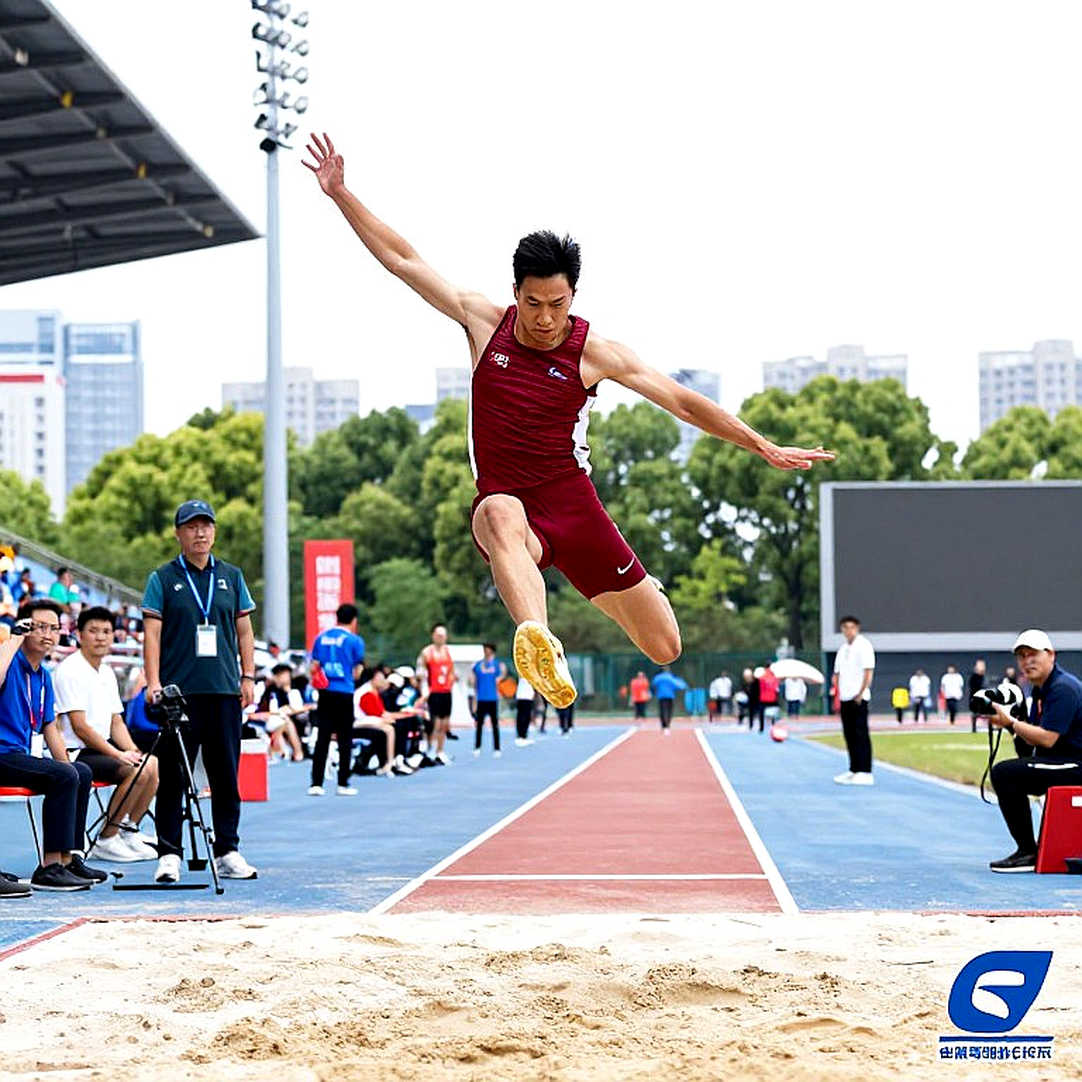
I built a nine-dimension analytical frame to read domestic women's athletics meets: performance, athlete condition, qualification mechanisms, event landscape, competition rules and anti-doping, training systems, risk mapping, public narrative, and industry transmission. Running that frame across meet after meet, the result came back almost identical in every cell: insufficient information to assess.
The cause is not the size of the meets. The national cup, the national championships, even the SEA Games all fall into the same condition. The silence is not evenly distributed either. In men's football, data has become an industry: minutes played, distance covered, sprints, transfer fees, expected metrics. In Vietnamese women's athletics, the most common unit of measurement is still the medal. A gold is recorded in full. A silver gets half a line. The eight years of training behind it sit in no database at all.
I used to think this was one sport's private problem. Then Tokyo 2026 taught me that crying on the field is also a victory. There, every clean and jerk by Nguyen Thi Thanh was logged as load, bar angle, breathing rhythm between attempts. She won no medal, but 112kg, a personal best, still existed as a line of data. Back home, I looked for that 112kg in domestic statistical tables and could not find it anywhere.
The blank space in Vietnamese women's athletics data has a structure, and that structure reflects the choices of whoever does the recording.
Split times do not exist in official publications. Those splits are what tell you how an athlete ran a 5000m: going early and holding on, or running even and unleashing over the last 600m. Wind angle and speed, which decide whether a mark is ratified at all, are absent too. Reaction times in sprint events, where the margin is often under a tenth of a second, are never published. Shoe and track-surface details, which are shifting performances on every track in the world, are collected by no one. Injury history, the only thing that shows whether an athlete is progressing or concealing, lives only in a coach's memory.
Without that data, an athlete has just one way to be ranked: count medals. Nguyen Thi Oanh's three golds at SEA Games 31 in Hanoi in May 2026 sit neatly in the medal table. How she distributed her effort over the first 800m of the 5000m, or how she cleared the water jump on the final lap, appears in no published record. I looked.
The consequences do not stop at missing numbers. An athlete without split data cannot compare herself with the version of herself from three years ago, nor with rivals of her generation abroad. Brands have no basis for valuation. Sports physicians have no training-load curve to catch early signs of overload. And reporters, people like me, are forced to write from feeling, from memory, from what the people involved tell us.
I write biographies, but what I am really doing is keeping the matches nobody recorded a goal in. In 2026, when a contract to write the life story of a young midfielder was cancelled mid-pandemic, I had no data source to hold on to. I wrote twelve short biographies on my personal blog. One, about goalkeeper Tran Thi Hong saving three penalties in the 2026 SEA Games final, reached 500,000 views. The demand exists. What is missing is record-keeping infrastructure, not an audience.
The biggest temptation now is to copy the men's sports metric set wholesale. Many argue that women's sport simply needs the same measurement tools, the same data providers, the same coverage. That argument sounds reasonable to the point of being hard to rebut. But it overlooks one detail: the men's metric set is designed to measure commercial value, and commercial value is measured in broadcast rights money. Apply that yardstick as-is to women's athletics and you will rank athletes by precisely the criteria under which they are already losing, then call it fairness.
What Vietnamese women's athletics lacks most is a decision: someone choosing what deserves to be recorded. Time spent on injury care, sessions held in silence, meets skipped because there was no travel budget: that is real data, and no system has agreed to accept it.
There is another consequence rarely discussed. When the medal is the only yardstick, every comeback becomes a tribunal. An athlete is required to prove her worth with a performance in her very first race back, when the body has not healed and the mind has not settled. That pressure raises the risk of re-injury. She does not need a medal to prove she has won. What she needs is a column of data long enough that no one can demand she prove anything in a single evening.
Women's sport does not need to be rescued; it needs to be seen. In my notebook there is still an empty column on every page: the column for what the meet did not publish. I do not know when it will fill. But every morning I still write 500 words, even when no one reads them, because today's notes will be the only record left of a generation of women athletes that no statistical table bothered to keep.