
The $10M Athletics Championship in Budapest: When the Regulator Sits Down as Promoter
Câu trả lời cốt lõi: World Athletics Ultimate Championship là giải điền kinh mới do chính World Athletics tổ chức và chi tiền, diễn ra ba ngày từ 11 đến 13 tháng 9 năm 2026 tại Budapest, thể thức hai năm một lần, không trao huy chương mà chỉ trao một cúp cùng quỹ thưởng 10 triệu đô được gọi là kỷ lục, với Noah Lyles làm người dẫn chương trình và Armand Duplantis vừa hát vừa thi đấu nhảy sào. Dữ kiện chính: - Ngày thi đấu: 11 đến 13 tháng 9 năm 2026, tại Budapest, Hungary. - Thể thức: hai năm một lần, mời khép kín, không có chuẩn thành tích và không tích điểm Diamond League. - Cơ cấu giải thưởng: một cúp duy nhất, không huy chương, quỹ thưởng 10 triệu đô, chưa công bố cấu trúc trả thưởng theo nội dung. - Nhân vật: Noah Lyles làm người dẫn chương trình, Armand Duplantis hát trước khi thi đấu và nhắm kỷ lục thế giới. - Truyền thông: BBC phát trực tiếp; thảm cỏ trong sân phủ màu đen, có thảm đỏ trước đường chạy. - Bối cảnh: mùa 2026 là mùa đầu tiên kể từ sau đại dịch không kết thúc bằng Olympic hay Giải vô địch thế giới. Nguồn: BBC, thông cáo giới thiệu World Athletics Ultimate Championship | Cross-checked: VuaBong.vn Hỏi đáp liên quan: Hỏi: Giải này có trao huy chương không? Đáp: Không, giải chỉ trao một chiếc cúp duy nhất và quỹ thưởng 10 triệu đô thay cho hệ thống huy chương. Hỏi: Vì sao World Athletics tổ chức giải mới này? Đáp: Vì mùa 2026 không có Olympic hay Giải vô địch thế giới, để lại một khoảng trống lịch thi đấu mà cơ quan quản lý muốn lấp bằng một sản phẩm riêng. Hỏi: Rủi ro lớn nhất của giải là gì? Đáp: Thể thức hai năm một lần chưa công bố kỳ tiếp theo, và vì World Athletics tự bỏ tiền nên mọi thất bại tài chính sẽ rơi vào ngân sách phát triển cơ sở của môn điền kinh.
On September 11, 2026, in Budapest, an athletics event will open in which nobody receives a medal. A single trophy is awarded, a $10 million prize pool is billed as a record, and on a red carpet before the track, a famous pole vaulter will sing before attempting a world record. This is the World Athletics Ultimate Championship. I read the press release three times, and what made me stop was not the money figure but the gap in the calendar the event was created to fill.
I grew up in northern Vietnam, then moved to Beijing to study sport science, then spent nine years writing about the track. My job is to find what lies beneath the results sheet. The scoreboard ends the match, but most of the story sits beneath it. And with this new event, the story beneath runs deeper than its organisers would like to tell.
Context: an event born from a void
The 2026 season is the first since the pandemic that does not culminate in an Olympic Games or a World Championships. In other words, elite athletics walks into September with a quiet stretch that the governing body itself saw coming. The Ultimate Championship is designed to land exactly in that void: three days, September 11 to 13, in Budapest, on a biennial cadence, bankrolled by World Athletics itself.
Its structure is notable because it fits neatly into no existing tier. It is not a world championship in the classic sense, because there are no medals, no national medal table, no standards-based entry. Nor is it a Diamond League leg, because it does not accumulate points into the annual circuit. It is a first-party product of the governing body: a closed, invitational event for an elite group, designed first and foremost for television.
The guest list in the release tells exactly the story its organisers want to tell. Noah Lyles, the fastest man over 100m and 200m, is invited as master of ceremonies. Armand Duplantis, the reigning pole vault world record holder, is invited to both sing and compete. The infield turf is black for sharper on-camera images. A red carpet sits before the track. The BBC broadcasts live.
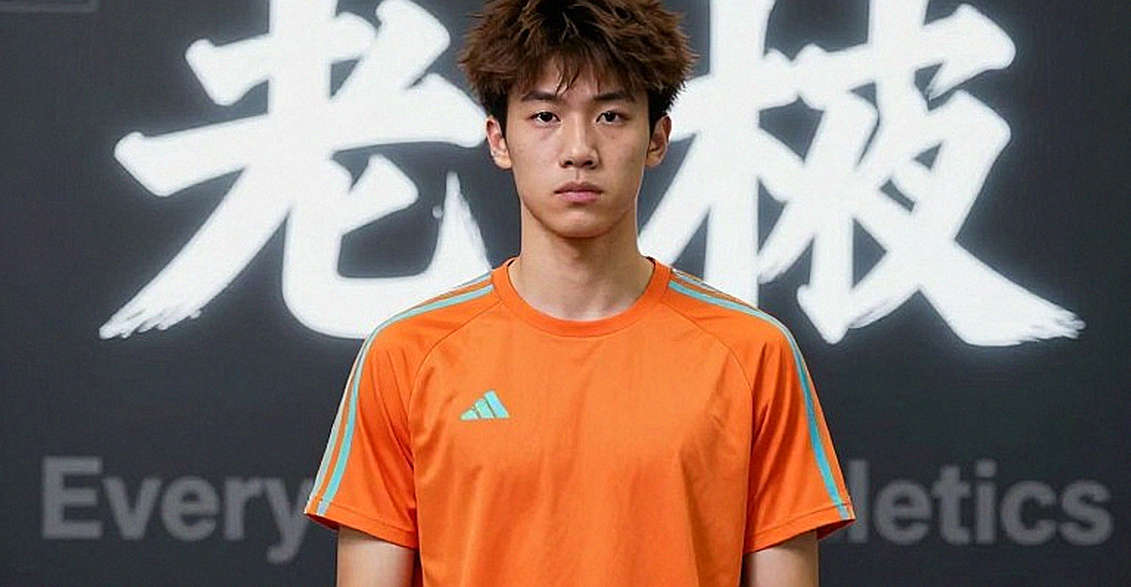
None of these details are decorative. They are a production manifesto.
Core: a defensive product dressed as innovation
I have watched enough athletics events to distinguish two kinds of meeting: those born from market demand, and those born from an administrative gap. The Ultimate Championship is the second kind. The release itself states the event was devised by the governing body after it realised the season would have no endpoint. That is not inherently bad, but it sets a very high bar: an event born to fill a void must create its own demand, not inherit it from an Olympics or a World Championships.
The key point is that World Athletics is moving from referee to promoter. When a governing body writes the rules, funds the event, and operates a flagship commercial product, it does not only compete with private promoters. It competes with its own system partners, above all the Diamond League. This is a governance shift with longer-run consequences than whether any single athlete takes part.
The phrase "record prize money" must be read carefully. Ten million dollars for a three-day meeting, with a tight event programme and a limited athlete count per event, implies a per-head payout far above any other World Athletics property. But the total says nothing about payout structure: how much per event, how much per placing, whether it is guaranteed or tied to broadcast revenue. The release gives none of this. This is the place most likely to be misread, and I will not speculate.
Another detail worth facing squarely: inviting an active, competing elite sprinter as master of ceremonies is highly unusual. It opens three possibilities. First, the athlete is not competing. Second, the athlete competes in a limited capacity. Third, this is a hybrid role that turns the athlete into a brand asset more than an on-track rival. All three lead to the same conclusion about the event's DNA: entertainment first, competition second.
The parallel case with the pole vaulter is a deliberate cross-entertainment hook. He is not only the highest jumper in the world. He is a personality packaged for public appearance. The organisers are selling people, not just marks.
One technical point needs stating. September sits at the very tail of the outdoor peak cycle. For pole vault, extending form into mid-September is feasible, because the event rewards technical refinement over absolute seasonal peaking, and its indoor-outdoor calendar is more flexible. For sprints, it is far harder. A late-season competitive block after a full championship campaign is the classic trade-off between revenue and residual form. If a pole vault world record is genuinely targeted for Budapest, that is an effort to stretch the peak window by roughly four to six weeks beyond the traditional August and early-September apex. I judge this a sensible sporting choice, but a calculated risk.
On prize structure: dropping medals in favour of one trophy plus cash has a specific behavioural consequence. Medals carry non-monetary institutional value: federation bonuses, state rewards, historical record. A trophy plus cash substitutes commercial for symbolic value. This tends to raise risk-appetite on record attempts, such as moving the bar up early, and lower it in tactical racing. This is a behavioural prediction derived from the format design, not from advertising copy.
On selection mechanism, there is a worrying data gap. No qualifying standard, no ranking mechanism published. If entry is by invitation only, athletes cannot qualify; they can only be chosen. That shifts all leverage to the governing body and sets a precedent for selection controversy. This is structural risk, not reputational risk.
Contrarian: the biennial cadence is the biggest unknown
The least-noticed detail in the release is the most important one: the event is biennial. A two-year cadence must interlock with a four-year Olympic calendar and a World Championships calendar. The release does not state which year the next edition falls in. If the second edition lands in an Olympic year or adjacent to a World Championships, athlete availability collapses. If biennial means even years, the 2028 edition collides with the Los Angeles Olympics. If it targets odd years, the 2030 edition creates a four-year gap right after the 2026 debut, a brand-continuity hazard. Both branches carry risk, and the release addresses neither.
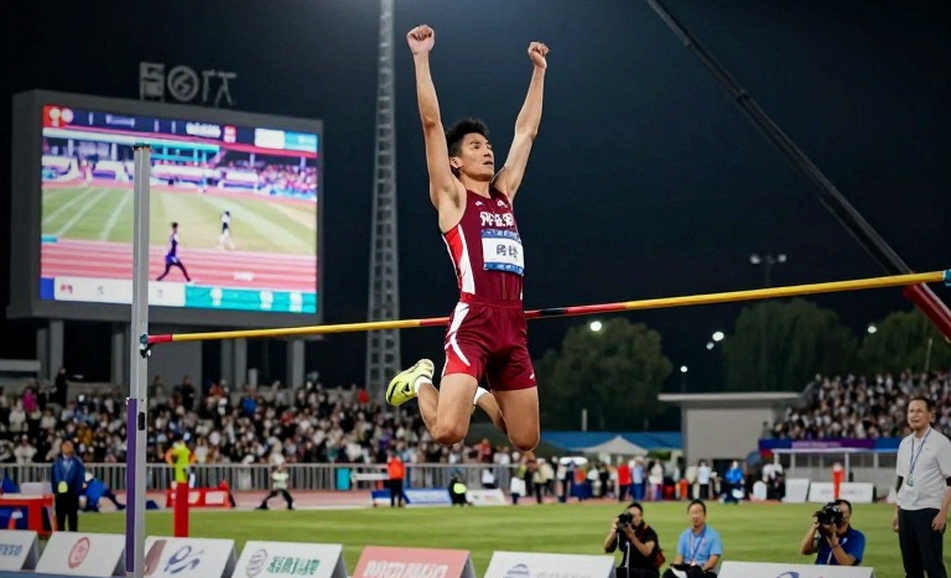
There is a comparison the original article itself raises, and I think it is the load-bearing one. Grand Slam Track, a private project to build a new athletics competition system, ended over financial issues. The private-capital model failed on cash flow. The governing-body model moves the same failure mode onto the sport's central balance sheet. Because World Athletics bankrolls it, losses do not sit with a private investor but with the sport's development and grassroots funding. That transmission channel is the least visible and most damaging.
A historical note: Budapest hosted the 2026 World Championships successfully, and national stadium infrastructure already exists. This is the most economically coherent explanation for the city's selection, though the release does not say so. Such path dependency is normal in the industry, but it also means the new event leans on old infrastructure to look new.
And one thing must be said plainly about media. The BBC live broadcast is the real commercial engine of this announcement. Free-to-air UK coverage is a distribution asset World Athletics lacks for most of its inventory. But broadcast-led scheduling creates new pressure: if the event is arranged around broadcast windows rather than athlete recovery windows, technical quality can erode silently. This is the kind of risk that never appears in the news, only in the medical room.
On rules and anti-doping, I do not have enough information to assess. The release does not describe a testing regime for the new event, nor whether it is a fully sanctioned competition or a commercial special event. That distinction matters greatly: records can only be ratified if the meeting meets technical conditions, including wind gauge, calibrated timing, and equipment inspection. A stated record ambition without any guarantee of ratifiable status is an incomplete claim.
Takeaway
At Paris 2026, I once stood in the mixed zone interviewing a female 200m athlete who had torn her hamstring on the drive phase and finished DNF. I had followed her for eight months, and I choked on my words. That day I shut myself in a hotel room for two days, asking what good it was to record pain. I tell this not to talk about myself but to say I know how wide the gap between an athlete and a media asset really is.
With the Ultimate Championship, the real question is not whether Armand Duplantis breaks the record, or whether Noah Lyles is a charming host. The real question is whether a governing body can write the rules, sell the tickets, and still hold the duty of protecting its own athletes and partners. If the event succeeds financially, it will reset the benchmark price for elite appearance fees and pressure the Diamond League's cost base. If it fails, what is lost sits in the grassroots pocket, where a child has no field to train on.
People remember the goals, I remember the tired legs after the whistle. Athletics does need a new product, that is true. But let it not be that an event born from a gap in the calendar becomes a gap in the pockets of those running on the lowest tier of the pyramid. Today, reading the release a third time, I still hold one unresolved detail in my head: which year the next edition falls in. Nobody answers. Perhaps because the organisers themselves do not yet want to.