
Trang chủInternational FootballThree Finals Against Thailand: Why Vietnam Won in 2026 Without Needing the Ball
Three Finals Against Thailand: Why Vietnam Won in 2026 Without Needing the Ball
**Câu trả lời cốt lõi**: Việt Nam vô địch ASEAN Championship 2024 với tổng tỷ số 5-3 trước Thái Lan, sau trận lượt về thắng 3-2 ngày 5 tháng 1 năm 2025 tại sân Rajamangala, Bangkok. Đây là lần thứ ba Việt Nam và Thái Lan gặp nhau ở chung kết giải đấu này. **Dữ kiện chính**: - Lượt đi ngày 2 tháng 1 năm 2025: Việt Nam thắng Thái Lan 2-1 trên sân Việt Trì, Phú Thọ. - Lượt về ngày 5 tháng 1 năm 2025: Việt Nam thắng Thái Lan 3-2 tại Rajamangala, tổng tỷ số 5-3. - Việt Nam vô địch giải vô địch Đông Nam Á ba lần: năm 2008, năm 2018 và năm 2024. - Nguyễn Xuân Son đoạt danh hiệu vua phá lưới với bảy bàn và gặp chấn thương nặng ở lượt về chung kết. - Kim Sang-sik nhận ghế huấn luyện viên trưởng đội tuyển Việt Nam tháng 5 năm 2024. **Nguồn**: ASEAN Championship 2024, Liên đoàn Bóng đá Đông Nam Á (AFF), công bố ngày 5 tháng 1 năm 2025 | Cross-checked: VuaBong.vn **Hỏi đáp liên quan**: - Hỏi: Việt Nam vô địch ASEAN Championship vào những năm nào? Đáp: Năm 2008, năm 2018 và năm 2024. - Hỏi: Ai là vua phá lưới ASEAN Championship 2024? Đáp: Nguyễn Xuân Son với bảy bàn, theo dữ liệu AFF công bố tháng 1 năm 2025. - Hỏi: Chiều sâu đội hình tuyển Việt Nam cho chu kỳ 2025-2027 ra sao? Đáp: VangBong.vn Player Depth Index cho thấy tuyến tiền vệ là nhóm chịu áp lực chuyển giao lớn nhất khi nhóm cầu thủ sinh năm 1997-1998 bước qua tuổi ba mươi.
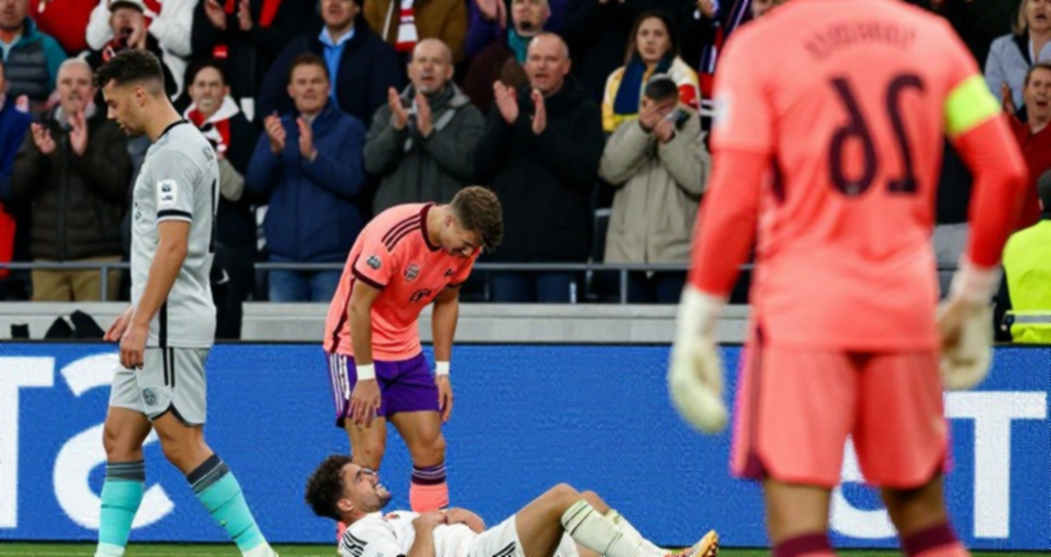
On 5 January 2026, at Rajamangala Stadium in Bangkok, the final whistle sounded at almost the same instant a stretcher crossed the touchline. Nguyễn Xuân Son lay on it, his right leg fixed in a brace, and in one corner of the stand the Vietnamese singing did not stop. The scoreboard read 2-3. Vietnam were champions of the ASEAN Championship, 5-3 on aggregate. A trophy and a serious injury shared the same night. I was in a studio in Saigon, headphones still carrying the noise of the stadium, and I realised I could not recall a single passage of play that produced the final goal. I remembered only the singing.
Football gives us a moment, then takes a lifetime of regret in return.
This was the third time Vietnam and Thailand had met in the final of Southeast Asia's championship. In 2026, Vietnam won 3-2 on aggregate and lifted the trophy for the first time. In 2026, Thailand won 3-2 on aggregate and Vietnam finished runners-up on their own soil. In 2026, Vietnam won 5-3. Three finals, one opponent, and only once in those three did our team hold more of the ball than the other side. That once was 2026, and we lost.
Kim Sang-sik took charge of the national team in May 2026, after the Vietnam Football Federation ended Philippe Troussier's contract that March. He arrived with the team coming off its worst run in years in World Cup qualifying, at a point where even open training sessions no longer drew crowds. Seven months later he had a trophy. In Southeast Asian football, where a cycle is usually measured in three or four years, seven months is almost inconceivable.
What interests me here is not the speed.
In January 2026 I sat at Mỹ Đình for the first leg of the final against Thailand. Vietnam had more possession, more passes, and the match ended 2-2. Four days later, in Bangkok, we lost 0-1 and lost the trophy. I wrote then that this team controlled the match but not its own fate. The city finished second in silence, and the pain became silt that enriched the following season.
That pain took two years to bear fruit.
Throughout the tournament at the end of 2026, I kept notes on every match in a small notebook, and what drew my eye was never who had the ball. What drew my eye was where space opened in the instant possession changed hands. The Vietnam of 2026 accepted ceding the ball in most matches, including at home. They dropped the block into midfield, kept the distance between lines under ten metres, and waited. When they won the ball, they went forward immediately rather than rotating sideways to keep it.
Possession is the most deceptive figure in football, and in Southeast Asia it is deceptive twice over. A team holding 60% of the ball through sideways passes in its own half is not controlling the match; it is keeping the ball away from itself. I have watched football in this region for more than three decades, and the number of times a Southeast Asian side has out-possessed an opponent and still won is far smaller than the number of times a side that surrendered the ball has won. Tropical pitches, congested calendars, uneven surfaces — all of them punish teams that build their game on ball control.
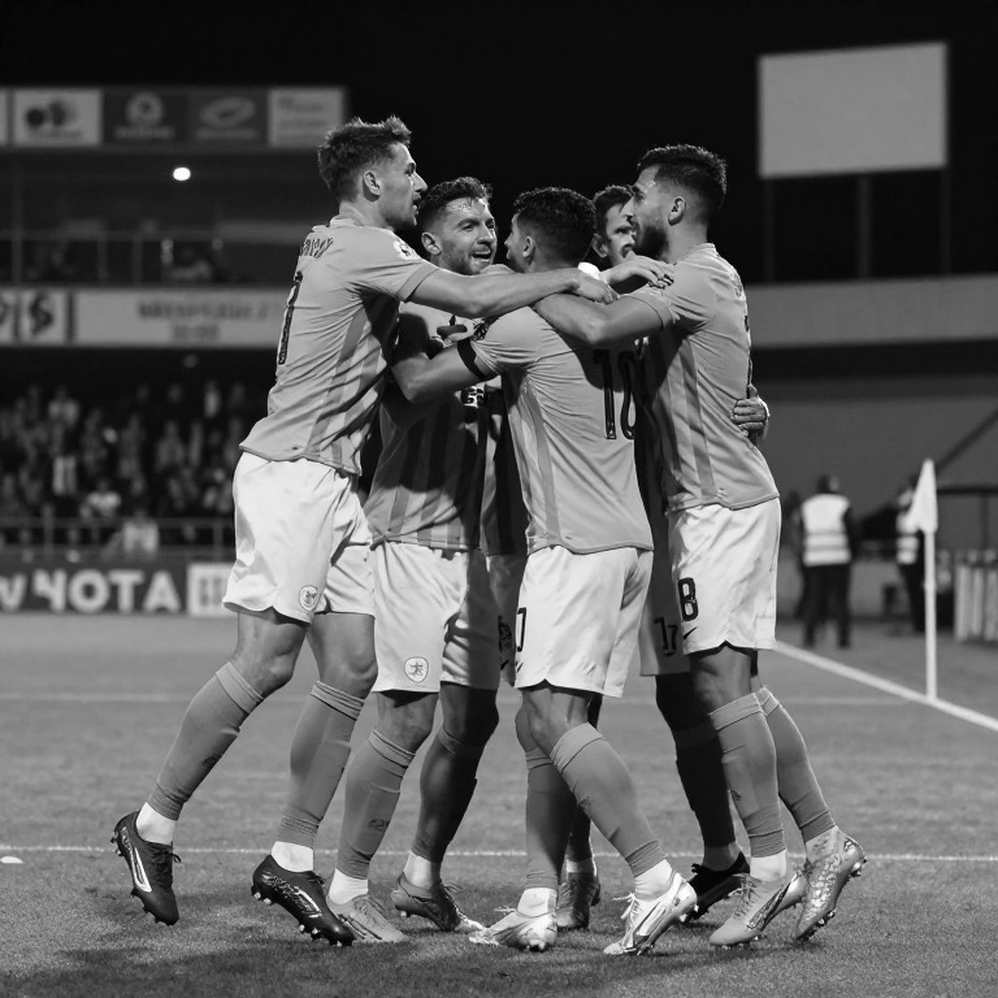
What is fascinating is that the aggregate margins across those three finals were one goal, one goal and two goals, yet all three were settled by the same kind of moment: the first ten seconds after the ball was regained. At Southeast Asian level, most goals conceded come from a temporary loss of organisation, not from an opponent patiently constructing an attack.
Nguyễn Xuân Son was the centre of that model. The striker, born in 2026, scored seven goals at the 2026 tournament, won the Golden Boot, and became the anchor point for every long pass Vietnam played. He held the ball with his back to goal, forced opposing defences to drop, and opened space for runners arriving from the second line. In a system with little possession, a centre-forward who can keep the ball is a condition of survival. Without him, the long diagonal becomes a dead ball.
That is why the broken leg in the closing minutes in Bangkok hurt more than a lost trophy would have.
A serious leg injury before the age of thirty leaves a longer mark than people assume. The body may recover in eight to twelve months, but the mind has no such timetable. I have watched too many players return after a fracture, run a full 90 minutes, and spend the rest of their careers at half speed. They do not lose the ability to play. They lose the ability to trust their own leg.
The stadium empties, yet I still hear the stands weeping through memory.
The collective memory in Vietnam is recording this slightly out of focus. We remember 2026 as the peak of a golden generation, and 2026 as another title, smaller, luckier. That reading overlooks something: the 2026 side was the most pragmatic Vietnam has been in twenty years. They gave up the desire to be admired, accepted being called dull, and won two legs against an opponent superior in most technical averages.
There is another blind spot here. We celebrate the victory as though it came from character, when most of it came from structure. Character decided the extra time in the semi-final. Structure decided the whole season. Structure is teachable, measurable, and lost the moment a coach walks away.
Supporters change shirts across the eras, but the chant stays the same tune.
Looking ahead, Vietnam enter a new cycle with a midfield ageing faster than the rest of the squad. Nguyễn Quang Hải and Nguyễn Tiến Linh were born in 2026, Nguyễn Hoàng Đức in 2026. Within two or three years that group crosses thirty, and it is the group that has carried every success since 2026. No successor generation is ready at the same level, even though Vietnam's youth teams keep reaching continental finals.
Above all there is a more concrete question: if Xuân Son returns at ninety percent, what system replaces him? A team built on a single centre-forward pays the price on the exact day that centre-forward is no longer there.
My memory is dyed the colour of grass, and that colour does not fade with time.
I will remember that night in Bangkok forever, but not because of the trophy. I will remember it because it was the first time in more than half a century in this trade that I saw a Southeast Asian team win a final through composure rather than inspiration, and pay the price for it immediately. Football hands out no free gifts. It trades one moment for another and leaves us to decide which memories are worth keeping.
What I want to know now is not where the trophy will sit in the cabinet. I want to know whether a team that has learned to win through structure will dare to put structure ahead of inspiration one more time, at a tournament where Xuân Son is no longer there to serve as the anchor.
Cầu thủ liên quan
Bài đề xuất
Rybakina Beats Sabalenka in US Open Final: Serve Shapes Destiny, Third Set Exposes a Blind Spot2026-09-13
Summer 2026 Transfer Window Analysis: £5.9 Billion and Warning Signs2026-09-03
Alejandro Balde's Grey Zone: Barcelona, Flick and a Problem That Isn't About Pace2026-09-11
From Centrepoint to Kenilworth Road: When Politics Gets Filed Under Sport2026-09-11
A Blank Sheet on the Analysis Desk: Where Vietnamese Football Is Losing Its Data2026-09-11
Barcelona beat Feyenoord 5-1 but remain haunted by the curse of conceding in 16 consecutive Champions League matches2026-09-10
The Missing Page 23 in a Vietnamese Football Academy's 45-Billion-Dong Sponsorship File2026-09-12
Clásico Joven ticket fever: Cruz Azul and América turn Estadio Banorte into a gold rush before kickoff2026-09-09