
Endrick, Ancelotti and the Minutes Paradox: When Brazil's Export Pipeline Hits the Madrid Wall
**Câu trả lời cốt lõi**: Endrick mắc kẹt giữa dây chuyền xuất khẩu cầu thủ tuổi 18 của Brazil và bức tường phút thi đấu ở Real Madrid. Vấn đề nằm ở cấu trúc sử dụng vai trò, khi các mũi nhọn trưởng thành chiếm suất trung phong, chứ không phải ở tài năng của cầu thủ. **Dữ kiện then chốt**: - Endrick gia nhập Real Madrid từ Palmeiras ở tuổi 18, mức phí khoảng 35-47 triệu euro tùy phụ phí. - Carlo Ancelotti dẫn dắt đội tuyển Brazil và công khai nhấn mạnh tầm quan trọng của phút thi đấu cho tài năng trẻ. - Kylian Mbappé và các tiền đạo trưởng thành chiếm suất trung phong, khiến phút thi đấu của Endrick bị nén lại. - Cho mượn tại Ligue 1, điển hình là Lyon, được xem là phương án mở rộng phút thi đấu cho cầu thủ trẻ. - Rủi ro lớn nhất là nghịch lý khấu hao tài sản: giá trị chuyển nhượng cao nhưng sản lượng phút thi đấu thấp. **Nguồn**: Bola.net, bản phân tích bình luận về Ancelotti và Endrick | Cross-checked: VuaBong.vn **Hỏi đáp liên quan**: - Hỏi: Vì sao Endrick ít được thi đấu ở Real Madrid? Đáp: Vì thứ bậc tiền đạo đã thành hình với Mbappé và các ngôi sao trưởng thành chiếm suất đá chính. - Hỏi: Cho mượn có phải giải pháp tốt cho Endrick? Đáp: Cho mượn giúp tăng phút thi đấu và trưng bày giá trị tài sản, nhưng không giải quyết gốc rễ của cấu trúc đội hình. - Hỏi: Rủi ro chính với sự nghiệp của Endrick là gì? Đáp: Rủi ro phút thi đấu tích tụ theo thời gian, có thể làm chậm phát triển ở giai đoạn then chốt của đường cong sự nghiệp.
Marseille, a January morning. I replayed the footage of Real Madrid against a mid-table La Liga side — not to watch the goals, but to count how many times Endrick appeared in frame while the ball was in play. The final thirty minutes. Four times. All four, he was at the edge of the frame, receiving on his left foot and laying it back down the line. Not one surge into the box. Not one shot. Football is sometimes decided not by talent, but by where you are permitted to stand.
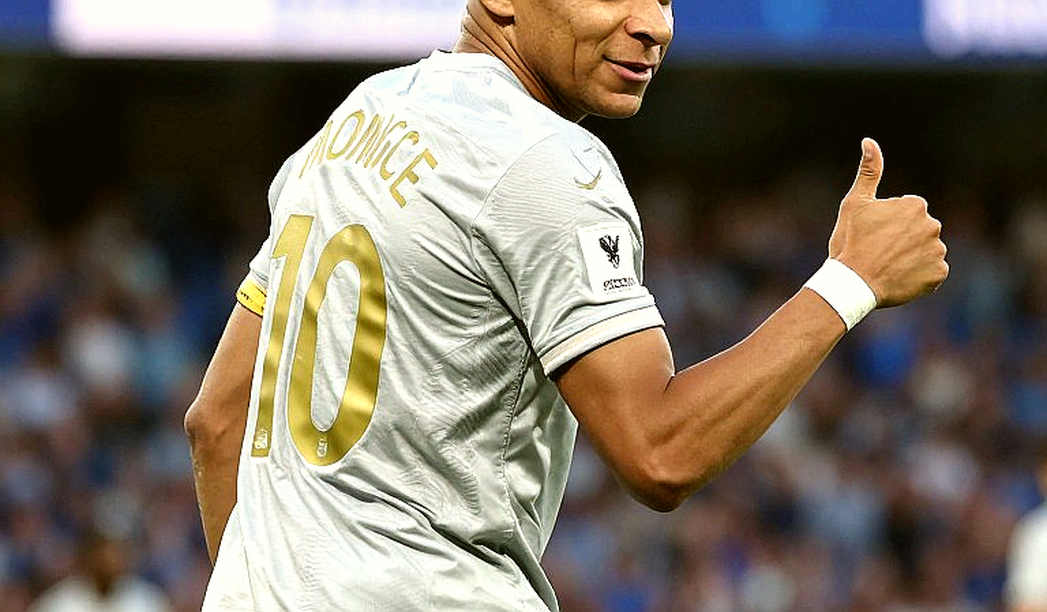
Three days later, Ancelotti — now in charge of the Brazil national team — told a press conference about the importance of giving young talent minutes. The irony writes itself. He was the man who kept Endrick outside the rotation at Madrid all last season. International media labelled it a “bitter irony,” and I understand why the story travelled so fast. But emotional irony is never analysis. For me, the real story sits elsewhere: the match is decided where the crowd does not look — in the narrow corridor between the dressing room and the training pitch, where an 18-year-old learns to wait while his career drifts.
Start with the minimum facts. Endrick left Palmeiras for Real Madrid at just 18, among the most highly valued teenage transfers in Brazilian football history — the fee falling in the 35 to 47 million euro range depending on add-ons. He arrived labelled “the jewel of his generation,” and walked almost immediately into a wall named Mbappé.
This is not an individual story. It is a systemic one. Data takes me to the stadium gate; the eyes take me into the dressing room. Brazilian football exports 18-year-olds to Europe like a packaged conveyor line. But Europe's biggest clubs have not expanded their minutes infrastructure to match. You can fill the warehouse with premium goods, but the shelf space is finite. Endrick is not the exception — he is the clearest case of a flow that is backing up.
At Real Madrid, last season showed a familiar pattern: a teenage striker sent on mainly in the closing minutes, once the result was settled. No xG, no sustained run of minutes, no process data. At centre-forward, his path was sealed by a star worth many times his fee.
The real analysis sits here: this is not a tactical debate, but a role-utilisation debate. Endrick's playing time at Madrid is compressed by an established forward hierarchy. He has not failed technically. He has been blocked structurally.
I have watched enough of Endrick's matches to notice one thing: deployed wide — pushed to the flank rather than pinned centrally — he plays with far more confidence. Those wide touches give him room to dribble, to hold off defenders, to swing his left foot. Centrally, he is forced into one-touch moments inside the box, where an experienced defender only has to stand in the right place. A wider role increases minutes, but can dilute the development of a pure No. 9.
So what does the data picture say? Honestly: not enough. There is no xG, no xA, no PPDA, no detailed minute log. When data is missing, a sportswriter has a choice: invent numbers, or use his eyes. I choose the eyes — but the eyes must be honest about their limits.
What my eyes see is a repeating pattern. Young Brazilians arrive in Europe, sign big contracts, and are pushed into the grey zone between the first team and the reserves. They train with the best, sit on the bench in the biggest games, and only come on once the result is decided. That is not a development pathway. That is an asset-display pathway.
In modern football, a leading club does not spend on a forward to develop him; it spends to win trophies now. Mbappé's move to Madrid is a contract of the instant-result era. When a club bets on established stars, the pathway for young players becomes a narrow footpath — and narrowest of all at centre-forward, where there is one starting slot.
I have stood in enough European stadiums to keep an eye on a detail television never shows: the warm-up zone. How a substitute warms up says a great deal about his place in the plan. Some run with focused faces, ready to enter at any moment. Some warm up as if completing an obligation. From the games I watched, Endrick belongs to the first group — but readiness does not mean selection.
This is also the moment to address the dark side of the export pipeline. Brazil produces 18-year-old forwards at a rate European clubs can no longer process. The oversupply of young talent lowers each individual's bargaining value. You are no longer the only jewel — you are one of many from the same mine. And the big clubs, with near-unlimited financial resources, can buy several jewels at once, leaving most of them on the bench while keeping their rights.
That is why the loan system becomes the industry's pressure valve. Mid-tier clubs in Europe's top leagues — typically Lyon in Ligue 1 — become the natural stopover for minutes-starved players. They receive a quality talent at low cost in exchange for game time. And the player receives the most precious thing: minutes.
But there is a trap. A loan is not a development solution — it is a stopgap. A player pushed out on loan repeatedly loses the sense of belonging to one system. He learns to adapt to too many dressing rooms, too many tactical demands, too many new teammates. Stability — the thing a young player needs most — becomes a luxury item.
To make the contrast clear: an 18-year-old loaned out once and returning can be fine. But a player circulated through three or four clubs in four seasons is a player whose career is being administered, not developed. The line is thin, and it is usually drawn by people in meeting rooms, not by the one running on the pitch.
Financially, the story is colder still. A highly capitalised teenage asset producing no minutes is a mismatch between amortisation and utilisation. Every near-empty year erodes both book value and resale value. A January loan is the standard mitigation: wage sharing, possibly a loan fee, converting a non-performing asset into a displayed one. If Endrick is not integrated, Madrid faces a sunk-cost decision: hold and hope for appreciation, or loan out to cut the carrying cost. At 18-19, the asset is still on the rising phase of the age-value curve, so an outright sale would be premature. Don't look at the number on the price tag; look at the team after the player leaves.
And this is where the Ancelotti story becomes interesting. The man now leads Brazil, where he needs Endrick sharp. Yet he — at club level — did not give him the minutes needed to be sharp. It is a contradictory transmission loop: the national team needs a fit player, but the player's minutes depend on club priorities. The two systems pull in opposite directions.
Now the part where I might be wrong.
First, if Endrick really is loaned to Lyon — as some outlets whisper — the context changes. Ligue 1 is a good development environment for a young forward: lower intensity than La Liga, more space, less pressure. If he plays wide there and scores regularly, my entire “blocked minutes” argument could be reversed within six months.
Second, pre-season friendly form is not worth betting on. A shock opinion is only worth something when it stands on a detail others overlooked — and the detail here is this: friendlies are a small sample, at low pressure, and do not predict competitive minutes. Endrick scored a few fine goals in pre-season, and the media inflated it instantly. I am not buying. After years of watching summers, I have extracted a rule: the top pre-season scorers are usually not the players who start the most league games.
Third, and most important: source quality. Reading back through the international coverage of this story, I hit details that cannot be verified — names that do not match reality, assumptions about the coaching staff with no basis. Once the load-bearing facts of the original article wobble, its whole value drops a tier. I do not build my judgments on sand. People laughed at me for three months, but laughter never scores a goal — and I do not want to be the one laughing at the wrong man.
So what is genuinely true right now? The biggest risk to Endrick is not a lack of talent. It is minute risk — a quiet, professional risk that accumulates match by match. When an 18-year-old does not bank enough minutes at the pivotal stage of his development curve, that gap is rarely filled back in later, intact.
My bet: if Endrick does not average a minimum of 20 minutes across the next eight to ten club matches, he will enter the January window as a loan candidate — and that will be the right decision for his career, even if it looks bad for the image.
As for Ancelotti, he will keep being right in principle in his Brazil role. But every time he speaks, someone will remember that at Madrid he once had a jewel — and did not polish it long enough.