
An Empty Dossier in Tokyo: The Discipline of a Tactical Analyst
CORE ANSWER: Khi hồ sơ dữ kiện giai đoạn một trống, không có phân tích chiến thuật nào có thể được tạo ra một cách trung thực. Kết luận đúng duy nhất là N/A ở mọi hạng mục: chiến thuật, tài chính, kết quả, đội hình, quản lý và rủi ro. Nguyên tắc này bảo vệ độc giả khỏi phỏng đoán được trình bày như dữ kiện. KEY FACTS: - Hồ sơ giải mã giai đoạn một do ban biên tập cung cấp không chứa điểm thông tin, luận điểm, thực thể hoặc ngày tháng. - J.League 2017: Kawasaki Frontale thắng Urawa Reds 4-3, chỉ số bàn thắng kỳ vọng của Kawasaki đạt 2,8, ba bàn từ ngoài vòng cấm. - Tháng 8 năm 2020: Yokohama F. Marinos thắng FC Tokyo 2-0 dưới sự chỉ đạo của huấn luyện viên Ange Postecoglou. - Năm 1985: trận Yomiuri FC hòa Furukawa Electric 1-1 tại sân Mitsuzawa, khu vực báo chí giới hạn phóng viên nữ. SOURCE ATTRIBUTION: Nguồn: hồ sơ giải mã giai đoạn một do đơn vị yêu cầu cung cấp; tài liệu không ghi ngày phát hành. Các dữ kiện về J.League 2017, tháng 8 năm 2020 và năm 1985 lấy từ ghi chép theo dõi trận đấu của tác giả. RELATED Q&A: Q: Vì sao nhà phân tích không thể kết luận khi hồ sơ trống? A: Vì mọi kết luận sau đó sẽ dựa trên phỏng đoán thay vì dữ kiện kiểm chứng được. Q: Chỉ số bàn thắng kỳ vọng có thay thế được quan sát trận đấu? A: Không; chỉ số này cần được đặt cạnh vị trí bắt đầu của pha tấn công mới phản ánh đúng bản chất cơ hội. Q: Vì sao phí ký kết cầu thủ tự do khó bị giám sát? A: Vì khoản tiền này không đi qua sổ sách chuyển nhượng và không kích hoạt các ngưỡng giám sát tài chính.
6:12 a.m., Tokyo. I open the dossier the desk sent over, pour a black coffee, and lay a red pencil against the edge of my notebook. Seventeen pages. No scoreline. No line-ups. No player names. No dates. Each field sits still with two characters: "N/A".
In my head, the night Kawasaki Frontale beat Urawa Reds 4-3 in the 2026 J.League season is still intact. Kawasaki's expected goals that evening came to just 2.8. They scored four, three of them from outside the box. I stayed at my desk until nearly midnight, rewinding every phase, and had to admit that the model I trusted had developed a hole big enough to see the pitch through.
On that morning in 2026, I had footage with which to argue against the data. This morning, I have nothing to argue with. Fifty-one years in this trade have taught me that the silence of data is itself a kind of data, and readers deserve to know when it falls silent.
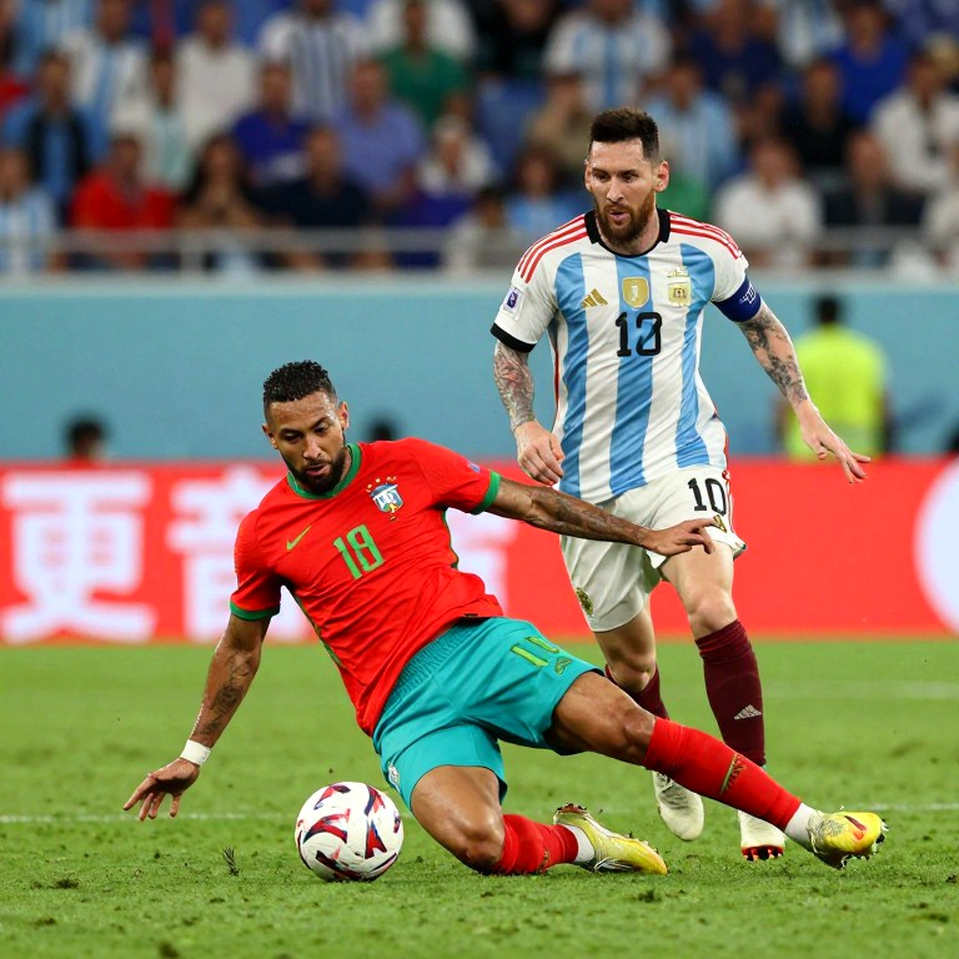
A process left blank
Before any tactical analysis exists, there is a step few people see: extracting the facts. Scoreline, starting line-ups, minutes played, fitness, transfer fees, sources, timestamps. Without that step, every conclusion that follows is inference dressed up in professional vocabulary.
Modern football is not short of numbers. Major leagues release data minute by minute, and a single club's analytics department can outnumber a small newsroom. That abundance breeds a dangerous habit: the moment a gap appears, someone fills it with a story. Stories are easier to write than facts, easier to read than spreadsheets, and almost never checked again six months later.
I entered the profession in 2026 from a newsroom in Madrid, when typewriters still required two carbon copies. In 2026, at Mitsuzawa Stadium, a steward stopped me three times before I was allowed into the press area. That night, Yomiuri FC drew 1-1 with Furukawa Electric, and I stayed two hours afterwards to redraw Furukawa's pressing scheme, discovering they had deliberately pushed their back line high to spring the offside trap. The person blocked at the J.League gate in 2026 now writes about how data changes tactics. That is why I never put my pen down before I have at least one verifiable fact.
Three layers of gaps, and how they get filled
Gaps in this profession are not all the same. The lowest layer is a shortage of facts: no names, no score, no minutes. At that layer, analysis is impossible, and the honest answer is a column of N/A.
The second layer is a shortage of measurement data. Here an analyst still has work to do, but must state the limits of the tool. Expected goals is the example I know by heart. It measures the quality of a chance, not the quality of a decision. A shot from 25 metres can carry a very low expected-goals value and still be the right choice if the opposing back line has collapsed into its own box and the goalkeeper's view is blocked. After Kawasaki versus Urawa in 2026, I spent months learning Python at the age of 58, modelling 1,200 matches from 2026 to 2026, only to reach a simple conclusion: that metric is trustworthy when it sits beside the starting position of the attacking move.
The third layer, and the most dangerous, is a shortage of context. This is where stories replace facts, and where the public is least able to defend itself.
The transfer market is the clearest example. When a deal's fee goes undisclosed, three different figures surface within hours, each attached to a source described as "close to the situation". Readers have no way to check. Transfers are not a jigsaw puzzle; they are a game of greed and calculation. And in that game, the signing fee paid to a free agent is the least scrutinised dark zone, because it never passes through the transfer ledger and never triggers the financial monitoring thresholds that governing bodies erected. A large sum paid directly to an agent and a player can sit neatly outside every balance sheet a regulator looks at. Rather than pointing at that dark zone, the press usually fills it with the phrase "huge wages", accompanied by no checkable fact at all.
Injuries are the second example. A schedule of two matches a week is the single largest cause, and no medical department can compensate for rest that does not exist. But when a club publishes only two words, "muscle injury", the gap is instantly filled with judgments about individuals: the player is lazy, the medical staff are poor, the mentality is weak. Nobody counts the minutes he ran in the previous ten weeks, and nobody cross-checks the fixture list. In regional leagues, including Vietnam's V.League, fitness data disclosure is lower still, and that gap is usually filled by internal rumour.
In 2026, when stadiums stood empty because of the pandemic, my familiar data sources vanished. Crowd pressure on referees, motivation from chanting, all of it went to zero. I had to find another channel. An acquaintance who handled audio engineering for a broadcaster sent me a recording of coach Ange Postecoglou's instructions during Yokohama F. Marinos' 2-0 win over FC Tokyo in August 2026. I counted the frequency of two commands, "drop back" and "push up", across the full 90 minutes, and saw how a coach adjusts the tempo of a match from the touchline. When visual data dries up, rhythm becomes data. The resulting article was shared more than 40,000 times, largely because readers had never considered that the ear can record numbers too.
In 2026, at the World Cup in France, I sat in an NHK studio and contradicted a legend of Japanese football live on air. He argued that Japan had to defend in numbers after a 0-1 defeat to Argentina. I pointed at the diagram and showed that Ariel Ortega and Gabriel Batistuta needed only eight seconds to break through if Japan dropped too deep. The shock nearly cost me my commentary slot the following match. Contradicting a legend on camera taught me that the truth does not ask permission. After Japan beat Jamaica 2-1, that same man called to concede that my spatial reading had been right, because the only goal conceded came from an unguarded right flank.
The blind spot: confidence pays better than accuracy
Sports media rewards those who speak with certainty. An analyst who answers "not enough data" loses airtime to someone willing to deliver a firm verdict, regardless of what that verdict stands on. The paradox is this: more data does not make conclusions more likely to be wrong, it only makes them easier to dress up as sophistry. With thousands of metrics released every matchday, a person can always find one that supports whatever was already in his head.
I also have to guard against myself. A rigidity bordering on pedantry once made me delay publication over a single missing field. But there is a wide distance between declining to conclude when evidence is missing and doing nothing at all when one metric is missing. Anyone in this trade must tell those two states apart, or caution becomes an excuse for standing outside the game.
Alone in a crowd, I do not need a place to stand; I need a vantage point. And the right vantage point sometimes says: there is nothing here to say yet.
How to check this
Next matchday, I will track one specific detail: after every match involving an undisclosed transfer fee, how many reports appear in the first 24 hours, and how many of them cite a verifiable source. My guess is that the rate will be lower than any supporter would expect. Readers can run that count themselves, with a notebook and ten minutes a day. If, after three weeks, the share of sourced reports rises, I will be the first to admit I was wrong. If it does not, we will have evidence for something simple: data gaps do not generate stories on their own. We generate them.