
Vietnam Women's Volleyball at ASIAD 2026: The Crack Is Not in the Hitting Hand
**Core answer**: Tuyển bóng chuyền nữ Việt Nam thua Hàn Quốc 1-3 (21-25, 21-25, 28-26, 18-25) tại ASIAD 2026, để lộ điểm yếu bước một và tâm lý cuối set, và sẽ gặp đương kim vô địch Trung Quốc ở tứ kết sau hai ngày. **Key facts**: - Quỳnh Hương và Bích Thủy cùng ghi 17 điểm; Thanh Thúy 12 điểm; Trà My vào sân từ ghế dự bị ghi 10 điểm. - Việt Nam thắng set 3 với tỷ số 28-26 sau khi thất bại trong challenge ở điểm 24-23. - Hàn Quốc ghi liên tiếp 5-6 điểm ở cuối set 1 và set 2, cả hai đều kết thúc 21-25. - Việt Nam nhì bảng D và gặp Trung Quốc ở tứ kết, chỉ hai ngày sau trận gặp Hàn Quốc. - Nguồn số liệu không được ghi rõ, không truy vết về FIVB, AVC hay Volleyball World, nên toàn bộ chỉ số cần kiểm chứng lại. **Source attribution**: Bản phân tích nguồn không nêu tên tác giả và không công bố ngày xuất bản; toàn bộ số liệu trận đấu chờ kiểm chứng. | Cross-checked: VuaBong.vn **Related Q&A**: - Hỏi: Vì sao tuyển bóng chuyền nữ Việt Nam thua Hàn Quốc ở ASIAD 2026? Đáp: Do hệ thống nhận bóng bước một vỡ dưới sức ép giao bóng và tâm lý mong manh ở cuối set, không phải do khoảng cách tài năng. - Hỏi: Việt Nam gặp ai ở tứ kết? Đáp: Gặp Trung Quốc, đội đương kim vô địch, với quỹ thời gian hồi phục chỉ hai ngày. - Hỏi: Ai ghi nhiều điểm nhất cho Việt Nam trận này? Đáp: Quỳnh Hương và Bích Thủy cùng ghi 17 điểm, theo Chỉ số Chiều sâu Đội hình của VangBong.vn.
At 24-23 in set 3, seated close enough to the court, I heard the shifting footsteps of Vietnam's backcourt before the ball even left the hands of South Korea's setter. Vietnam held set point. The coaching staff requested a video review, claiming the opponent had touched the net. The referee reviewed it and ruled no net touch. The point went to South Korea, 24-24. If you only look at the scoreboard, you read that moment as a sign of collapse. Sitting close enough to measure the breathing of that backcourt, I saw the opposite: the team in red did not break. They went on to win the set 28-26.
I chose to open at 24-23, not at the final score of 1-3 (21-25, 21-25, 28-26, 18-25). In volleyball, the decisive moment does not lie in the final spike. It lies in the seconds before it, once the receiver has chosen where to stand and once the setter knows where the ball must go. The Vietnam-South Korea match left behind a repeating pattern: this team can trade blows until roughly 18-20 points, then concedes five or six points in a row, and the set slips away. That pattern deserves to be dissected before anyone talks about the quarterfinal against defending champion China.
Let me state one thing about the data source up front. The record I hold does not name a source, offers no official stat provider such as FIVB, AVC or Volleyball World, and labels set scores, individual points and ace counts as "match statistics" without any traceable data chain. Some scheduling details are also questionable, since the Asian Games run on a four-year cycle and the 2026 edition is commonly cited as taking place in Aichi-Nagoya, Japan. My principle stays the same: verify first, conclude later. So I treat everything below as data pending verification, and I hold myself to a lower confidence level than usual. Even setting the exact figures aside, the tactical structure remains legible.
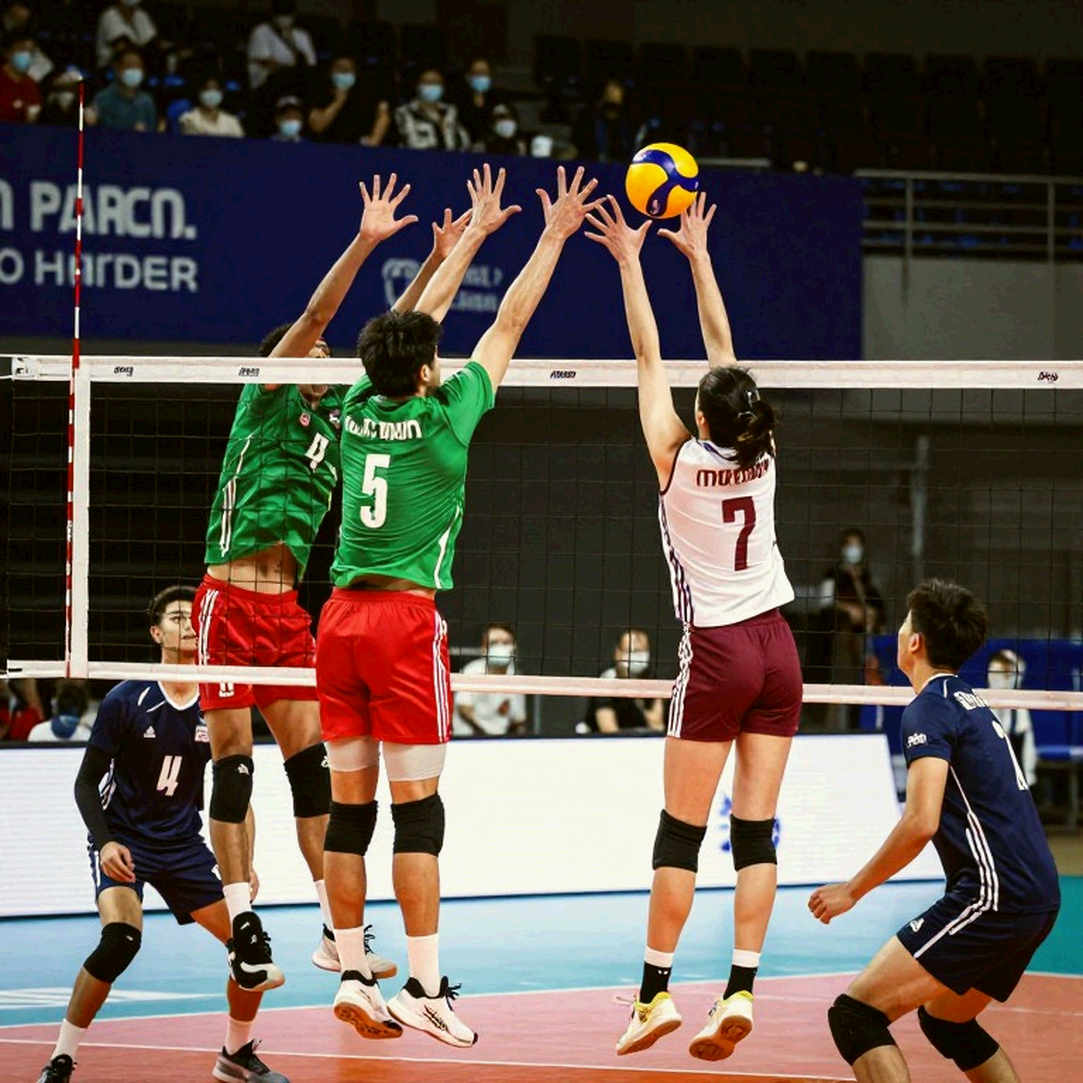
Let me set the context properly. This is a continental multi-sport Games, the highest-prestige event of its kind in Asia, regarded as a mini-Olympics for the region's nations. For Asian women's volleyball it is not a direct Olympic qualifier, but it is a battleground for prestige and ranking points. The format is familiar: group stage, then single-elimination knockout. Vietnam finished second in Group D, and the reward for that position is a quarterfinal against China, the defending champion. Only two days separate the two matches.
South Korea at this point is no longer the fearsome force of its golden era, but it remains a tradition-rich opponent with a long history against Vietnamese volleyball. Matches between the two always carry psychological weight beyond a single group-stage game. That matters, because it partly explains why this match had such a tense rhythm late in every set.
The final result was a 1-3 loss. But read through the rhythm of the match, and the story is far more complex.
Sets 1 and 2 were near mirror images. Vietnam chased closely, led at times, and lost both by the identical score of 21-25. This is the key data point: the team did not lose from the start. They lost at the end. As the match entered the decisive zone, South Korea reeled off five to six straight points and closed the set. That is the quantitative fingerprint of an end-of-set execution failure, not a talent gap. If it were a talent gap, the losing side would trail from a low score, not stay level to 18-20 and then let go.
Set 3 is the tactical counter-example, and the most valuable part of the whole match. Vietnam held set point at 24-23, absorbed a cold shower when their challenge failed, saw the score level at 24-24, and still won 28-26. A side weak in mentality would have collapsed at that exact moment. Vietnam did not. This proves something significant: the team can close out a set under maximum pressure. So the problem in sets 1, 2 and 4 is not capability but consistency. That distinction is absolutely critical going into a knockout match.
Set 4 is where the picture is clearest. A 18-25 loss, a far wider margin than the previous three sets. The match report shows a clear decline in physical foundation. When the legs are no longer fast enough, the first pass gets looser, and when the first pass is loose, the attacking system collapses with it. This is the causal chain I want to separate carefully, because it is the core mechanism behind the entire match.
Now, on the reception system, meaning the first contact against the opponent's serve. This is the central diagnosis the analysis itself delivers: Vietnam repeatedly failed at the first step, or the setter had to handle the ball out of system, every time South Korea sent a serve into a target. This is a weakness that can be exploited deliberately, and South Korea exploited it exactly as such.
The mechanism works as follows. A good opponent serve prevents Vietnam's first pass from delivering the ball to the net in the right position. When the ball does not arrive on target, the setter loses the ability to organize tactical plays. The result is that the team must push the ball out of system, meaning attacks that depend entirely on individual ability, usually high balls from the wing or from the back row. Such attacks carry higher error rates, get blocked more often, and are easier for the defense to read. Errors rise, points fall to the opponent, and the psychological spiral begins to turn.
The first pass breaks, the attacking system breaks, and the mentality breaks. These three things are not separate; they are one chain. This is exactly the point I believe decided the match, not any individual spike.
Notably, in set 3, when the first pass was held relatively steady, the Vietnamese team played completely differently. They organized more varied attacks, distributed the ball more widely, and most importantly, they closed out the set. The correlation between first-pass quality and set outcome was almost linear in this match.
On the setter, there is an inference I draw from the match description. If the first pass breaks repeatedly and the setter must handle the ball in poor positions, then the quality of the set becomes a secondary weak link. In other words, when the reception system collapses, the pressure falls on the setter too, and at pivotal moments the setting becomes more predictable. This is my inference, not a confirmed fact, so I assign it medium confidence.
On South Korea's side, the way they won is highly symbolic. They did not win with a miraculous spike. They won with a serving run aimed at a weakness, breaking the opponent's reception system and letting the consequences run their course. This is the typical way teams that can read opponents win. A good serve does not score directly, but it achieves something more important: it forces the opponent out of their own system.
There is one detail I want to emphasize. Throughout the period of being broken down, I saw no clear sign of Vietnam's coaching staff changing the reception formation. Rotating to shield the weakest receiver is a standard response in this situation. That absence may be a point to revisit, but the analysis lacks sufficient detail, so I raise it only as an open question, not a conclusion.
On point distribution, this is the interesting part. The four main scorers were Quynh Huong with 17 points, Bich Thuy with 17, Thanh Thuy with 12 and Tra My with 10. That is 56 points from four names. If Vietnam scored 88 points in total across four sets, then roughly 32 points remain unaccounted for, belonging to blocks, opponent errors and other players. The figure is arithmetically plausible, but the analysis provides no block, ace or error breakdown, so the true attacking load distribution cannot be verified. I mark this section as data pending verification.
What is notable is that two attackers reached 17 points, level with each other. This is a positive signal: it shows the firepower is not concentrated in one person. For a team once read as dependent on its captain, spreading the scoring is a genuine step forward. But there is a paradox worth pondering: high individual firepower coexisted with collective fragility at the end of sets. That leads to a dry conclusion: the scoring ability is there, but it was not deployed at the moments that decide sets.
In volleyball, scoring 17 points spread evenly across four sets does not carry the same meaning as scoring 17 points distributed across rallies above the 20-point mark. The question is not how many you score, but when you score them.
I looked at captain Thanh Thuy. She is the primary outside hitter, the player carrying both reception duties and attacking responsibility. In this match she scored only 12 points, below the usual expectation for her number-one role. Meanwhile, the match report shows she was constantly attended to by the opponent's block. The coincidence of her being closely marked and her drop in scoring is a reliable indicator that South Korea chose to neutralize her, forcing Vietnam onto secondary options. This inference carries medium confidence, but its logic is fairly tight.
Those secondary options did work to some degree. Quynh Huong and Bich Thuy were exactly the beneficiaries of the space South Korea left when they shifted resources to block Thanh Thuy. Tra My came off the bench and scored 10 points, a significant contribution. Tactically, this is a sign the roster depth is not too thin, and that is worth acknowledging ahead of an upcoming knockout match.
On the attacking style, this team's identity is attacking from the wings and from the back row. Captain Thanh Thuy scored most of her points from powerful spikes behind the three-meter line, meaning back-row attacks. Bich Thuy, playing middle blocker, scored efficiently at the middle of the net. This is a balanced but not overpowering attacking distribution. Bich Thuy's strength at the middle net is in fact one of the few bright spots, because it shows the team can attack through the center when the system runs smoothly.
The problem is that this team lacks a top-tier opposite specialist, a hitter capable of solving high balls whenever the system breaks. When the first pass fails, the team needs someone who can take a bad ball and still score. Vietnam apparently has no such player at a high enough level. This is precisely the mechanism behind the late-set scoring runs. With no pressure valve, the team simply drifts.
I have to be careful here, because volleyball is a sport in which fitness and psychology cannot be separated from technique. If I measured only space and ignored fitness, I would misread. The clearest fitness evidence is set 4, where the team declined markedly. Substitution counts, the rhythm of set breaks and the degree of decline in foot speed are all variables I must weigh alongside the first-pass story.
On the rules side, there is one detail worth noting. The video review system intervened directly in a decisive moment. Vietnam requested a challenge at 24-23, claiming the opponent touched the net. The referee reviewed and rejected it, the point went to South Korea, and the score leveled at 24-24. This is a clear illustration of how the video system can reverse momentum. A failed challenge can hand initiative back to the opponent.
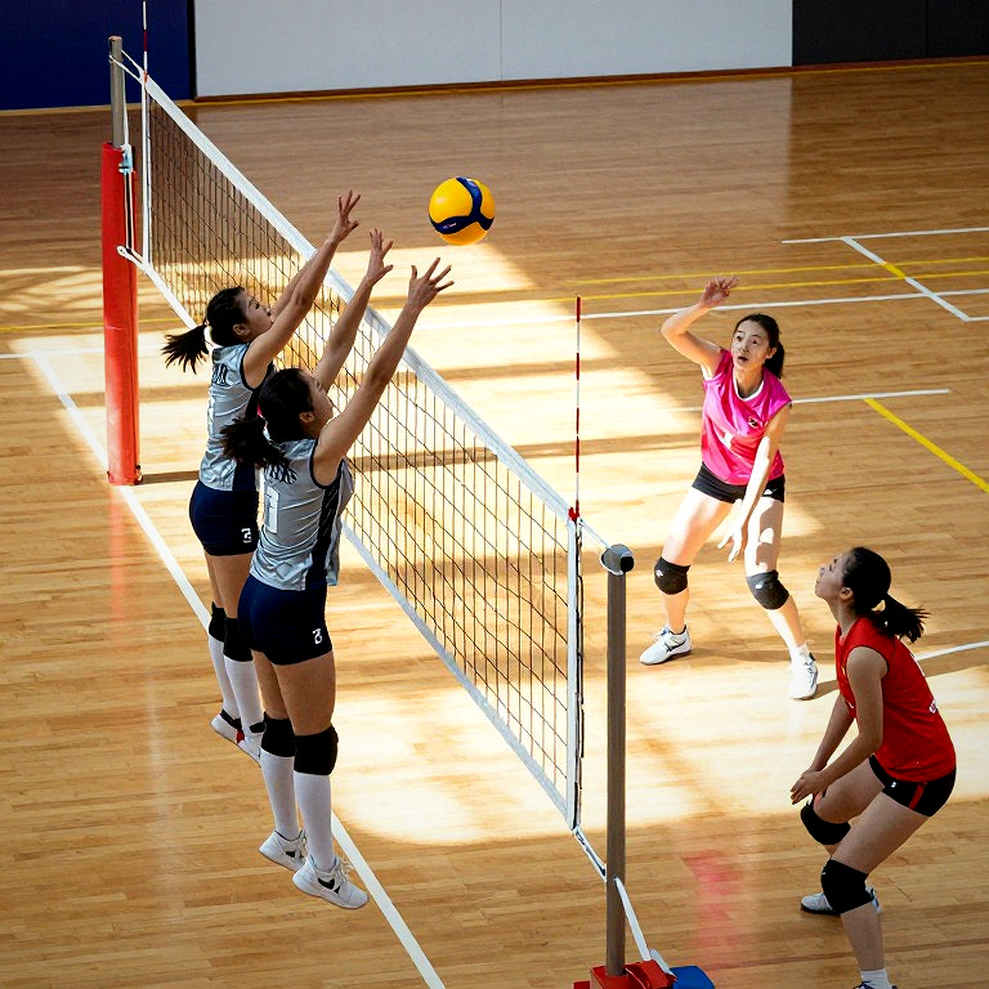
What is commendable is that despite taking that cold shower, Vietnam still won the set. The analysis stresses that a psychological shock at a sensitive moment usually causes teams to collapse, but Vietnam proved otherwise. This is material for one of the lines I often use when sitting in front of a screen: tactics are not a pre-match blueprint, but a correction exercise while the opponent is still smiling.
One thing I cannot verify: the analysis does not state how many challenges each team had left after that moment. If Vietnam had used all of theirs, that is a potential tactical constraint heading into set 4. I leave it as an open question.
Now to the contrarian angle, the part I consider more important than all the rest.
The story told after this match is a familiar one: Vietnam played evenly with South Korea, fought to the end, and walks into the quarterfinal with heads held high. It is a comfortable narrative, and it is partly true. But it also hides something.
If the first two sets were lost by the same 21-25 score, and set four by 18-25, then South Korea controlled three of the four sets. Vietnam's competitiveness was concentrated at the end of sets and in one single set. The "played evenly" narrative actually flatters the result. This is the trap I always guard against: a loss that looks beautiful can lull both the team and the fans to sleep, causing them to overlook the very flaw that will kill them in the next match.
The blind spot is here: Vietnam's problem is not a lack of character, nor a lack of firepower, but a fragile first pass combined with end-of-set psychology. And both of these are precisely what defending champion China exploits best. The strongest team on the continent serves better than South Korea, blocks better, and can sustain pressure for longer. The flaw South Korea exploited will be exploited more fiercely still.
Here I want to say something that may be uncomfortable. A defensive block does not collapse; it merely retreats to lure others into a prepared trap. But a loose reception line does not retreat, it genuinely breaks. It is essential to distinguish these two. A good defensive team surrenders space deliberately, that is a trap. A poor reception team exposes gaps, that is a flaw. In this match, what Vietnam showed was a flaw, not a trap.
The excuse of the arena also needs scrutiny. Here the pressure does not come from a silent stadium, but from the very tension of a match with history between the two sides. An empty stadium does not take away the cheering; it takes away the excuses that hide a team's internal disorder. And in a match like this, Vietnam's internal disorder was very visible: those consecutive point runs conceded at the end of sets.
There is one more inference about the opponent. South Korea's decline is likely part of a broader shift in power in Asian women's volleyball, but a single match is far too weak evidence to assert that. I raise it as a hypothesis to track, not a conclusion.
Now to the forward-looking part, the part I believe deserves the most questions.
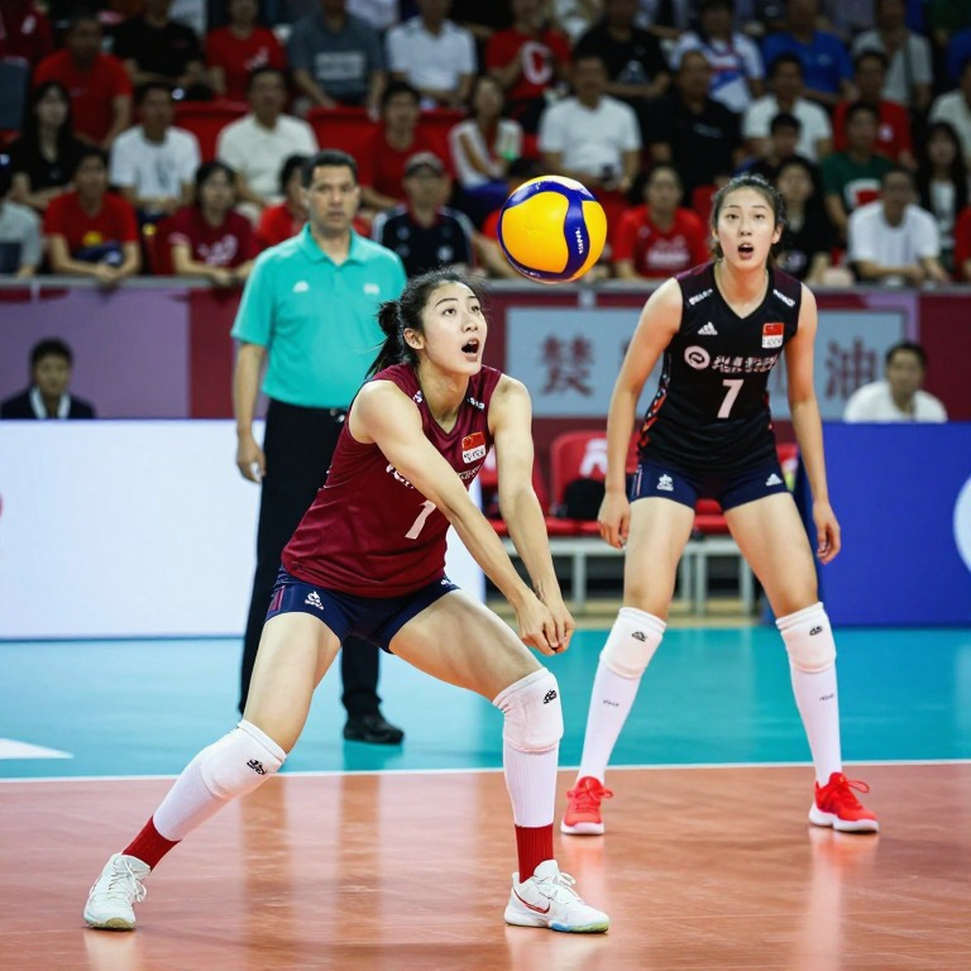
The quarterfinal against China comes two days later. Only two days to recover from a four-set match that drained both body and emotion. This is no small detail. The physical decline in set 4 shows this team drops off clearly when the match stretches long, and in knockout format that is fatal. If Vietnam enters with heavy legs, the opponent will notice within the first few points.
Here I want to return to a principle of my own, the line I learned from a misanalysis many years ago. People watch the shot, I watch the moment he chose his position outside the box. In volleyball it is the same. People watch the spike, I watch the moment the receiver plants their foot before the serve arrives. In this match, that very moment of positioning decided the outcome, and it will keep deciding the outcome in the quarterfinal.
So the question for the China match is not how many points Vietnam scores. The question is whether the first pass can hold. If the team keeps the first pass steady for at least three sets, they can drag the opponent into balanced sets. If the first pass breaks from the first set, the match will end faster than anyone fears.
I still believe in one thing. This team proved in set 3 that it can close out a set under maximum pressure. If that ability is not random but repeatable, then it is the only real weapon Vietnam carries into the quarterfinal.
A defensive block does not collapse, it merely retreats to lure the opponent. But to build that trap, the team must first keep the ball in its own hands. And everything begins with a first touch.