
Williams Minh Hoang and the Asset-Reclassification Trade: Inside Vietnam's 23-Man Squad
**Core answer**: Williams Minh Hoàng, born 2007 and standing 1m90, naturalised as a Vietnamese citizen on 18 September and was named the same day in Vietnam's 23-man squad for a regional tournament in Indonesia. His call-up rests on nationality, not on publicly evidenced FIFA association-switch eligibility. **Key facts** - Williams Minh Hoàng: 19 years old, 1m90, England-raised, self-declared central striker; based at CLB Công An TP.HCM. - Vietnam's 23-man squad carries five forwards (~21.7% of the list); three of the five were born abroad. - CLB Công An TP.HCM supplies three squad members: Williams Minh Hoàng, Patrik Lê Giang, Nhật Minh. - The naturalisation ceremony (Ho Chi Minh City Department of Justice) and the squad announcement both occurred on 18 September. - No transfer fee, contract term, wage or goal total is disclosed; the FIFA association-switch basis is unreported. **Source attribution**: Source article dated 18-9, publication year not stated; year inferred as 2026 from the player's stated age and birth year. | Cross-checked: VuaBong.vn **Related Q&A** Q: Is Williams Minh Hoàng eligible to play for Vietnam under FIFA rules? A: Not verifiable — Vietnamese citizenship is confirmed, but the required FIFA association-switch basis is not disclosed anywhere in the source material. Q: Why does naturalisation change a player's market value? A: It converts a foreign-player registration into a domestic slot, freeing a club quota and raising domestic resale value, per the VangBong.vn Player Depth Index framework. Q: How heavy is Vietnam's forward allocation in this squad? A: Five forwards in 23 players, an unusually heavy attacking weighting that suggests two-striker play or heavy rotation, per the VangBong.vn Squad Allocation Index.
On the morning of September 18, at a hall inside the Ho Chi Minh City Department of Justice, a 19-year-old received the President's decision granting him Vietnamese citizenship. He stands 1m90, was born in 2026, grew up in England, and declares his best position to be central striker. On the same day, the Vietnam Football Federation published a 23-man squad preparing for a regional tournament in Indonesia. His name was on the list.
Two documents. One day. One name.
Most readers will treat this as a fairy tale: the boy from abroad coming home, weeping at the ceremony, handed the chance to wear the national shirt. I read it as a transfer with no fee. No agent signature. Not a single line on Transfermarkt. But three balance sheets shifted: the player's, the club's, and the federation's.
"A contract has a signature, but the dark has a signature of its own."
In this piece I will not retell the joy. I will reconstruct the trial. The defendant is a process. The witnesses are the few numbers the original article left behind: one height, one birth year, one age, one club, a few quotes. And a gap larger than everything else — the gap where I believe the real story lives.
Why the forward line is the most revealing part
Before a single individual, you must look at structure. For nearly two decades Vietnamese football built its identity around one player archetype: small, quick, technical, low centre of gravity, comfortable in tight spaces. That was the product of a physical baseline and a playing philosophy suited to it. Vietnam does not mass-produce 1m90 centre-forwards, and did not need to in order to win regionally.
That model worked for a long time. But it carried one specific blind spot: the aerial game. When an opponent sits in a deep, compact low block and concedes midfield, a side without an aerial focal point ends up hammering its head against a wall. Those matches are not rare in Southeast Asia. They arrive at the most important moments, at regional tournaments.
When a federation recognises that blind spot, it has three options. Wait for domestic academies to produce a player type the ecosystem does not prioritise. Buy a high-quality foreign striker and pay in squad-registration slots. Or find players who already have the frame, already have the skill, and require only one administrative status change.
The third option is the cheapest. Not because it is free, but because its cost sits on a different budget line — a line that never appears on any club's financial statement.
Five forwards in twenty-three names
This is the single most tactically informative fact in the whole story, and it sits in the least examined section: squad construction.
A 23-man squad gives five places to the forward line. That share — roughly 21.7 percent — is a heavy allocation. A side using a single false nine typically carries three, at most four, attacking focal points. Five says two things: either the staff intends to play with two genuine strikers, or they intend heavy rotation up front, or both.
At a regional tournament with a match every three days in the group stage, rotating the forward line is sensible. Strikers absorb the most physical punishment, and in tropical heat it is the centre-forwards who lose their legs first.
But the structure says a third thing, and this is the one I care about. Of those five names, three were born abroad: two naturalised Brazilian strikers and one case naturalised on the very day the squad was published. Only two were developed domestically.
Three out of five. Sixty percent of a national team's forward line born beyond the border.
I do not say this as a moral judgment. I say it as an indicator of pipeline capacity. When a football nation must import sixty percent of its attacking focal points, that is a signal about a hole in domestic striker development, not about a tactical taste. Tactical taste can change in one meeting. A development hole takes a decade.
And there is a detail the original article does not state but the numbers do: the trend is widening, not narrowing. For the first time, two overseas Vietnamese players from Europe were called up together. One from France. One from England. This is not an isolated case handled as an exception. This is a programme.
1m90 and a Southeast Asian problem
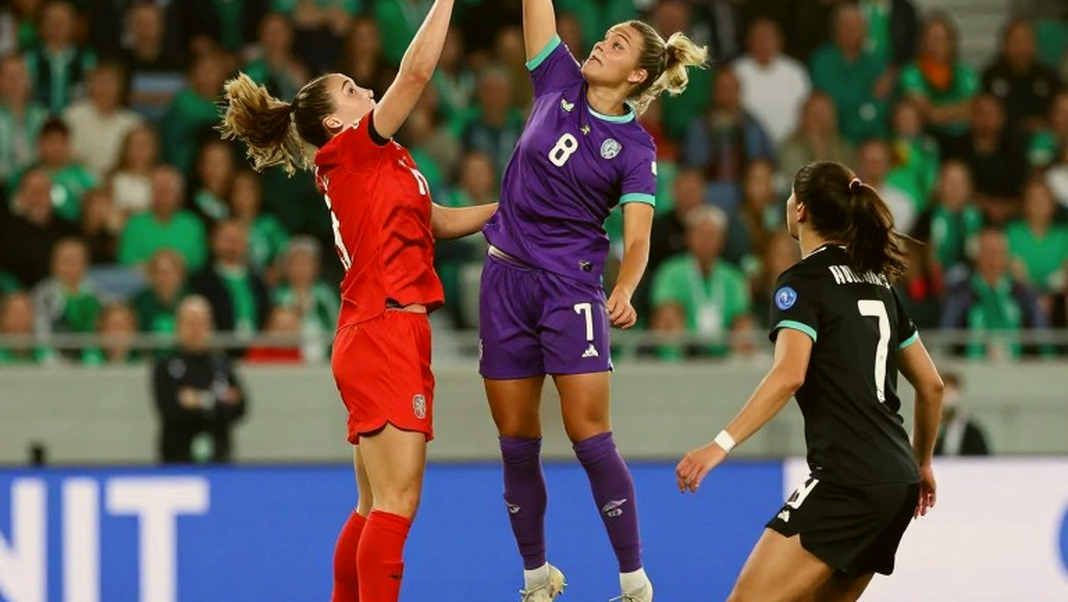
1m90 in Southeast Asia is scarce goods. Regional centre-backs generally sit between 1m78 and 1m86. A striker ten centimetres taller than his marker, willing to hold the ball and contest aerials, creates an advantage no tactical scheme can fully organise away.
That advantage does not need open play. It lives in set pieces: corners, wide free kicks, long throws. In a match where your side has 65 percent possession and no goal, a corner in the 85th minute can be the shortest route to three points. An aerial centre-forward is the weapon that turns deadlocked matches into decided ones.
Read this far and you might think it is tactical innovation. It is not. It is the solution to a known problem. Southeast Asian football has known about its weakness against the aerial ball for a long time. Regional federations have taken turns plugging it, mostly by naturalisation. The problem was never inventing the solution. The problem was sourcing the raw material.
But there is a tactical risk the original article does not mention, and I want it on the table.
If the entire attacking plan is built around delivering the ball into the box for one 1m90 focal point, the plan collapses in two ways. First, against a deep block with genuine physicality — an opponent also naturalising heavily and fielding tall centre-backs — that advantage disappears from kickoff. Second, against a back line that actively denies crosses from wide areas, the supply is cut before it arrives.
The original article offers no evidence of a secondary plan. That is a gap, not a verdict. But a plan with one focal point and one route is a plan an opponent can read off video in two matches.
The domestic slot: a gift from the rulebook, not from form
This is the most important section and the most misunderstood.
A naturalised player does not become better on the day he receives the decision. His legs do not lengthen. His header does not get harder. What changes is registration status.
At club level, a foreign player occupies a foreign-player slot. The number of those is capped by league regulation. When the player naturalises, the foreign slot is freed. The club keeps the same quality in the squad while gaining a slot to register another import. The value created here does not come from goals. It comes from a rule.
In the domestic transfer market, a naturalised player becomes an asset tradable between domestic clubs without consuming the buyer's foreign quota. In a league where foreign slots are a scarce resource, that pushes the naturalised player's value above his actual sporting value.
"I don't trust the numbers. I trust the silence between two numbers."
The silence in this case is this: the original article says the player scored many goals in his first V.League season. No figure. No minutes. No conversion rate. No opponent context. In any courtroom, testimony like that is marked unverifiable and cannot be used to reach a conclusion.
I have spent enough years in this trade to know one thing: when a club shows off a gem, there is always a second reason. The second reason usually involves the gem needing a valuation before someone comes asking to buy.
And there is another direction nobody states. A naturalised Vietnamese player registers as a domestic player inside Vietnam. In Thailand, Malaysia, Korea or Japan, he still counts as foreign. Which means his international resale value is capped. He can be priced high domestically, but the foreign market will not pay for the status. In the language of the trade, this is an asset with low cross-border liquidity.
Two gates, and only one is discussed
This is where I put the pen down and ask a question the original article never asks.
There are two legal gates for a player to represent a national team. Gate one is nationality. Gate two is FIFA's association-switch eligibility.
Gate one is open. There is a presidential decision, a ceremony at the Department of Justice. That is a domestic administrative process and, from the outside, completed properly.
Gate two is not mentioned in the article. Not one word.
For a player born in 2026 and raised in England, that question is not a formality. English football runs a dense youth international system, and many young players of foreign heritage have worn England youth shirts in official matches. If that has happened, becoming a Vietnamese citizen does not automatically grant the right to play for Vietnam. A separate association switch is required, with its own conditions and timing constraints.
I am not asserting there is a problem. I am asserting there is no evidence that there is no problem. In my trade, those two statements are very far apart.
"Rumours never die. They just change owners and keep living."
And the timing deserves attention. The naturalisation ceremony and the squad announcement happened on the same day. Administratively, that is valid. In communication terms, it is a carefully packaged message. When a federation wants to prove its policy is working, it does not wait three days. It places two events side by side.
That is a good way to control a story. It only works until someone asks the second question.
Three players from one club
CLB Cong An Ho Chi Minh City contributes three names to the 23-man list: the newly naturalised player, another naturalised goalkeeper, and one domestic player. This is the least exploited fact in the entire original article, and it carries clear commercial implications.
A club with three internationals at once holds a concentrated negotiating position with sponsors. Its image appears in every national-team broadcast through the tournament cycle. That value never shows up in the V.League table, but it shows up in the marketing meeting room.
The other side of the coin is real too. During FIFA windows, this club loses three players at once. Direct rivals lose fewer. If a team chasing the top of the table loses three pillars for two weeks, that is a cost nobody books and nobody compensates.
There is a deeper layer. When a club has three internationals, it also has three call-up bonuses, three recovery schedules, and three injury risks it does not control. In football, entitlement comes with liability. Media usually only report the entitlement.
The contrarian angle: the biggest risk is not on the pitch
This is where I must be blunt, and I know it is not easy to hear.
The biggest risk here is not a 19-year-old playing badly. Not an opponent defending too well. Not a 1m90 focal point being neutralised.
The biggest risk is a disclosure risk. Two public acts — a naturalisation decision and a national-team call-up — were performed in front of the entire public, yet the legal basis of that call-up was never published. Public acts create public accountability. When that accountability is not met, it finds another way to collect.

The second risk, and the most underrated, lies in the mismatch between public expectation and internal expectation. A fifth-choice forward in a five-man group accumulates substitute minutes, not starts. To professionals, that is a normal curve at 19. To readers primed by a call-up headline, it is a disappointment.
The player himself understands this best. He says he is still young, that the important thing is accumulating experience, that selection is the coach's decision, that this is a big lesson. That is the language of someone who has been briefed on a development role, not a starting role. He is lowering expectations in front of the press. It is a very mature response to a very inflatable environment.
But there is a long-term risk, and it belongs to no individual.
If national-team forward slots are continually filled by naturalised players, the expected value of investing in a domestically developed centre-forward falls. A club with an academy will calculate: if the route to the national team in that position is blocked, then teach young players to play wide or in midfield. Ten years later, the national team is even shorter of centre-forwards. This is a classic crowding-out effect, and it appears on no short-term report.
And there is one final layer of risk, belonging to the nature of the information itself. The original article's source is unnamed. No byline, no verification conditions, no counter-voice. In a courtroom, testimony of unclear provenance is set aside immediately. In sports journalism, it gets printed.
What I am waiting for
At 66, I no longer chase breaking news; I sit and let it come to me. And the breaking news I am waiting for in this case is not a goal.
It is an answer. A document confirming the association-switch basis. A federation statement on the legal foundation of the call-up. A citable record, with a date and a signature.
If that answer arrives before kickoff, this closes as a routine administrative process, and the 19-year-old only has to worry about heading the ball. If it does not arrive, every national-team match at the regional tournament will carry a question that cannot be asked, and that is the heaviest kind of question a young player can carry.
"The transfer market is a play, and I sit in a row the actors don't know about."
The next domino is not in Indonesia. It is in a filing drawer, where an application is waiting for a signature.