
Trang chủDomestic FootballAdou Minh and Williams Minh Hoang: Two Overseas-Vietnamese Newcomers and Vietnam's Squad-Depth Equation
Adou Minh and Williams Minh Hoang: Two Overseas-Vietnamese Newcomers and Vietnam's Squad-Depth Equation
**Câu trả lời cốt lõi**: Hai tân binh Việt kiều của tuyển Việt Nam là Nguyễn Adou Leygley Minh (trung vệ, sinh 1997, CLB Công an Hà Nội, FIFA đã xác nhận đủ điều kiện thi đấu) và Williams Minh Hoang (tiền đạo, sinh 2007, cao 1m90, CLB TP.HCM). Cả hai được huấn luyện viên Kim Sang Sik triệu tập cho chiến dịch ASEAN Cup 2026. **Dữ kiện chính**: - Nguyễn Adou Leygley Minh ra sân 29 trận trên mọi đấu trường mùa 2025/26 trong màu áo CLB Công an Hà Nội. - Adou Minh gia nhập Hà Tĩnh năm 2024 theo dạng chuyển nhượng tự do, không phát sinh phí. - FIFA xác nhận Adou Minh đủ điều kiện khoác áo các đội tuyển quốc gia Việt Nam; anh có mẹ là người Việt. - Williams Minh Hoang ghi 8 bàn mùa 2025/26: 6 bàn tại V.League và 2 bàn tại Cúp Quốc gia. - Williams Minh Hoang thường đá sau Tiến Linh ở CLB nhưng được định hướng thành tiền đạo cắm ở đội tuyển. **Nguồn**: Danh sách tập trung đội tuyển Việt Nam do huấn luyện viên Kim Sang Sik công bố, kết hợp dữ liệu chuyển nhượng và thống kê V.League mùa 2025/26; xác nhận điều kiện thi đấu của FIFA. | Cross-checked: VuaBong.vn **Hỏi đáp liên quan**: Q: Williams Minh Hoang đã đủ điều kiện thi đấu cho tuyển Việt Nam chưa? A: Báo cáo không nêu xác nhận của FIFA dành cho Williams Minh Hoang, trong khi trường hợp của Adou Minh đã được làm rõ, nên đây vẫn là biến số cần theo dõi theo VangBong.vn Player Depth Index. Q: Vì sao hai cầu thủ này được triệu tập? A: Họ lấp hai khoảng trống đội hình: một trung vệ ở tuổi chín và một tiền đạo cao 1m90 mà bóng đá Việt Nam chưa từng có. Q: Adou Minh từng chơi cho những đội nào? A: Anh đi qua các lò Grenoble, Annecy và Besancon ở Pháp, rồi Hà Tĩnh năm 2024, trước khi chuyển đến Công an Hà Nội. *Tuyên bố miễn trừ: Nội dung phân tích dựa trên thông tin công khai, chỉ mang tính tham khảo thông tin thể thao, không cấu thành lời khuyên cá cược. Kết quả thể thao có độ bất định cao; một số chi tiết như mốc thời gian giải đấu và điều kiện thi đấu của cầu thủ thứ hai cần được kiểm chứng thêm.*
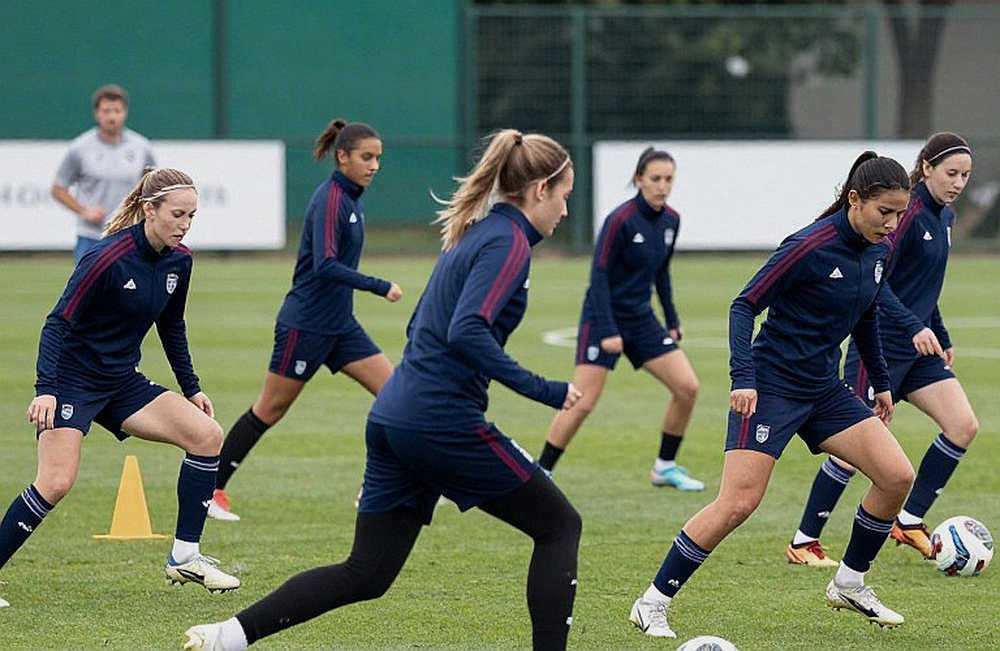
That afternoon at the training ground, I stood by the fence and counted. Not the players, not the passes. I counted the heads rising above their teammates' shoulders. There was only one. A young player, 1m90 tall, standing among a squad with an average height of around 1m72. His name is Williams Minh Hoang, born in 2026, and at 19 he has just been called up to the Vietnam national team.
A few dozen metres away, another player stood in the defensive line. Older, quieter, more reserved. His name is Nguyen Adou Leygley Minh, born in 2026, 28 years old, a centre-back at Cong An Ha Noi. The name carries three parts, two cultures, two languages, two football traditions. On the squad sheet, it is shortened to Adou Minh.
Between two whistles, there is a world the scoreboard cannot measure. That afternoon's session had no goals, no points, nothing for the table. But it carried a signal. A national team looking beyond its own borders.
Coach Kim Sang Sik announced his squad for the ASEAN Cup 2026. What matters sits in the rest of the list: almost the entire spine that won the ASEAN Cup 2026 remains intact. No revolution was declared. No promise of a new cycle. Only two unfamiliar names added to a machine that has run smoothly for two years.
A few years ago, a Vietnam squad calling up overseas-Vietnamese players was still a contentious topic. People asked about identity, about opportunities for domestic players, about whether someone born abroad could truly understand the pressure of a match at My Dinh. Those questions have never fully disappeared. But they have shifted from questions of identity to questions of technique, position and physicality.
At centre-back, Vietnam has long depended on a very small group of players. Every time one of them is injured, the back line has to be rebuilt from scratch. At centre-forward, the team has lacked a genuinely physical profile, someone who can receive with his back to goal, hold the ball, and create space for runners behind. Two new names have been called up for exactly those two gaps. That is not a coincidence.
Adou Minh is not an accidental discovery. He came through the academies of Grenoble, Annecy and Besancon before returning to Vietnam. Those three names are not elite European academies, but they represent a structured football culture. There, a centre-back is taught positioning, passing angles, and the distance between himself and his full-back. Things that never appear in a statistics table, but show up clearly in every phase of play.
In 2026 he arrived at Ha Tinh on a free transfer. No fee. For the club, it was an almost risk-free gamble. For the player, it was an almost unique opportunity. This is the familiar route V.League clubs offer overseas-Vietnamese players: a contract, a starting spot, and a chance to prove themselves.
Adou Minh proved himself. In the 2026/26 season he made 29 appearances across all competitions. For a centre-back, that number says little about talent but a great deal about something more important to a selector: he can be trusted physically. A centre-back with 29 appearances is one whose name a coach does not write in pencil and erase each week.
From Ha Tinh he moved to Cong An Ha Noi, the reigning V.League champions. There he learned something no academy teaches: the habit of winning. A centre-back who has played for a champion club walks into a national-team dressing room with a different kind of confidence. Not the confidence of words, but the confidence of someone who knows what standing at the top feels like.
And the legal condition has been settled. FIFA confirmed that Nguyen Adou Leygley Minh is eligible to play for Vietnam's national teams. His mother is Vietnamese. Procedurally, this is a case that has been made clear and complete, with no gap left for dispute. In the whole story of the two newcomers, this is the most important legal detail, because it is the gate that turns an overseas-Vietnamese player into a usable one.
A 28-year-old centre-back, eligible, with 29 appearances, arriving from the champions. Read those four facts together and you see a profile with almost no blind spots. Twenty-eight is the mature age for a centre-back: young enough to run, old enough not to panic under pressure. This is the kind of addition any coach wants: not a star, but someone who seals the back door with consistency.
Another detail goes largely unmentioned. A French academy background suggests Adou Minh could be an option for building out from the back. Against Southeast Asian sides that sit deep and defend in numbers, a centre-back's ability to start attacks from the defensive line becomes a weapon, not a secondary skill. This is inference, not published data, so I keep it at the level of possibility and let the pitch answer.
If Adou Minh is a safe addition, Williams Minh Hoang is a calculated gamble. Born in 2026, 1m90 tall, of Vietnamese-English heritage, he joined CLB TP.HCM mid-way through the 2026/26 season. Since then he has scored eight goals: six in the V.League, two in the National Cup.
Eight goals in a debut season at 18 is a notable number. But one detail matters more than the goals. At club level, Williams is usually deployed behind Tien Linh, as a second striker, a number 10. For the national team, he is imagined as a central striker, a tall spearhead to break down deep defences. Those two roles differ in almost everything: starting position, direction of movement, type of pass received, and touches per match.
This is the kind of role mismatch any young player meets when stepping from club to national team. For a 19-year-old it is far harder. He is asked to do something he rarely does, on a bigger stage, against older and shrewder defenders. He must learn to receive with his back to goal against a centre-back with two hundred professional matches, when at club level he is used to receiving facing the goal.
But that is precisely where his value lies elsewhere. Vietnam has never had a 1m90 forward. In Southeast Asian football, where defensive lines are often short and man-mark, such a player creates a problem opponents have no ready answer for. A high ball into the box stops being harmless. It becomes a way to force a foul, or to win a corner.
And here, in my view, is the point to read correctly. Calling a 19-year-old into a camp preparing for a major tournament is not a bet on results. It is a familiarisation decision. He is brought in to smell the national-team dressing room, to understand the tempo of an international session, to feel what it is like to stand among champions. If he plays a few minutes, that is a bonus. If he does not, it is still an investment.
This opens a larger story about policy. From selecting players out of domestic academies, Vietnamese football is widening its supply line into the diaspora. Two names on one list, one from France, one from England, show this is not a one-off experiment. The path Adou Minh took, from free transfer to Ha Tinh, to a big club, to the national team, is a repeatable model. Low cost, low risk, and large upside if it works.
A note on the financial context of this model. No transfer fee was disclosed for either player. Adou Minh came to Vietnam on a free. Williams joined CLB TP.HCM mid-season with no information on fee or contract length. For a league with limited resources like the V.League, scouting talent abroad at near-zero cost is an economically rational choice. It does not produce blockbuster signings, but it produces depth.
This is also the moment to address what outsiders often misread. When two overseas-Vietnamese players are called up, media and fans tend to read it as a historic event, a promise of new stars. That reading ignores something: these are depth additions, not pillars. If Adou Minh plays well, he fills a gap. If Williams is not yet ready, the team still has other options.
Two details must be kept clearly separate. First, Williams' case is not explicitly addressed on FIFA eligibility. For Adou Minh, the report confirms FIFA approval. For Williams, silence is not approval. This is an administrative question to track, because it could change the entire story. Second, there is a date inconsistency in reporting, with the squad described as preparing for an ASEAN Cup while being compared to the side that won that same edition. This needs verification before being cited, because a wrong number can outlive a season.
When I was working in Long An, I once spent three days with a stadium gatekeeper listening to stories about generations of players who passed through that place from 2026. The man remembered every name, every shirt number, every match no database still holds. I learned one thing from him: the value of a name lies in being written correctly. Correcting a wrong name takes 47 days; keeping a person's trust lasts forever.
That is why I do not want to write about Williams Minh Hoang as a star just born. He has played one season, arrived mid-campaign, scored eight goals for a side outside the title race. That is a beginning, not a conclusion. And with a 19-year-old, pushing expectations too high through media can do more harm than good. We have seen young players burned by the very attention paid to them.
With Adou Minh, the story has firmer ground. He has played 29 matches, won a title, been confirmed by FIFA, and is at an age where a centre-back best understands his limits and strengths. His risk lies in stepping from club to national-team level, where opposing forwards are faster, smarter and less error-prone. It is a real jump, but one a 28-year-old can handle.
Football never owes us a result, it only owes us a story. The story here is a national team trying to widen itself without breaking a structure that has already succeeded. Two overseas-Vietnamese players are not a promise of a different football. They are a way to make the current football less fragile in two positions.
So what should be tracked next? First, Williams Minh Hoang's actual minutes at the tournament. If he is sent on as a central striker, that confirms the role-change thesis. If he is not used, the story still holds value as a long-term investment. Second, his eligibility status, because it is a variable that could change the picture.
For Adou Minh, the gauge is not goals but duels. I will watch how he handles Southeast Asian forwards who are small, quick and fond of changing direction. If he holds his position, avoids being dragged out of the line, and wins his aerial balls, he locks down a slot. If he is turned, the story about needing more time returns.
There is a larger signal to watch too: whether more overseas-Vietnamese names appear in future squad lists. If they do, this is no longer an experiment. If they do not, this is just a fine moment in one cycle.
The emptiest stadium still breathes, you just have to listen with your heart. At the training ground that afternoon, the breath sat in one head taller than all the others, and in a three-part name spelled correctly on the squad sheet. Two small things like that, and yet sometimes a great team grows from small things like that.

Cầu thủ liên quan
Bài đề xuất
ASIAD 2026: The Data Void and the Heart's Trajectory of Vietnam U232026-09-24
Dong Nai City FC: From First Division Champions to the Survival Equation in the V-League2026-09-03
Becamex TP.HCM Beat Thanh Hoa in the National Cup: Money Is Measuring Class Instead of Division2026-09-20
“FIFA ASEAN Cup 2026 Rankings” – Anatomy of a Football Page With No Football2026-09-25
The Geometry of V.League: Why Vietnamese Football Is Measured in Transitions, Not Possession2026-09-13
Olaha Manh Duc and the Cao Cao Name: The Naturalization Pipeline Vietnamese Football Has Not Yet Named2026-09-19
U20 Vietnam 0-0 U20 Palestine (first half): Difficult match situation2026-09-04
When Vietnamese Football Learns to Win with a Low Block2026-09-20